
Indonesia wildfire emissions hit 19.7 million tonnes in one week, over a third of global total
This digest was compiled by AI from multiple sources — links to the originals are below.
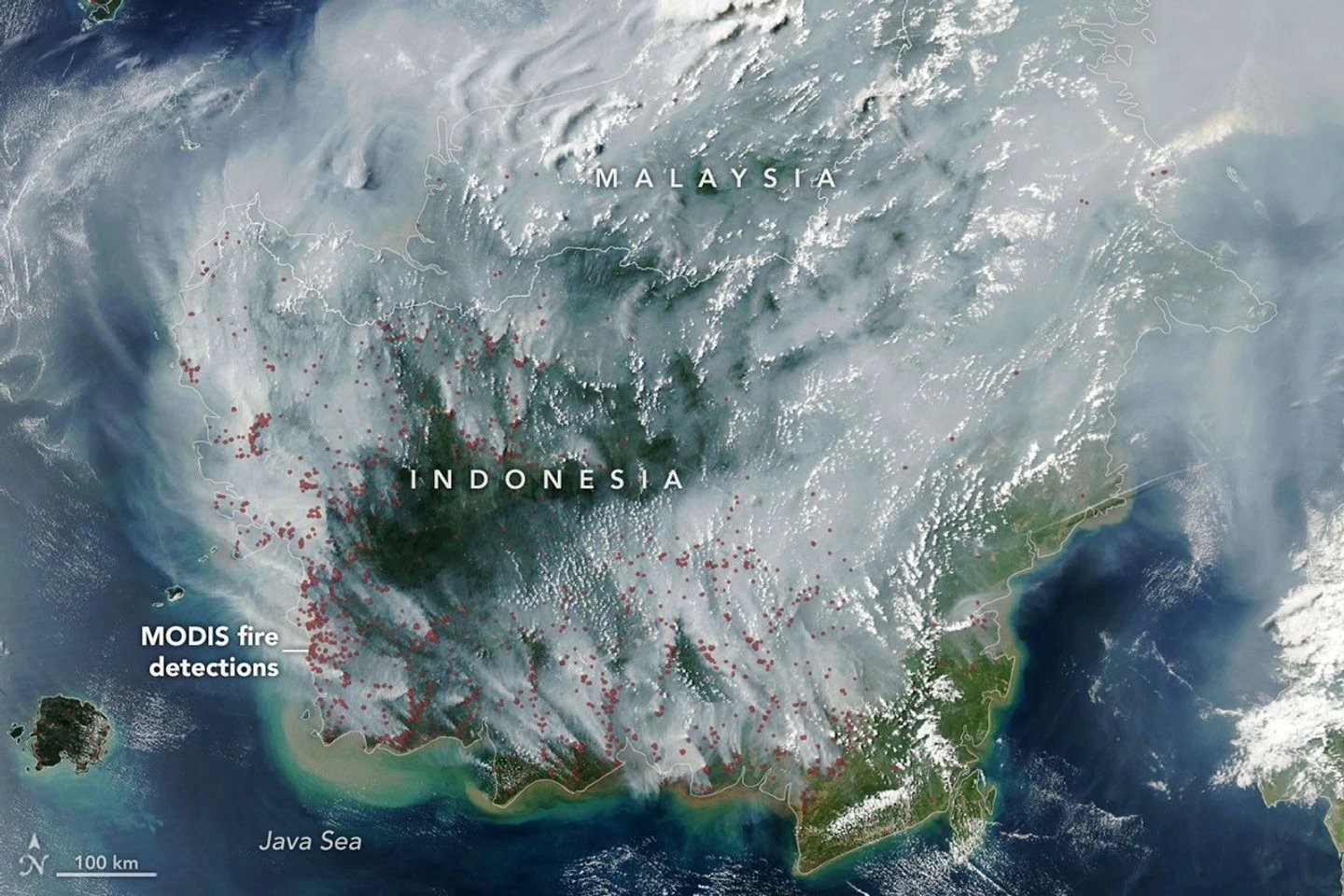
Indonesia produced 19.7 million tonnes of wildfire emissions in one week in September, over a third of the global total, according to the EU's Copernicus monitoring service. Toxic haze has been drifting across Southeast Asia as the country grapples with its most severe wildfire season in over a decade. Environmental groups are urging President Prabowo Subianto to implement stricter corporate accountability.
Key Facts
- Indonesia emitted 19.7 million tonnes of carbon in one week in September, over a third of the global total, according to the EU's Copernicus monitoring service.
- The current wildfire season is Indonesia's most severe in over a decade.
- Environmental groups are urging President Prabowo Subianto to implement stricter corporate accountability.
- Years of draining carbon-rich peatlands for commercial plantations have left vast ecosystems fragile and fire prone.
Emissions Surge
The EU's Copernicus environment monitoring service reported that Indonesia produced 19.7 million tonnes of emissions in one week in September, over a third of the global total. This figure underscores the scale of the ongoing wildfire crisis, which has made the current season the most severe in over a decade.
Regional Haze Impact
Toxic haze has been drifting across Southeast Asia as extreme weather worsens the annual fire season. The transboundary smoke has raised health and environmental concerns in neighboring countries.
Calls for Accountability
Environmental groups continue to urge President Prabowo Subianto to implement stricter corporate accountability and decisive action to head off further devastation. Experts say that despite regulatory frameworks, years of draining carbon-rich peatlands for commercial plantations have left vast ecosystems fragile and fire prone.
1 source
Time · lag behind first