
Indonesia's 2026 peat fires burn underground, emissions reach 10% of 2015 crisis
This digest was compiled by AI from multiple sources — links to the originals are below.
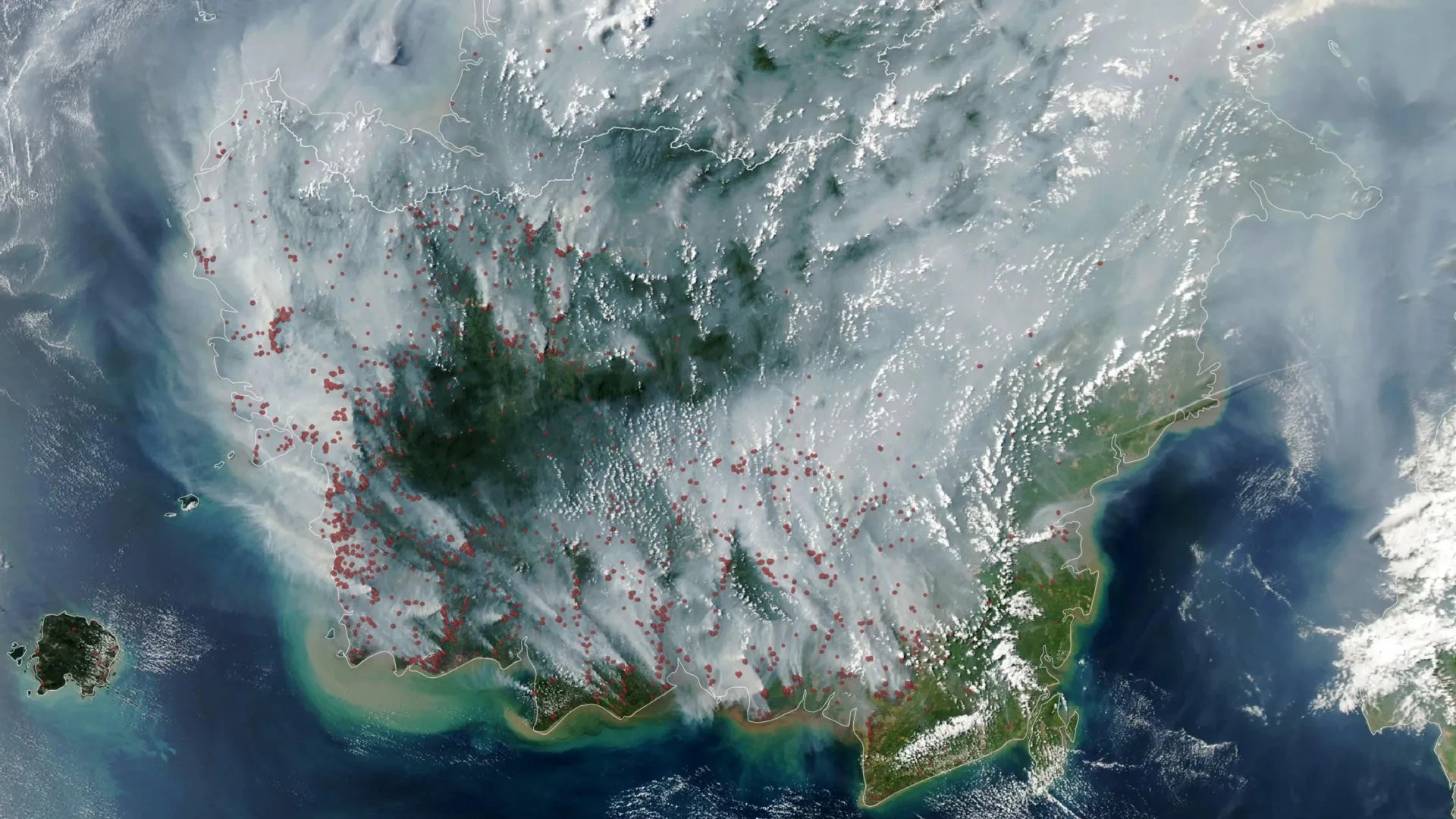
Indonesia's 2026 fire season is underway, with peat fires burning underground and producing high levels of pollution. Satellite data from September 1, 2026 shows widespread fire detections across the country. Emissions have already reached roughly 10 percent of the total from the 2015 crisis, even as El Niño intensifies the dry season.
Key Facts
- Peat fires produce three times more fine particulate matter than other tropical forest fires, along with five times more sulfur dioxide and twice as much methane and carbon monoxide.
- Indonesia contains about 36 percent of the world's tropical peatlands.
- By September 2, 2026, the fires had been burning for about a month and had already released roughly 10 percent of the amount produced during the 2015 crisis.
- NOAA assessed El Niño as present and strengthening in August 2026, and the Indian Ocean Dipole was also in a positive phase.
- Robert Field, a Columbia University researcher, said fire activity is tracking sharply upward, similar to 2015.
Underground Peat Fires
Tropical peatland fires smolder through dried wetland soils and peat deposits, often continuing underground at relatively low temperatures. This makes them extremely difficult to extinguish and exceptionally polluting. Peat fires produce three times more fine particulate matter than other tropical forest fires, along with five times more sulfur dioxide, three times more organic carbon, and twice as much methane and carbon monoxide. Indonesia contains about 36 percent of the world's tropical peatlands, which can dry enough to ignite during severe droughts.
Satellite Fire Detections
The MODIS instrument aboard NASA's Aqua satellite captured an image of the region on September 1, 2026, showing numerous fire detections across Indonesia. Each red dot on the annotated map represents a pixel containing thermal anomalies associated with fire, and a single fire can produce multiple detections. Over the past three decades, such conditions have repeatedly produced long-lasting fires that blanket large areas in smoke for weeks and disrupt the lives of millions of people.
El Niño and Drought
NOAA assessed El Niño as present and strengthening in August 2026, and the climate pattern commonly reduces rainfall across Indonesia. The drying can become even more pronounced when El Niño occurs alongside a positive phase of the Indian Ocean Dipole, which was also underway. Robert Field, a Columbia University researcher, said Indonesia is only about three weeks into its fire season but fire activity is tracking sharply upward, similar to 2015. After more than three months of burning in 2015, Indonesia's fires had emitted 1.75 billion tons of greenhouse gas equivalents, more than Japan emits in an entire year. By September 2, 2026, the fires had been burning for about a month and had already released roughly 10 percent of the amount produced during the 2015 crisis.
1 source
Time · lag behind first