
Kazakh school satellite NIS PocketQube reaches orbit on SpaceX Falcon 9
This digest was compiled by AI from multiple sources — links to the originals are below.
The NIS PocketQube, a satellite built by students of Nazarbayev Intellectual School in Astana, reached orbit on October 1, 2026, aboard a SpaceX Falcon 9 rocket launched from Vandenberg Space Force Base in California. The 5×5×5 cm, 250-gram satellite is now in low Earth orbit, and students will begin receiving telemetry for research projects. The launch marks the culmination of a project that began in 2019 and involved 17 students.
Key Facts
- The NIS PocketQube satellite was launched on October 1, 2026, aboard a SpaceX Falcon 9 rocket from Vandenberg Space Force Base in California.
- The satellite measures 5×5×5 centimeters and weighs 250 grams, and is equipped with control, power, and radio communication systems plus solar panels.
- The project began in 2019 and involved 17 students from Nazarbayev Intellectual School in Astana's Nura district.
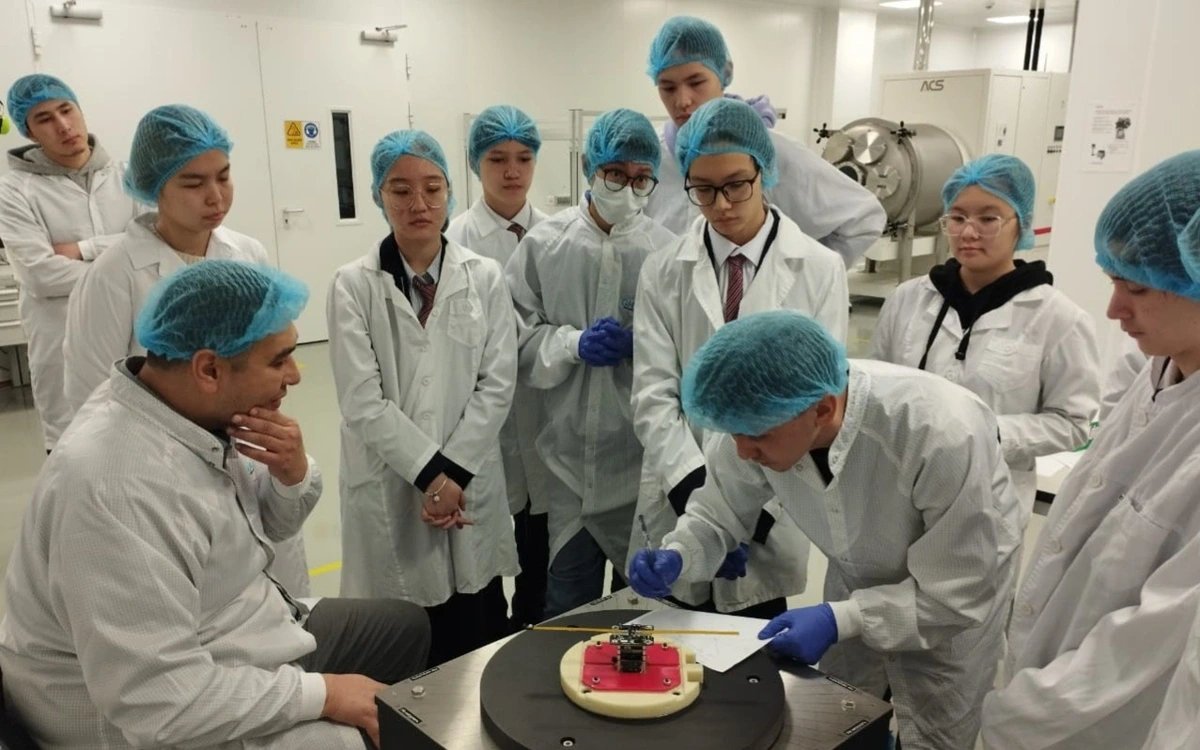
- In December 2022, the satellite passed thermal vacuum and mechanical tests at the National Space Center.
- The school received a ground receiving station including a receiver, antenna, and computer equipment to receive data via the SatNOGS network.
Launch Details
The NIS PocketQube was launched on October 1, 2026, as part of SpaceX's Transporter-18 mission, which carried 130 satellites and spacecraft to low Earth orbit. The Falcon 9 rocket lifted off from Vandenberg Space Force Base in California. The satellite was developed by students of Nazarbayev Intellectual School in the Nura district of Astana, with support from teachers and space industry specialists from Kazakhstan and abroad. NIS Board Chairman Anuar Zhangozin commented that he never thought Elon Musk would contribute to the development of NIS, but the rocket of his company sent the satellite created by their students into space.
Satellite Development
Work on NIS PocketQube began in 2019, and in 2020 the school opened the NIS Space laboratory and launched the course 'Space Technology Electronics' for students in grades 7–10. Over the course of the project, 17 students participated, engaging in 3D modeling, electronic board design, microcontroller programming, and development of data processing algorithms in Python. In December 2022, the satellite successfully passed ground thermal vacuum and mechanical tests at the National Space Center. With the assistance of the Embassy of Kazakhstan in Greece, final checks and integration of the satellite into the launch container of UARX were carried out together with a Greek company. Specialists from JSC 'NC Kazakhstan Gharysh Sapary' and LLP 'Galam' also participated in the project.
Post-Launch Operations
Students will now be able to receive telemetry from the satellite and use the data in research projects in physics, astronomy, programming, and engineering disciplines. The school received a receiving station including a receiver, antenna, and computer equipment, which will allow receiving information through the international SatNOGS network. In the future, it is planned to create a ground complex that will provide access to satellite data for schoolchildren throughout Kazakhstan.
8 sources
Time · lag behind first