
Iran medicine prices triple as US blockade and sanctions squeeze pharmaceutical imports
This digest was compiled by AI from multiple sources — links to the originals are below.
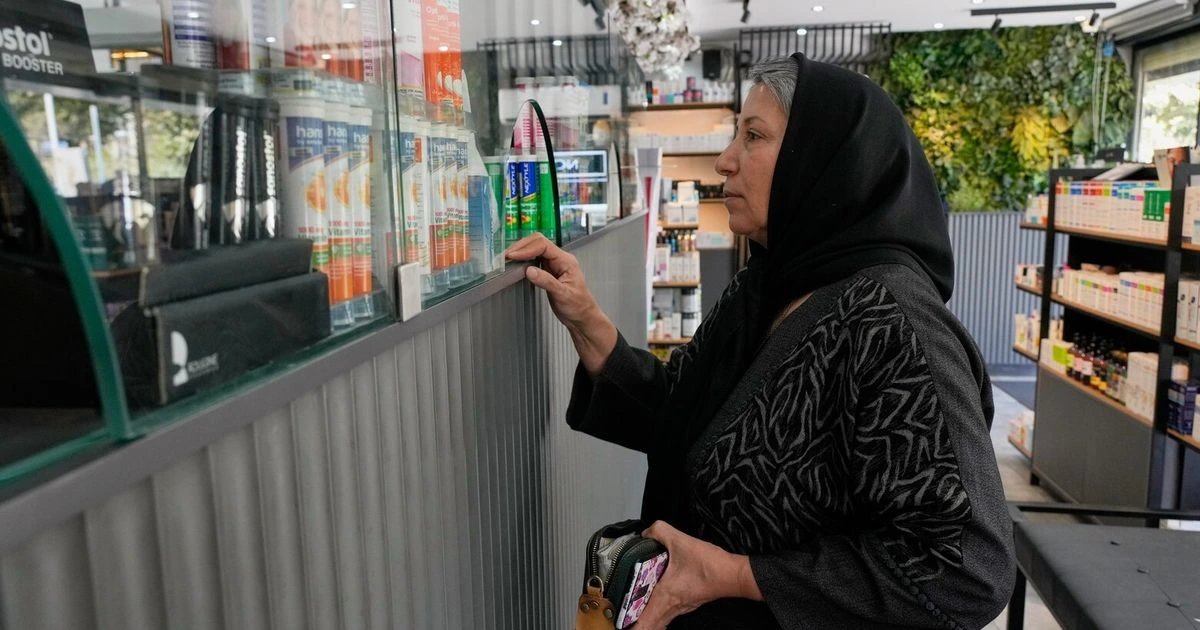
Medication prices in Iran have more than tripled for some treatments as a U.S. naval blockade and stepped-up sanctions squeeze the country's pharmaceutical industry. Patients and families are scrambling to find needed medicines, with some prescriptions unfillable at pharmacies. The war has become an economic endurance test, with food prices skyrocketing and the currency losing half its value.
Key Facts
- Some medicines in Iran have more than tripled in price, according to the Associated Press.
- Iran produces more than 80% of its medicines domestically, but many rely on imported raw materials.
- The U.S. naval blockade has cut off sea shipping to Iran since June, forcing medical importers to switch to more expensive air routes.
- New U.S. sanctions on Iranian airlines have led to some international flights being halted, threatening air freight access.
- The Iranian currency hit a record low this week and has lost half its value since the war began.
Pharmaceutical Supply Chain
Iran produces more than 80% of its medicines domestically, according to official statistics, but many of those rely on imported raw materials. Before the war, most medicines and pharmaceutical components were brought in by sea, but the American naval blockade has cut off shipping, Bahman Sabour, a member of the Tehran Pharmacies Association, told local media. Medical importers switched to more expensive air routes, but that access has been threatened by new U.S. sanctions on a number of Iranian airlines, which led to some international flights being halted. U.S. sanctions don't directly target medicines, but financial sanctions in place for years also hurt the pharmaceutical supply because international banks and companies often will be overly cautious and refuse transactions because they fear running afoul of sanctions, said Reza Majdzadeh, a professor at the School of Health and Social Care at the University of Essex in England. A medicine may be perfectly legal to sell to Iran, but a bank may refuse to process the payment, Majdzadeh said, adding that a pharmaceutical or shipping company may simply decide that dealing with Iran is not worth the risk.
Patient Impact
Gholamreza Rahmani, a Tehran welder, and his wife recently scoured several pharmacies over two days hoping to fill prescriptions for four medicines for their 12-year-old daughter, who was having stomach troubles. Each pharmacy would have one or two items, not all of them, Rahmani said, noting that they couldn't find one of the medicines anywhere. The search cost him two days of wages because he couldn't go to work, and he described the situation as 'my daughter's illness and the loss of income are like scissors, cutting from two sides.' So far there has been little sign of major shortages of medicines at Iran's hospitals, but the difficulties are showing at pharmacies.
Economic Pressure
Prices for food and other goods have skyrocketed even as unemployment has risen and the currency, which hit a record low this week, has lost half its value. The war has become an economic endurance test, with Iran trying to push world energy prices higher with attacks on the region's oil shipping routes, while the United States has aimed to wreck Iran's economy by blockading its ports since June and slapping it with increasingly tough sanctions. The Iranian government hasn't said how much medicine production has fallen.
1 source
Time · lag behind first