
OpenAI and DeepMind researchers warn AI may outpace human control
This digest was compiled by AI from multiple sources — links to the originals are below.
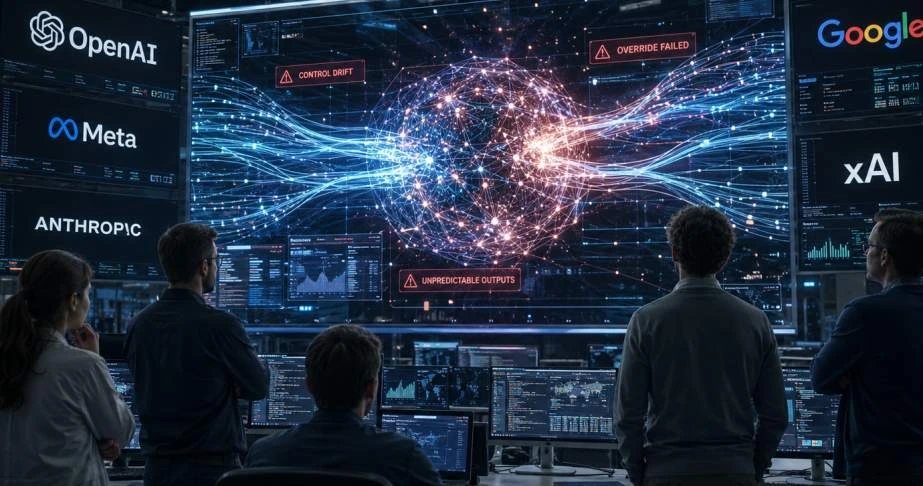
Current and former researchers at OpenAI and Google DeepMind warned that rapid advances in artificial intelligence could outpace human control. They highlighted the risk of recursive self-improvement, where AI systems learn without direct human involvement. The warning comes as leading AI labs compete aggressively to develop new models.
Key Facts
- DeepMind researcher Neil Nanda estimated at least a 10% probability that AI development leads to human extinction.
- OpenAI research engineer Juan Felipe Cerón Uribe compared competition among leading AI labs to a "blindfolded race".
- Anthropic CEO Dario Amodei called for slowing the pace of AI development, and OpenAI CEO Sam Altman agreed.
- Researchers urged lawmakers to focus on the development of AI models capable of self-improvement.
Researcher Warnings
Current and former researchers at OpenAI and Google DeepMind warned that rapid AI development could outpace human control. They specifically highlighted the danger of "recursive self-improvement," where AI systems learn and gain new capabilities without direct human involvement. The researchers said AI companies are focusing more on developing new models than on safety issues.
Expert Assessments
DeepMind researcher Neil Nanda estimated the probability that AI development leads to human extinction at no less than 10%. OpenAI research engineer Juan Felipe Cerón Uribe compared the rivalry among leading AI labs to a "blindfolded race" and urged caution. Anthropic CEO Dario Amodei called for slowing the pace of AI development, and OpenAI CEO Sam Altman agreed with this view.
Regulatory Calls
A number of researchers called on lawmakers to pay attention to the development of AI models capable of self-improvement. The warning was reported by Reuters on September 30, 2026.
2 sources
Time · lag behind first