
Perseverance rover finds groundwater, lakes, and hot fluids in Jezero Crater
This digest was compiled by AI from multiple sources — links to the originals are below.
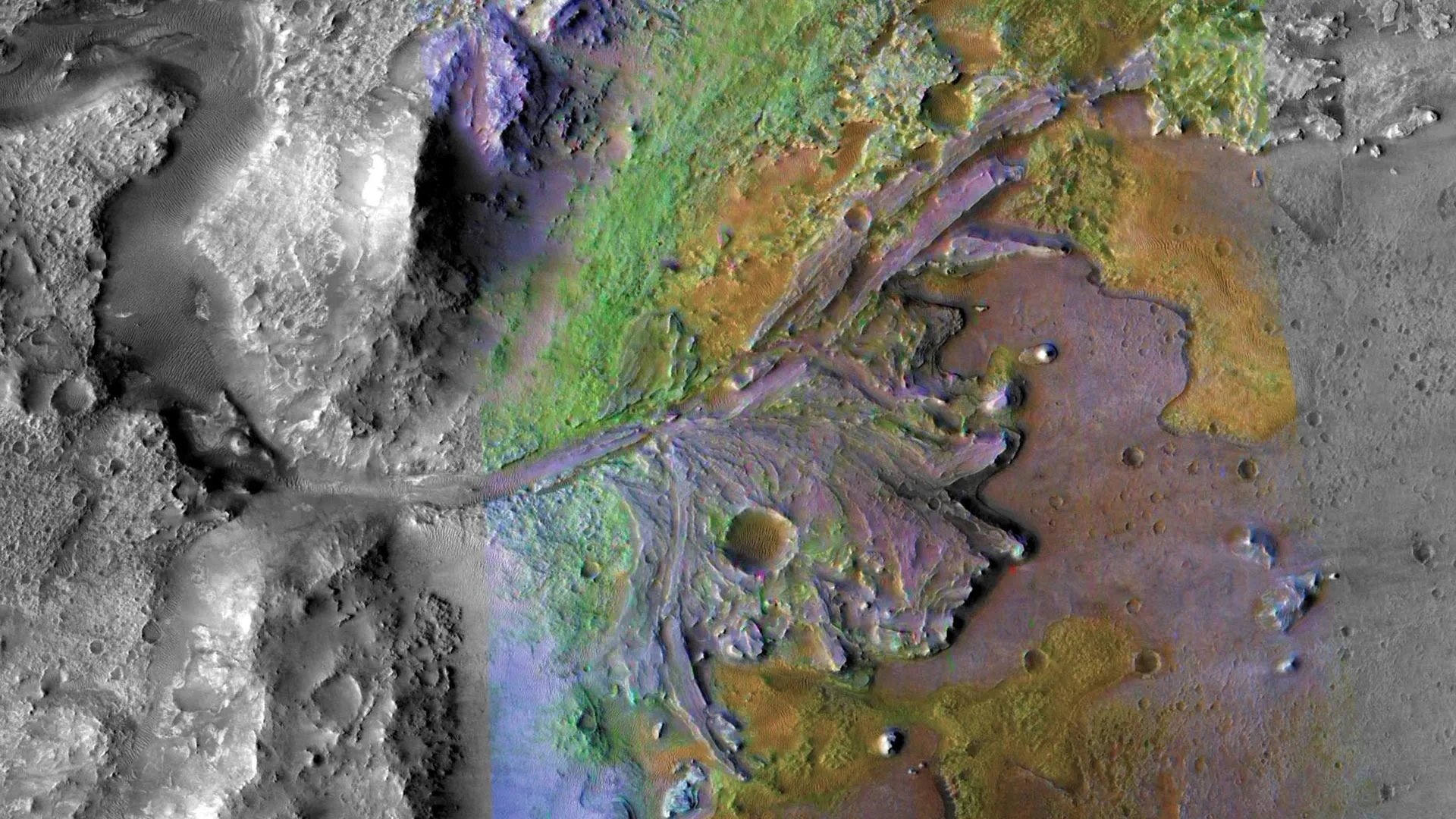
NASA's Perseverance rover found evidence of groundwater, ancient lakes, and hydrothermal activity in Mars' Jezero Crater, according to a study published in Communications Earth & Environment. The discovery came from analysis of igneous rocks in the crater's Margin Unit, which revealed at least three separate water interactions. The findings challenge earlier assumptions that the area's carbonates formed solely from a lake.
Key Facts
- Perseverance studied more than 185 bedrock targets in the Margin Unit using its SuperCam laser instrument.
- The rocks in the Margin Unit interacted with water on at least three separate occasions, each altering their chemistry differently.
- The findings were published in the journal Communications Earth & Environment.
- Perseverance examined the Margin Unit over approximately 870 feet (265 meters) of elevation.
Unexpected Igneous Rocks
When Perseverance arrived at the inner rim of Jezero Crater in September 2023, researchers expected to find sedimentary rocks along the ancient lake shoreline. Instead, the rover encountered igneous rock, which forms when magma cools underground or volcanic material solidifies at the surface. These igneous rocks revealed an unexpectedly complicated history of water interaction. The evidence indicates at least three separate episodes of water interaction, each changing the rocks' chemistry and physical appearance in different ways.
SuperCam Analysis
Much of the evidence came from SuperCam, an instrument mounted on Perseverance's mast that identifies mineral composition by analyzing reflected light. SuperCam can fire its laser from up to 21 feet (6.5 meters) away, creating a plasma burst whose spectrum reveals the rock's chemical makeup. Using this technique, Perseverance studied more than 185 bedrock targets across the Margin Unit. Candice Bedford, a research scientist at Purdue University and the study's lead author, said the Margin Unit became a 'crossroads for aqueous systems.'
Geological History
Perseverance examined the Margin Unit over approximately 870 feet (265 meters) of elevation. At higher elevations, the rover encountered coarse, crystalline rock rich in olivine. The Margin Unit sits inside one of the largest exposures of carbonate on Mars, so the findings extend beyond Jezero Crater.
2 sources
Time · lag behind first