
NASA's Roman Space Telescope activates 300-megapixel camera in orbit
This digest was compiled by AI from multiple sources — links to the originals are below.
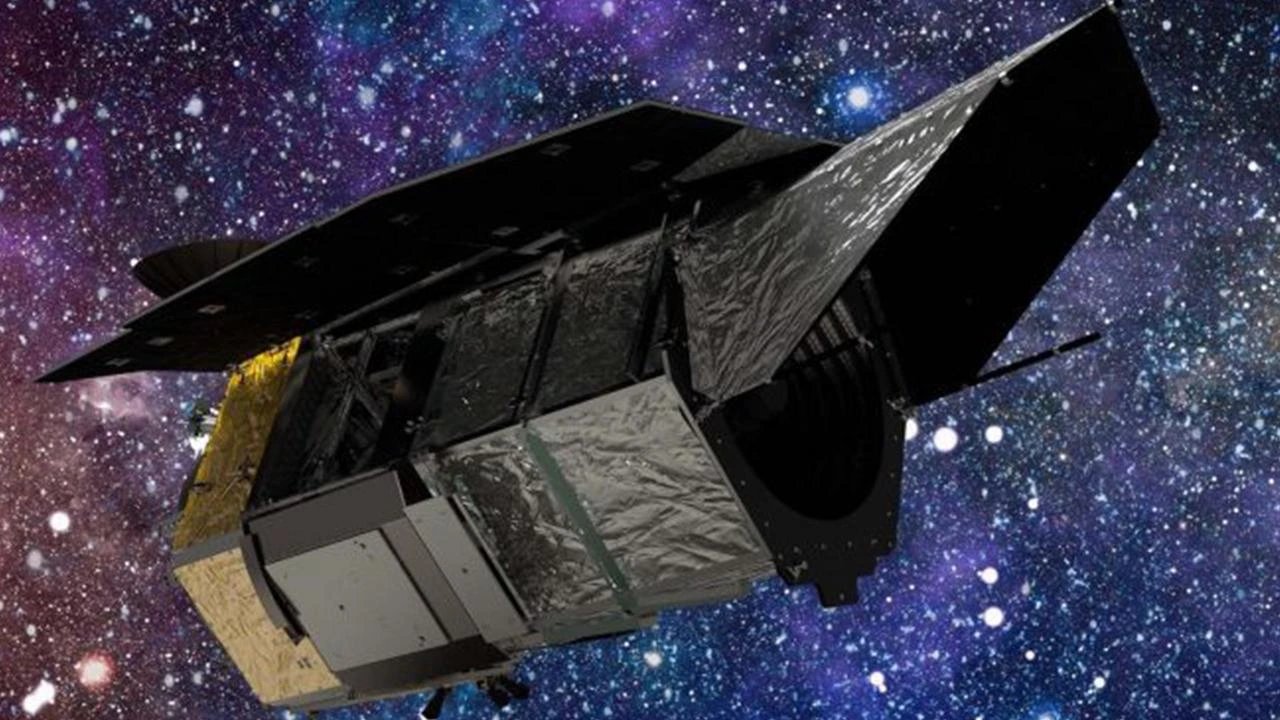
NASA's Roman Space Telescope has activated its 300-megapixel Wide Field Instrument in space. The telescope's Coronagraph Instrument also completed digital, electronic, and mechanical checks earlier this month. Both instruments are now operational as the spacecraft continues its 1.6 million kilometer journey to the L2 point.
Key Facts
- The Wide Field Instrument's 18 infrared detectors were cooled to minus 183 degrees Celsius and activated on September 11.
- The Coronagraph Instrument's thermal control system reached its normal operating temperature of 22 degrees Celsius.
- The telescope is traveling approximately 1.6 million kilometers to the second Lagrange point, L2.
- Each Wide Field Instrument image will cover an area larger than the apparent size of the full moon.
- NASA Goddard Space Flight Center scientist Josh Schlieder confirmed the instrument is operational in space.
Wide Field Instrument Activation
Engineers held the Wide Field Instrument in a standby state for 10 days to allow the device to dry and clean. During this period, the detectors were maintained at minus 65 degrees Celsius. On the morning of September 11, heaters were turned off and the system was cooled to minus 143 degrees Celsius. At that temperature, the 18 infrared detectors were activated and continued cooling to their final operating temperature of minus 183 degrees Celsius. Engineers tested the filter and prism systems that control light wavelengths in a weightless environment, and confirmed the focusing mechanism worked correctly.
Coronagraph Instrument Checks
The Coronagraph Instrument is designed to directly image planets orbiting other stars using advanced technology. The system uses optical components, masks, and flexible mirrors to suppress a star's intense glare. Scientists and engineers at the Pasadena Command Center confirmed communication with all major parts of the instrument, including software, temperature controls, cameras, and avionics systems. Ground controllers remotely operated the instrument's main functions, including moving mechanisms that position masks, color filters, and prisms. The coronagraph's thermal control system was verified and the hardware was heated to its normal operating temperature of 22 degrees Celsius.
3 sources
Time · lag behind first