
Caltech study finds 2-billion-year-old carbon signal may be local, not global
This digest was compiled by AI from multiple sources — links to the originals are below.
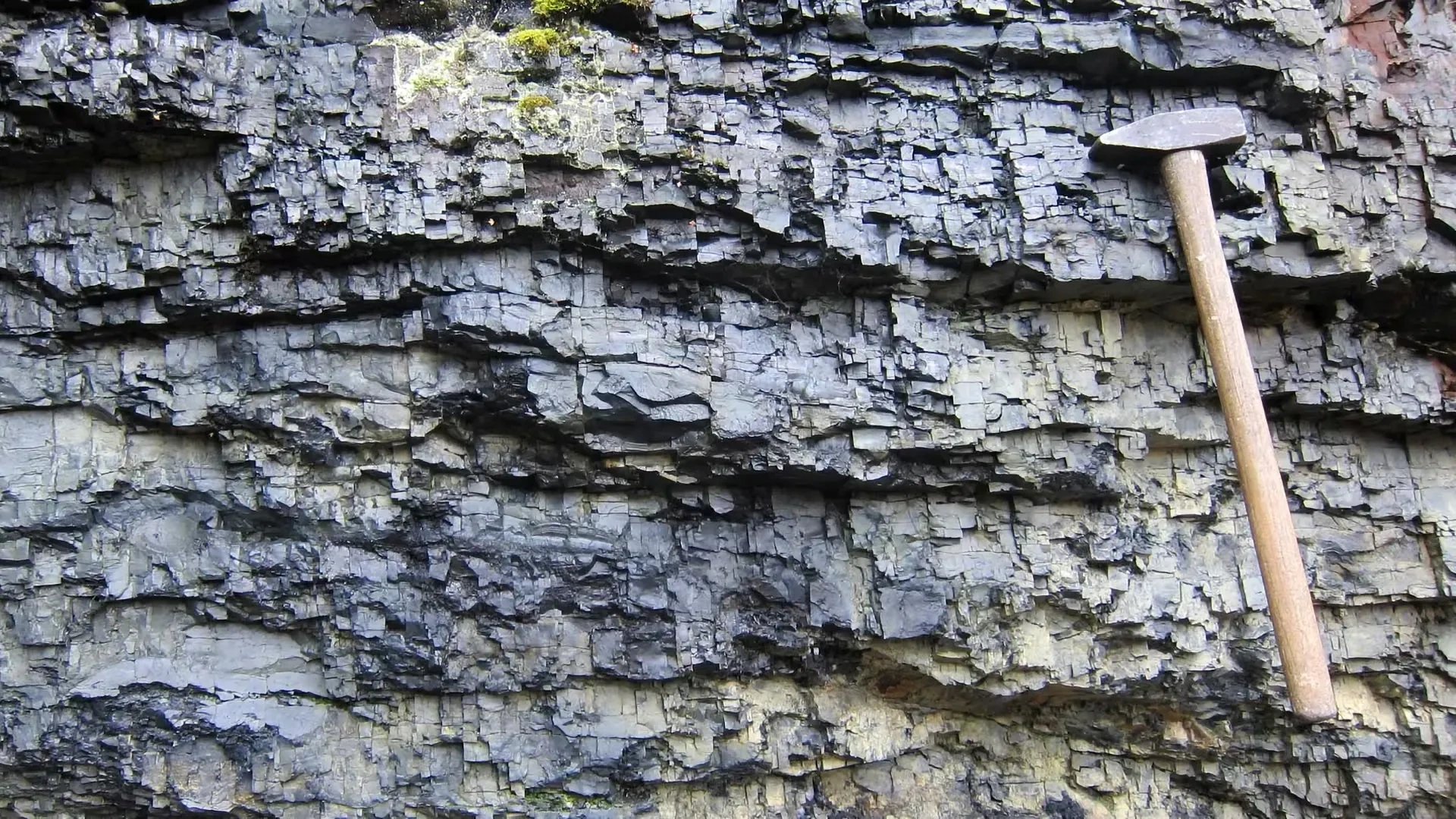
Caltech researchers report that an unusual carbon-isotope signal in 2-billion-year-old rocks from Karelia, Russia, may reflect local basin processes rather than a global carbon-cycle disruption. The study, published in Geology, analyzed gases trapped in microscopic pockets within the Zaonega Formation. The findings challenge the interpretation of the Shunga-Francevillian event as evidence of a planetwide environmental change.
Key Facts
- The Zaonega Formation in Karelia, Russia, is one of the world's oldest known fossil oil fields.
- The unusual carbon-isotope signal found in the Zaonega Formation and in rocks from Gabon is known as the Shunga-Francevillian event.
- The study was led by Nivedita Thiagarajan, a senior scientific researcher at Caltech, and published in Geology.
- The carbon-isotope signal at the Karelia site can be explained by local phenomena in a several-hundred-square-kilometer sedimentary basin.
The Shunga-Francevillian Signal
Around 2.5 to 2 billion years ago, Earth underwent the largest chemical transformation ever recorded at its surface, with oxygen beginning to accumulate in the atmosphere. As oxygen levels increased for the first time, enormous amounts of microbial material were buried beneath the seafloor, trapping carbon in rocks and leaving behind an unusual isotopic signature. For decades, many scientists have interpreted that signature as evidence that Earth's carbon cycle became dramatically unbalanced on a global scale. An unusual carbon signal found in both the Zaonega Formation and rocks from Gabon is known as the Shunga-Francevillian event. Scientists have often pointed to it as evidence that Earth experienced a major global disruption of the carbon cycle around 2 billion years ago.
Caltech Reanalysis
A new study led by Caltech researchers is raising questions about whether the Russian evidence really records a planetwide event. Nivedita Thiagarajan, a senior scientific researcher at Caltech, said the team studied gases trapped in microscopic pockets within rocks from the Zaonega Formation in Karelia, Russia. The researchers found that the carbon-isotope signal at this key site can be explained by local phenomena that occurred in a several-hundred-square-kilometer sedimentary basin rather than across the entire globe. Thiagarajan is the lead author of a recent paper published in Geology. The study describes how the researchers reconstructed the sequence of changes preserved in Karelia's rocks following the first major increase in atmospheric oxygen.
1 source
Time · lag behind first