
African leaders renew push for UN Security Council permanent seats at UNGA81
This digest was compiled by AI from multiple sources — links to the originals are below.
African leaders at the 81st UN General Assembly renewed calls for permanent representation on the UN Security Council. Nigeria's Vice President Kashim Shettima demanded at least two permanent seats for Africa with veto powers. UN Secretary-General Antonio Guterres also urged reform, saying the Council must reflect today's geopolitical realities.
Key Facts
- Nigeria's Vice President Kashim Shettima called for at least two permanent seats for Africa on the UN Security Council, with veto powers for as long as the veto exists.
- Ghana's President John Mahama said Security Council reform is 'an imperative for the legitimacy, credibility and survival of the United Nations'.
- In 2025, the Security Council adopted 44 resolutions, including 24 under Chapter VII of the UN Charter, and 18 of those 24 concerned Africa.
- The UN General Assembly launched intergovernmental negotiations on Security Council reform in 2008, but talks have continued without agreement on core questions.
- Changing the Council's permanent membership would require an amendment to the UN Charter.
Renewed Calls for Reform
UN Secretary-General Antonio Guterres used his final address to the General Assembly on Tuesday to renew his call for Security Council reform. Guterres said the Council must become more representative and better reflect today's geopolitical realities. Nigeria's Vice President Kashim Shettima, delivering President Bola Tinubu's national statement, called for at least two permanent seats for Africa, with veto powers for as long as the veto exists, as well as five non-permanent seats for the continent. Ghana's President John Mahama made a similar appeal: 'Security Council reform is not a favour to Africa; it is an imperative for the legitimacy, credibility and survival of the United Nations'.
The Stalled Reform Process
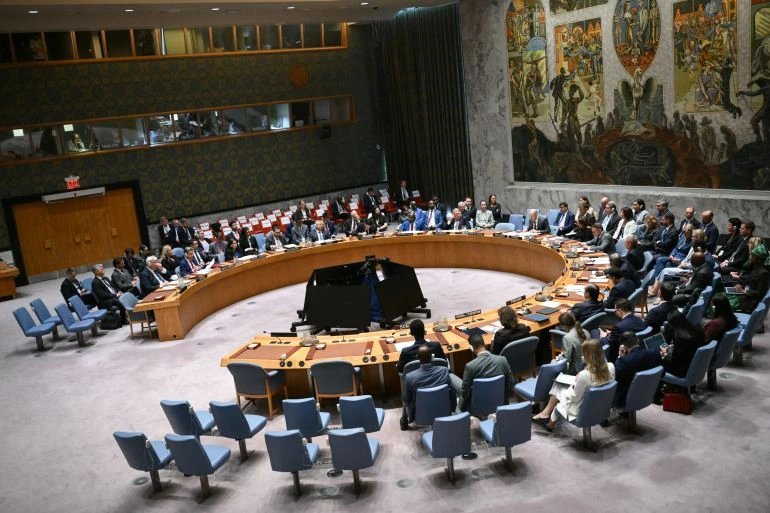
The Security Council has 15 members: five permanent members — China, France, Russia, the United Kingdom and the United States — and 10 members elected by the General Assembly for two-year terms. The five permanent members hold veto power, allowing any one of them to block a substantive Council resolution. No African country has a permanent seat, yet Africa remains central to much of the Council's work. In 2025, the Council adopted 44 resolutions, including 24 under Chapter VII of the UN Charter, which covers measures such as sanctions and authorisations for the use of force. Eighteen of those 24 Chapter VII resolutions concerned Africa.
Obstacles to Change
Professor Ibrahim Gambari, a former Nigerian foreign minister and former Nigerian permanent representative to the UN, said the status quo is not interested in change. Gambari noted that in the appointment of the Secretary-General, a candidate cannot proceed unless each of the five permanent members agrees, giving the unelected P5 a privilege they do not want to relinquish. He said Africa's absence is difficult to justify given the continent's size and the amount of Security Council business involving it. The General Assembly launched the intergovernmental negotiations process on Security Council reform in 2008, covering the Council's size, membership categories, regional representation and the veto. The talks have continued through successive General Assembly sessions without agreement on the core questions, and changing the Council's permanent membership would require an amendment to the UN Charter.
1 source
Time · lag behind first