
Pakistan PM calls Houthi threat to Mecca, Medina a 'red line' at UN
This digest was compiled by AI from multiple sources — links to the originals are below.
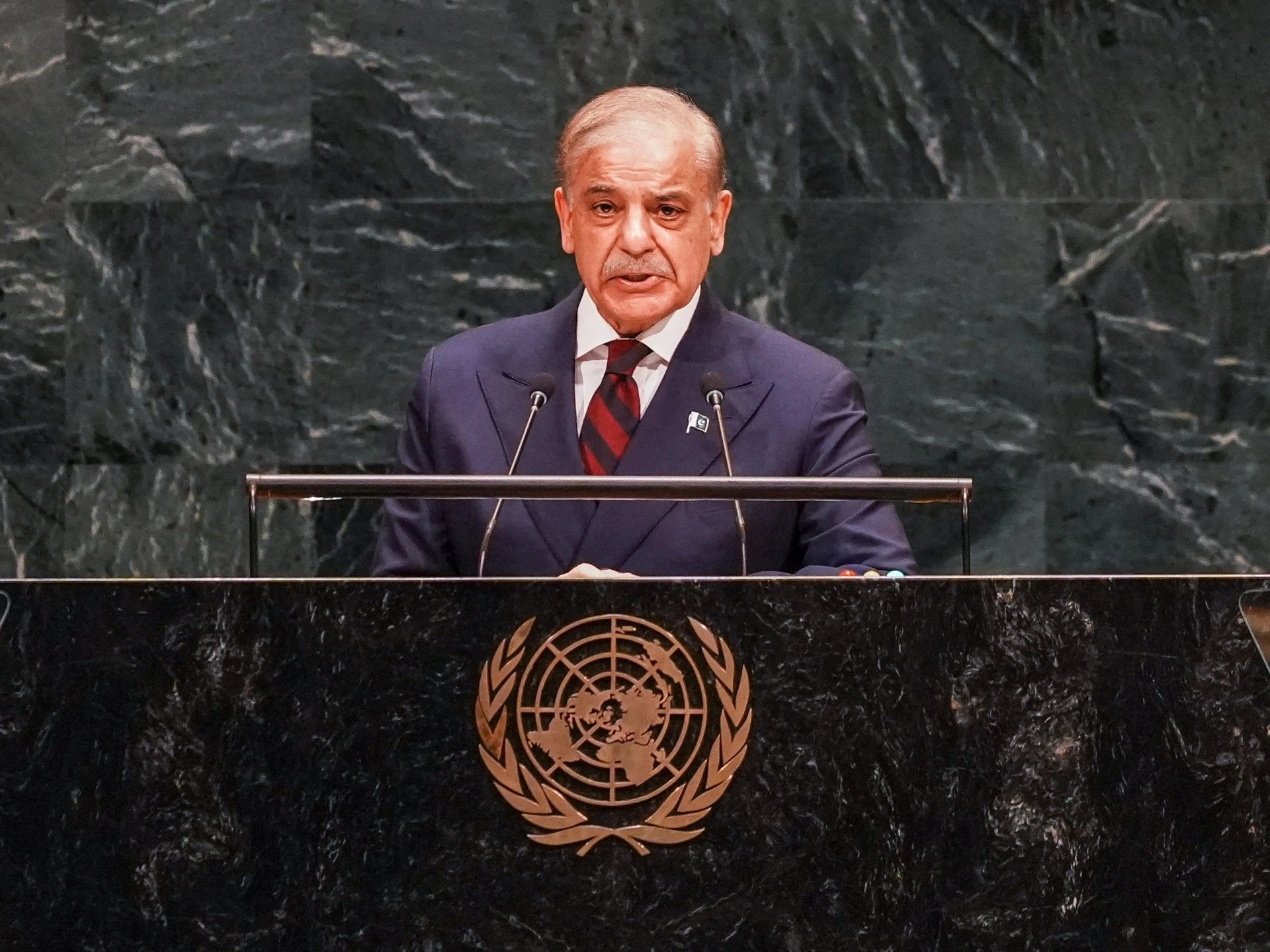
Pakistan Prime Minister Shehbaz Sharif told the UN General Assembly on Friday that any threat to Mecca and Medina is a 'red line that must never be crossed'. He condemned recent Houthi attacks on Saudi Arabia as 'deplorable'. His remarks came as military chiefs from Pakistan, Saudi Arabia and Turkey met in Riyadh to discuss the Mecca Joint Defence Agreement.
Key Facts
- Shehbaz Sharif told the UN General Assembly that any threat to Mecca and Medina is a 'red line that must never be crossed'.
- Pakistan, Saudi Arabia and Turkey signed the Mecca Joint Defence Agreement last month, which treats an attack on one member as an attack on all.
- Military chiefs from the three countries met in Riyadh on Friday to discuss intelligence sharing and military coordination.
- Turkish President Recep Tayyip Erdogan said support for Saudi Arabia could include intelligence, logistics or ammunition.
UN Address
Shehbaz Sharif denounced recent Houthi attacks as 'deplorable' in his address to the United Nations General Assembly in New York on Friday. He said an attack by the Iran-aligned Yemeni group, which Riyadh says targeted Mecca, 'outraged Muslims across the globe'. The Houthis have dismissed the accusations as a 'heinous lie'.
Mecca Pact and Military Talks
Pakistan, Saudi Arabia and Turkey signed the Mecca Joint Defence Agreement last month, stating that an attack on any member will be treated as an attack on all. Islamabad and Ankara have refrained from getting involved in Riyadh's ongoing fight with the Houthis. The military chiefs of all three countries met in Riyadh on Friday and discussed enhancing intelligence sharing and military coordination, the Pakistani military said. The chiefs reviewed the security situation and threats facing Saudi Arabia, affirmed a commitment to collective defence and pledged to turn Mecca Agreement commitments into effective cooperation. Turkish President Recep Tayyip Erdogan said in a Newsweek interview that support could include 'intelligence, logistics or ammunition, with more extensive military assistance possible depending on the scale of the threat'.
Regional Diplomacy
Sharif also referenced the US-Israeli war against Iran and Pakistan's role as a co-mediator, which culminated in the Islamabad Memorandum of Understanding signed by Washington and Tehran. The accord has since unravelled while regional countries push for a conclusive end to the war, which has caused a global energy crisis and exacerbated tensions across the Middle East. Sharif said the Strait of Hormuz and the Bab al-Mandeb waterway are 'arteries of the global economy' that should remain free and safe.
1 source
Time · lag behind first