
Houthi attacks on Saudi Arabia test Mecca Pact's untested defence framework
This digest was compiled by AI from multiple sources — links to the originals are below.
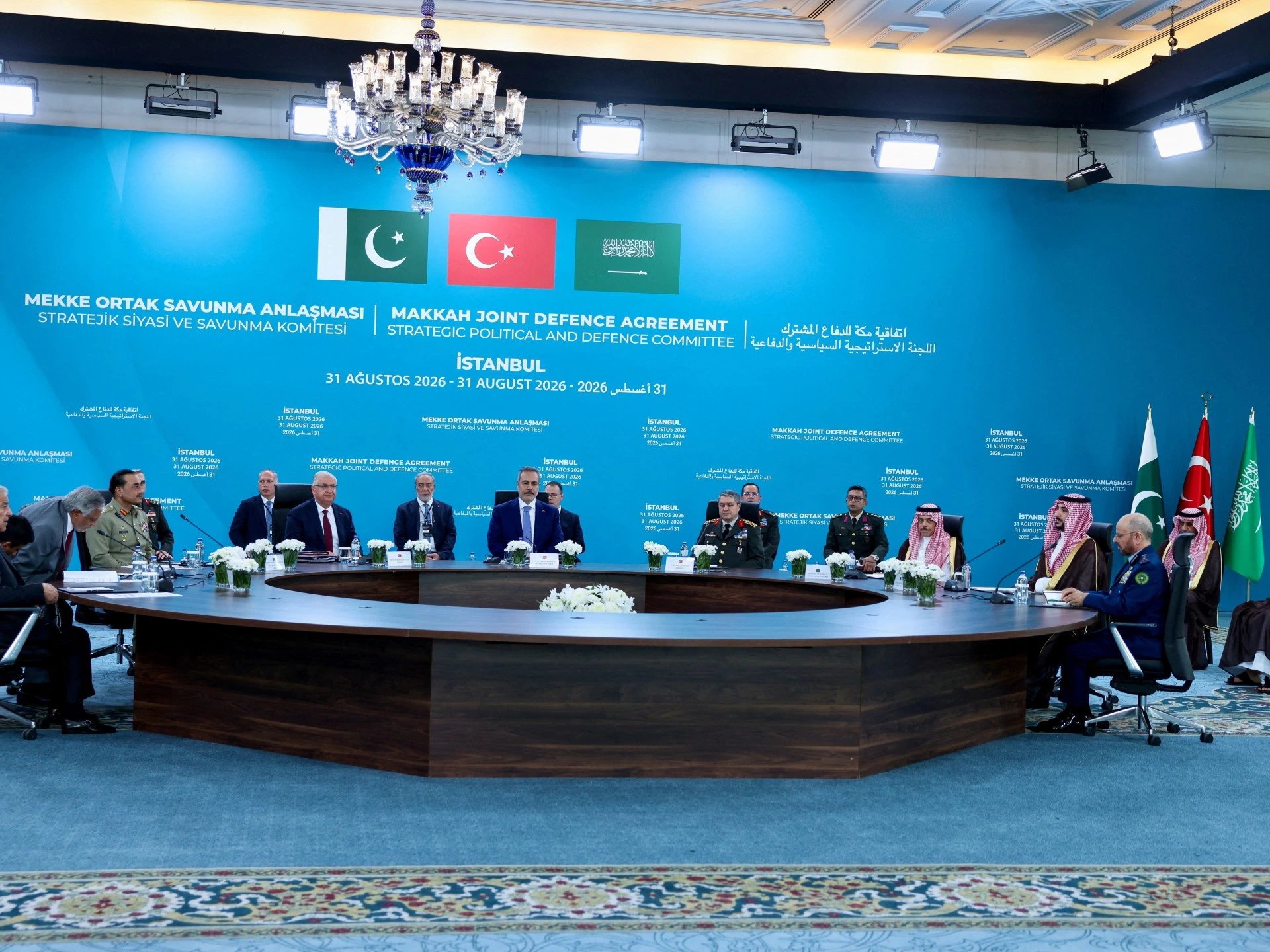
Houthi attacks on Saudi cities have wounded about 70 people and raised questions about the operationalisation of the Mecca Joint Defence Agreement between Saudi Arabia, Turkiye, and Pakistan. The pact, signed in September 2025 and expanded in August 2026, remains in a gestation period without publicly defined thresholds for military intervention. Pakistan's Defence Minister Khawaja Asif said unprovoked aggression against Saudi Arabia would make the pact operational, while Turkiye's Foreign Minister Hakan Fidan likened its mechanism to NATO's Article 4 and 5.
Key Facts
- Houthi rebels captured Mocha port and now threaten control of the Bab al-Mandeb strait.
- Houthi attacks on several Saudi cities wounded about 70 people, including women and children.
- Saudi Arabia and Pakistan signed their first mutual defence agreement in September 2025, which expanded in August 2026 to include Turkiye and became the Mecca Joint Defence Agreement.
- Pakistan's Defence Minister Khawaja Asif said unprovoked aggression against Saudi Arabia would make the Mecca Joint Defence Agreement operational.
- Turkiye's Foreign Minister Hakan Fidan said the Mecca Pact would work like NATO, requiring a member state to request and define the specific type of help needed.
Houthi Escalation
Yemen's Houthi rebels captured Mocha port and now threaten to control the main waterway of the Bab al-Mandeb strait. They have also attacked several cities in Saudi Arabia, wounding about 70 people, including women and children. The repeated attacks against Saudi energy, civil, and defence facilities, combined with the maritime blockage by Iran and its Yemeni partner the Houthis, directly raise the question of the Mecca Pact's operationalisation.
Mecca Pact Framework
In September 2025, Saudi Arabia and Pakistan signed their first mutual defence agreement, which expanded in August this year to include Turkiye and became the Mecca Joint Defence Agreement. The three countries have since established a joint secretariat, with its headquarters in Riyadh, with Pakistan taking the chairmanship for an initial three-year term. The pact remains in a gestation period and does not publicly identify the thresholds or scenarios under which a member would move to direct military intervention. Its organisational and institutional structure, including rules of engagement, mechanisms of consultation, and collective defence and deterrence, are yet to be formally developed.
Operationalisation Debate
Earlier this week, Pakistan's Defence Minister Khawaja Asif said that an unprovoked aggression against Saudi Arabia, or a spillover of the Yemen conflict into the kingdom, would make the Mecca Joint Defence Agreement operational, adding that "there should be no doubt in this." Asif, however, did not share specific details on what shape that operationalisation would take. Last month, Turkiye's Foreign Minister Hakan Fidan clarified that the Mecca Pact would work the same way as NATO: if a member state is attacked, it must actively request and define the specific type of help it needs. NATO's Article 4 allows for a member to call alliance consultations and exchange of information, while Article 5 requires mutual assistance from allies but leaves each state to decide the nature of that assistance.
1 source
Time · lag behind first