
US to establish Arctic military base at Mestersvig under new Greenland defense deal
This digest was compiled by AI from multiple sources — links to the originals are below.
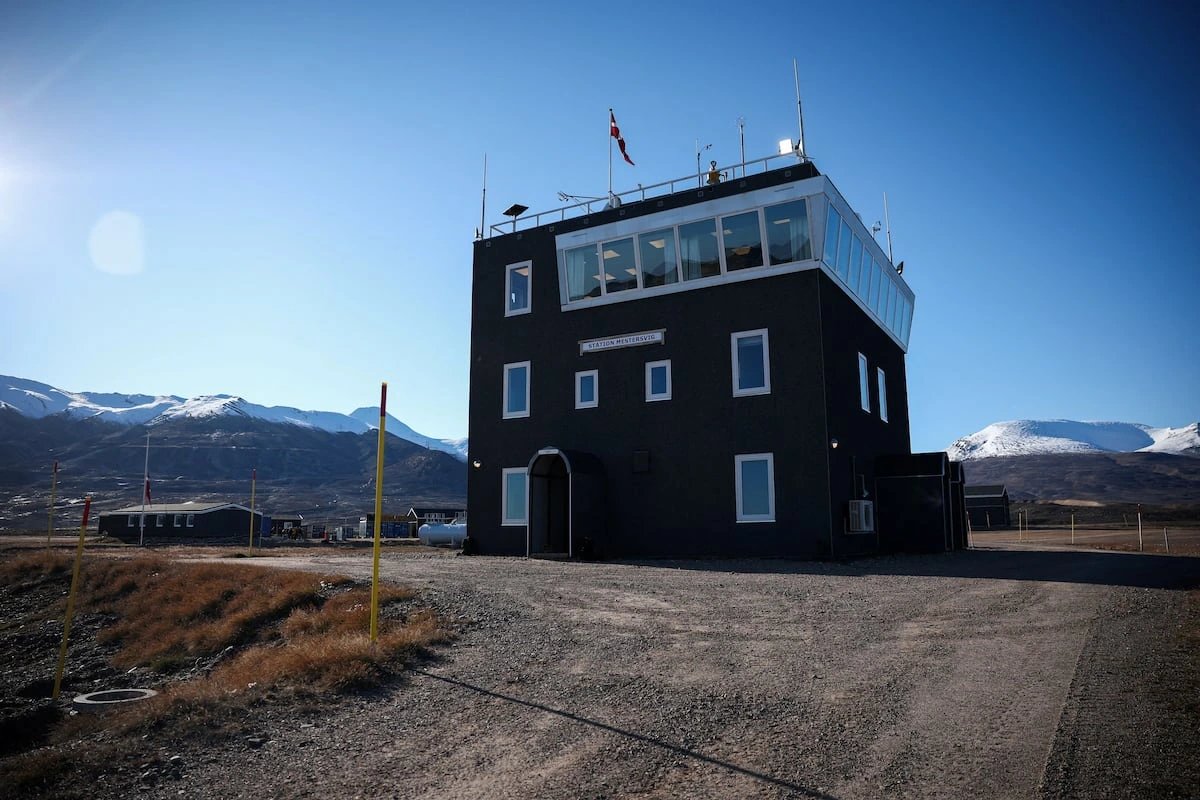
The United States will establish a military base at Mestersvig in eastern Greenland under a new defense agreement signed this week. The outpost, currently manned by three Danish soldiers, sits 149 miles from the nearest settlement and overlooks the GIUK gap, a strategic chokepoint for Russia's Northern Fleet. The expansion could mark the first U.S. military buildup on the semi-autonomous Arctic island in decades.
Key Facts
- The U.S. defense agreement allows Washington to establish bases at Mestersvig and Narsarsuaq in southern Greenland.
- Mestersvig sits 149 miles from the nearest settlement, which has a population of 330.
- Only three Danish soldiers currently maintain the facility, built in the 1960s with barracks for 150 soldiers.
- The base overlooks the GIUK gap, the stretch of ocean between Greenland, Iceland and Britain that Russia's Northern Fleet must cross to reach the Atlantic.
- An EU-backed project aims to mine molybdenum 12 miles from Mestersvig, and a Texas oil company plans to drill this winter at an untested basin just south of the outpost.
Strategic Location
Mestersvig sits at the edge of an uninhabited national park larger than Germany and France combined. The outpost oversees the GIUK gap, the stretch of ocean between Greenland, Iceland and Britain that Russia's Northern Fleet must cross to reach the Atlantic. For NATO, controlling this chokepoint is critical to containing Russian naval power. The 1.1-mile airstrip can accommodate military transport planes and collects up to 5 meters of snow a year.
Local Reaction
Local member of parliament Justus Hansen welcomed the expansion, saying, "In east Greenland, we really need that new money." Robert Price, CEO of Greenland Energy, said any infrastructural improvements in Greenland would be very welcome. Anders Ibsen, a former officer with Denmark's Sirius dog sled patrol, described the conditions as "as remote, as cold, and as extreme as you can find in the world."
1 source
Time · lag behind first