
NUS physicists unveil lutetium clock accurate to 260 billion years
This digest was compiled by AI from multiple sources — links to the originals are below.
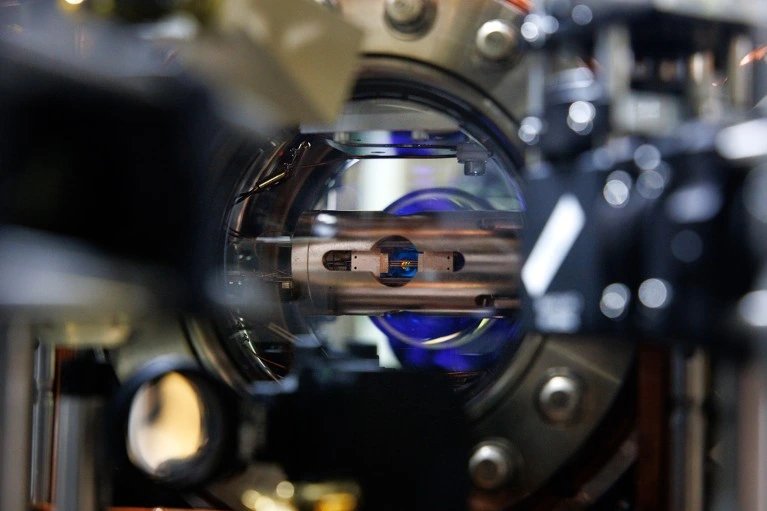
Physicists at the National University of Singapore have unveiled the world's most accurate clock, based on the rare-earth metal lutetium. The optical atomic clock is four times more accurate than the previous best, based on calcium ions, and would take more than 260 billion years to lose a second. The achievement, published in Nature on 23 September, is the result of more than 10 years of work.
Key Facts
- The lutetium clock would take more than 260 billion years to lose a second.
- The device is four times more accurate than the previous best clock, which was based on calcium ions.
- The achievement was published in Nature on 23 September.
- The team compared two lutetium clocks and their ticks matched to the 19th digit, the most precise clock comparison ever performed.
- The NUS team says it is the only group in the world making clocks from lutetium.
Clock Design and Operation
The clock works by tapping into a natural and fixed property of lutetium ions: the frequency of light that makes an electron transition into a higher-energy, excited state. By continuously observing a single ion, researchers locked a laser light to the exact frequency that triggers the transition, then used the laser's oscillations as ticks to mark time. Compared with some atoms often used to make atomic clocks, such as ytterbium and strontium, lutetium is much less sensitive to fluctuations in temperature and magnetic fields. NUS physicist Kyle Arnold says the element's properties are well suited to the job.
Verification and Future Plans
The researchers not only calculated their estimate of the clock's accuracy but verified it by comparing two lutetium clocks with each other. The two clocks' ticks matched to the 19th digit, which the team says is the most precise clock comparison ever performed. David Leibrandt, a physicist at the University of California, Los Angeles, who works on ultra-precise clocks, calls the accuracy impressive. The researchers behind the lutetium clock say it is robust enough that they hope to be able to miniaturize it and eventually take it out of the lab. Murray Barrett, the NUS physicist who led the team, says the achievement is the result of more than 10 years of work.
1 source
Time · lag behind first