
South Korea's Lee limits Iran deployment to protecting ships, citizens
This digest was compiled by AI from multiple sources — links to the originals are below.
South Korean President Lee Jae-myung said on September 18 that Seoul will not deploy troops that intervene in the U.S.-Iran war, but will take minimum measures to protect commercial vessels, oil shipping routes, and citizens. The announcement follows U.S. President Donald Trump's public pressure for South Korea to join the conflict and his scaling down of joint military exercises. Seoul has sent a government inspection team to the UAE to assess conditions for a potential deployment.
Key Facts
- President Lee Jae-myung said on September 18 that South Korea will not deploy troops that intervene in the U.S.-Iran war.
- Lee added that Seoul should take minimum measures to protect commercial vessels, crude oil shipping routes, and citizens' lives and safety.
- U.S. President Donald Trump announced the scaling down of annual South Korea-U.S. joint military exercises after Seoul refused to join the Iran conflict.
- A South Korean government inspection team was sent to the United Arab Emirates to assess security and operational conditions for a potential deployment.
- Between 2003 and 2008, approximately 4,000 South Korean soldiers were deployed to Iraq for non-combat missions.
Lee's Deployment Limits
President Lee Jae-myung drew a clear line on the scope of South Korea's military involvement in a press conference on September 18. He stated that 'there will be no deployment that involves or intervenes in the war,' but added that South Korea should undertake 'minimum measures to protect its commercial vessels, crude oil shipping routes, and the lives and safety of its citizens, as other countries are doing.' The announcement came after U.S. President Donald Trump publicly expressed dissatisfaction with South Korea's refusal to participate in the U.S. war with Iran. Trump also announced the scaling down of annual South Korea-U.S. joint military exercises and expressed a strong affinity with North Korean leader Kim Jong Un in the same post.
Pressure from Washington
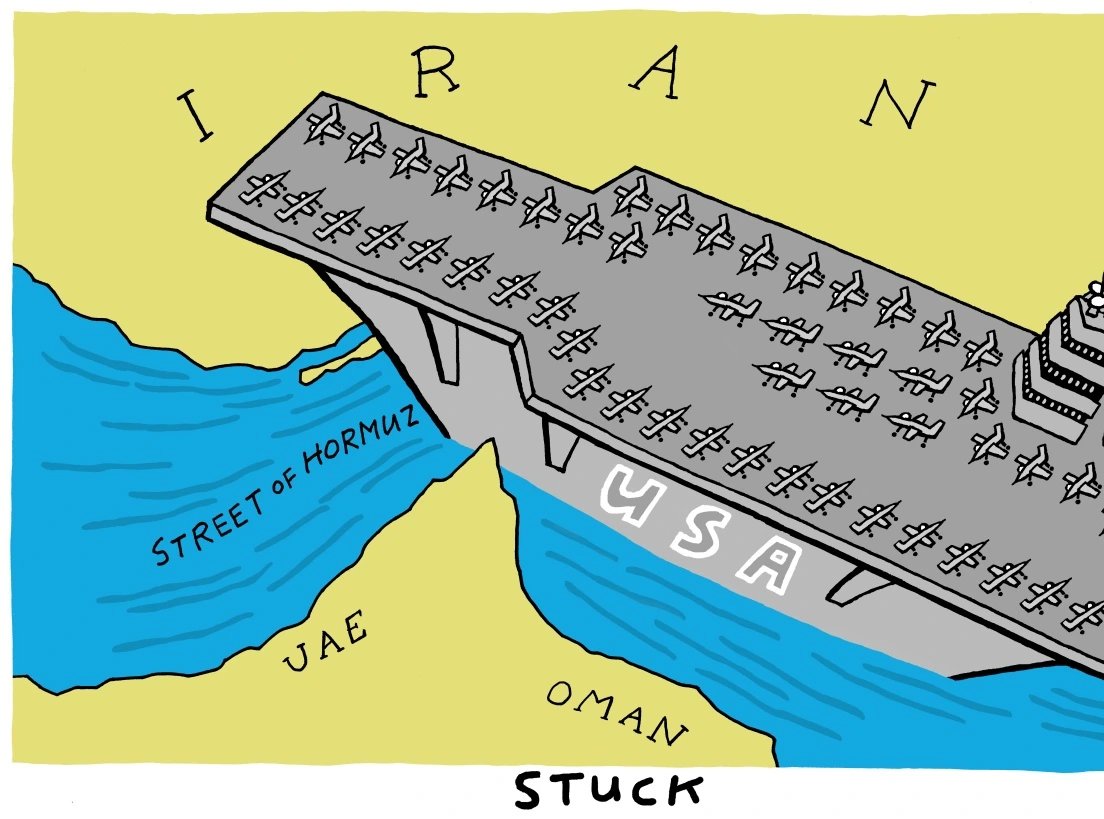
Trump has publicly called for Seoul's participation in the U.S. war with Iran since March and posted on Truth Social that South Korea said 'No thanks!' to joining the denuclearization of Iran. The South Korean government is reportedly considering various military and non-military options, including the deployment of military assets to Hormuz. A government inspection team was sent to the United Arab Emirates to assess security and operational conditions for a potential deployment.
Iraq War Precedent
Seoul previously sent troops to support U.S. military operations in the Middle East, including engineering and medical units to Iraq in 2003. Following a U.S. request and National Assembly approval, then-President Roh Moo-hyun sent additional troops, in part to reinforce the South Korea-U.S. alliance amid the North Korean nuclear issue. Between 2003 and 2008, approximately 4,000 South Korean soldiers were deployed to Iraq for security, reconstruction, medical support, and other non-combat missions despite strong domestic opposition. Currently, Lee has far less room than Roh did in 2003 to use overseas troop deployment as a means of strengthening cooperation with Washington.
2 sources
Time · lag behind first