
Trump order to place political appointees over NIH grants alarms scientists
This digest was compiled by AI from multiple sources — links to the originals are below.
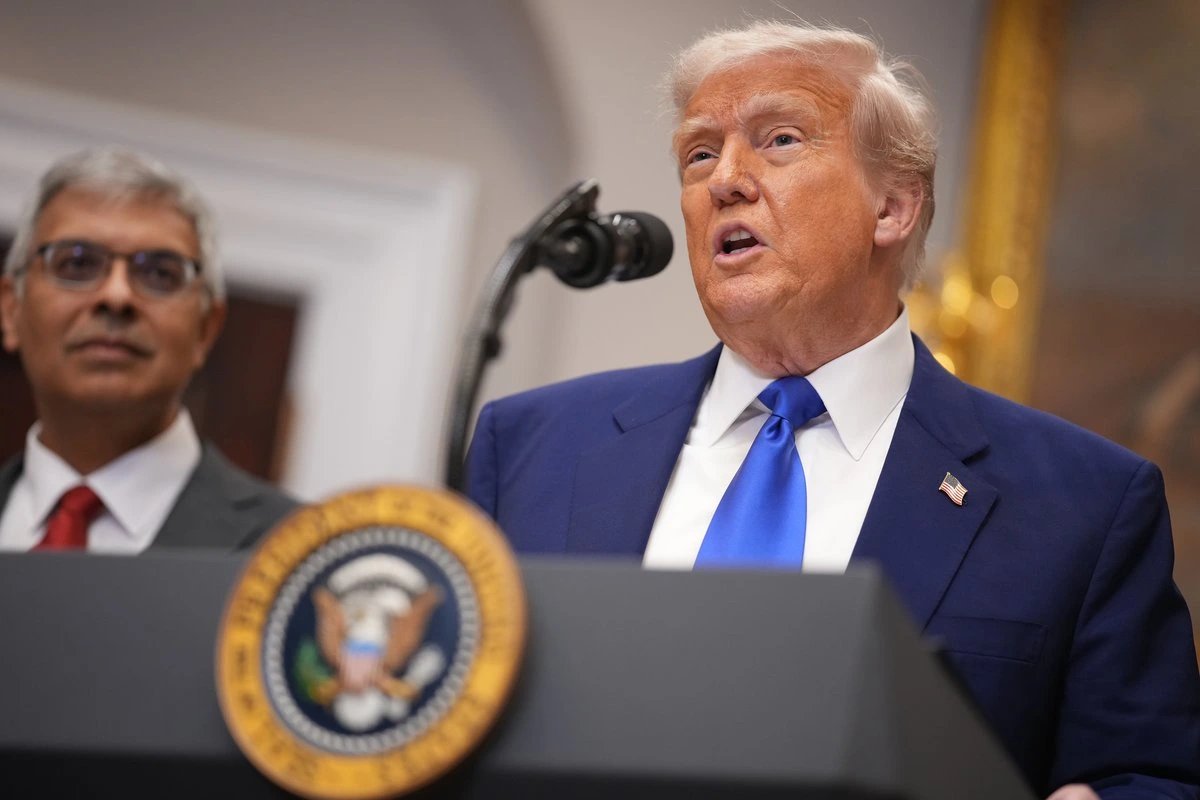
President Donald Trump is reportedly planning an executive order to create a committee that would oversee and potentially veto scientific grants issued by the National Institutes of Health. Scientists and advocates warn the move would undermine the NIH's independent peer-review process and U.S. leadership in biomedical research. The order has not yet been released, but reports by the New York Times and Politico have drawn sharp criticism from the scientific community.
Key Facts
- The reported executive order would create a committee to sign off on grants issued by the National Institutes of Health, which has a budget of more than $40 billion.
- The committee would reportedly include OMB director Russell Vought and NIH head Jay Bhattacharya.
- Earlier this month Congress temporarily blocked similar regulations proposed by the Office of Budget Management from going into effect.
- Jennifer Jones, director of the Center for Science and Democracy at the Union of Concerned Scientists, said the plans would "upend the way we do science in this country."
Proposed Oversight Committee
The planned executive order was reported by the New York Times and Politico and has yet to be released. Under the reported order, an appointed committee would sign off on grants issued by the U.S. National Institutes of Health. The committee would reportedly include OMB director and Project 2025 proponent Russell Vought and NIH head Jay Bhattacharya. The Washington Post first reported on discussions among Trump officials about such a panel.
Scientific Community Reaction
Jennifer Jones, director of the Center for Science and Democracy at the Union of Concerned Scientists, said scientific grants should be judged by scientific expertise, not political ideology. If finalized, the reported plans would "upend the way we do science in this country," Jones said. Arthur Caplan, an emeritus professor at the New York University Grossman School of Medicine, called the idea "very, very dangerous and bad." Caplan, who previously served on NIH advisory committees, said he does not think peer review at the NIH is broken.
Peer Review Under Threat
Historically, the NIH has followed a "gold standard" practice of independent peer review for federal grants, according to Caplan. The process requires researchers to submit a lengthy proposal and go through multiple rounds of screening and review by independent experts. The NIH funds research on cancer, Alzheimer's disease, heart disease, and more, which Jones described as "the kind of biomedical research that touches everybody's lives."
1 source
Time · lag behind first