
Radio waves from Beta Pictoris b hint at first exoplanet aurora
This digest was compiled by AI from multiple sources — links to the originals are below.
Astronomers detected radio waves from exoplanet Beta Pictoris b using the MeerKAT telescope in South Africa. The signal, traced to the planet itself, suggests the first evidence of an aurora outside the solar system. The findings were submitted to arXiv.org on September 15.
Key Facts
- Beta Pictoris b is a gas giant about 63 light-years from Earth with a mass 10 times that of Jupiter.
- The planet's magnetic field exceeds 1,000 gauss, compared to Earth's 0.5 gauss.
- The radio waves are circularly polarized, matching the signature of auroral emissions.
- The study was submitted to arXiv.org on September 15 and has not yet undergone peer review.
Detection Method
Researchers used the MeerKAT radio telescope in South Africa to observe Beta Pictoris b. They traced the radio waves to the exoplanet itself, ruling out the host star as the source. Yvette Cendes of the University of Oregon led the study. Previous efforts to detect exoplanet radio waves were hindered by stellar interference.
Aurora and Magnetic Field
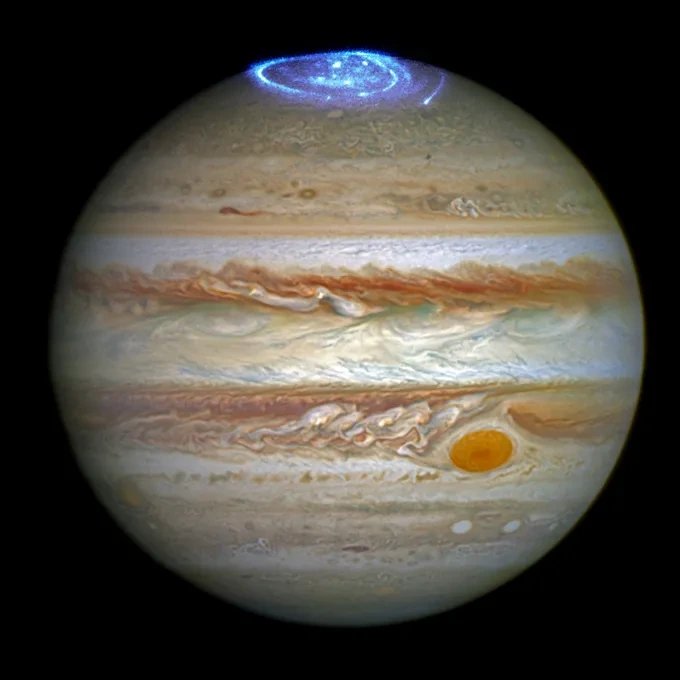
Auroras on Earth and other solar system planets are caused by charged particles spiraling in magnetic fields. The observed radio waves are circularly polarized, a hallmark of auroral emission. The signal implies a magnetic field of more than 1,000 gauss on Beta Pictoris b. Earth's magnetic field is about 0.5 gauss, making the exoplanet's field exceptionally strong. The planet's mass of 10 Jupiters places it near brown dwarf territory, where such strong fields are known.
1 source
Time · lag behind first