
Kazakh sellers risk losing Russian market over labeling gap
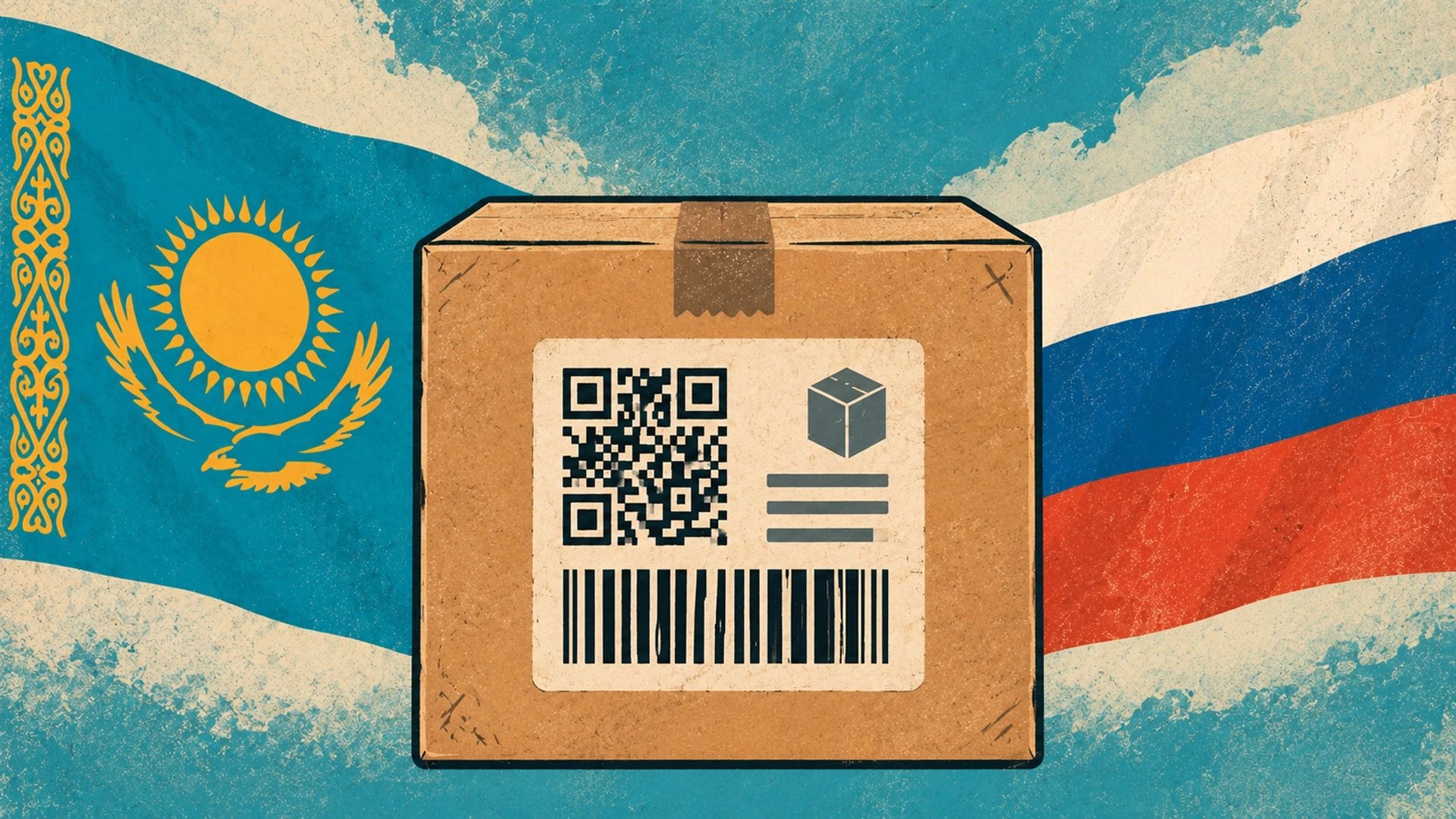
This digest was compiled by AI from multiple sources — links to the originals are below.
Kazakh sellers on Russian marketplaces face halted shipments after Russia's mandatory labeling rules took effect in July 2026, while Kazakhstan's own system remains incomplete. Talli Distribution, a cosmetics seller, says 90% of its revenue came from Russia and it has effectively stopped shipping labeled goods. The trade ministry is working on 23 product groups, but direct ordering of Russian codes through Tañba is available only for light industry goods.
Key Facts
- Talli Distribution says about 90% of its revenue came from the Russian market before the new labeling requirements took effect in July 2026.
- Kazakhstan exported $8.25 billion worth of goods to Russia in 2025, down 13.6% from $9.55 billion in 2024.
- Exports by Kazakh sellers through Wildberries grew 62% in 2025, with Russian buyer demand up 69%.
- The Ministry of Trade is working on 23 product groups, but direct ordering of Russian codes through Tañba is implemented only for light industry goods as of September 2026.
- Russian buyers placed 50% more orders with Kazakh sellers on Ozon in 2025.
Labeling Gap
Russia has already introduced mandatory labeling for several product categories, while Kazakhstan is only preparing to implement its own labeling system. The Ministry of Trade reports work on 23 product groups, but as of September 2026 the mechanism for direct ordering of Russian codes through Tañba is available only for light industry goods. Testing is underway for confectionery products, and toys and perfumes are planned to be connected next. Two universal agreements between national operators on mutual recognition and traceability of codes are being coordinated separately.
Business Impact
Talli Distribution, a cosmetics seller, says about 90% of its revenue came from the Russian market before the additional requirements appeared in July 2026. The company has been forced to use a Russian legal entity to obtain the necessary codes, which increases costs. Elfina, a toy distributor, says that among the sellers it knows, some companies have up to 90% of sales coming from Russian buyers. For these businesses, the key question is whether a Kazakh company can obtain the destination country's code and continue legally selling in Russia before national labeling is introduced.
Trade Dynamics
In 2025, Kazakhstan exported $8.25 billion worth of goods to Russia, a 13.6% decline from $9.55 billion a year earlier. Total trade turnover between the two countries fell 1.2% from $28.1 billion to $27.8 billion, while imports from Russia to Kazakhstan rose 5.1% from $18.6 billion to $19.5 billion. Traditional trade statistics do not capture the fast-growing segment of Kazakh companies selling through marketplaces. According to Wildberries data collected by the Ministry of Trade, exports by Kazakh sellers through the platform grew 62% in 2025, and demand from Russian buyers increased 69%. Exports of sporting goods rose 99%, food products 86%, health goods 82%, household appliances 80%, accessories 74%, and cosmetics and perfumes 71%. On Ozon, Russian buyers placed 50% more orders with Kazakh sellers in 2025.
1 source
Time · lag behind first