
Trump-Xi Summit Tests Four Fault Lines Amid Low Expectations
This digest was compiled by AI from multiple sources — links to the originals are below.
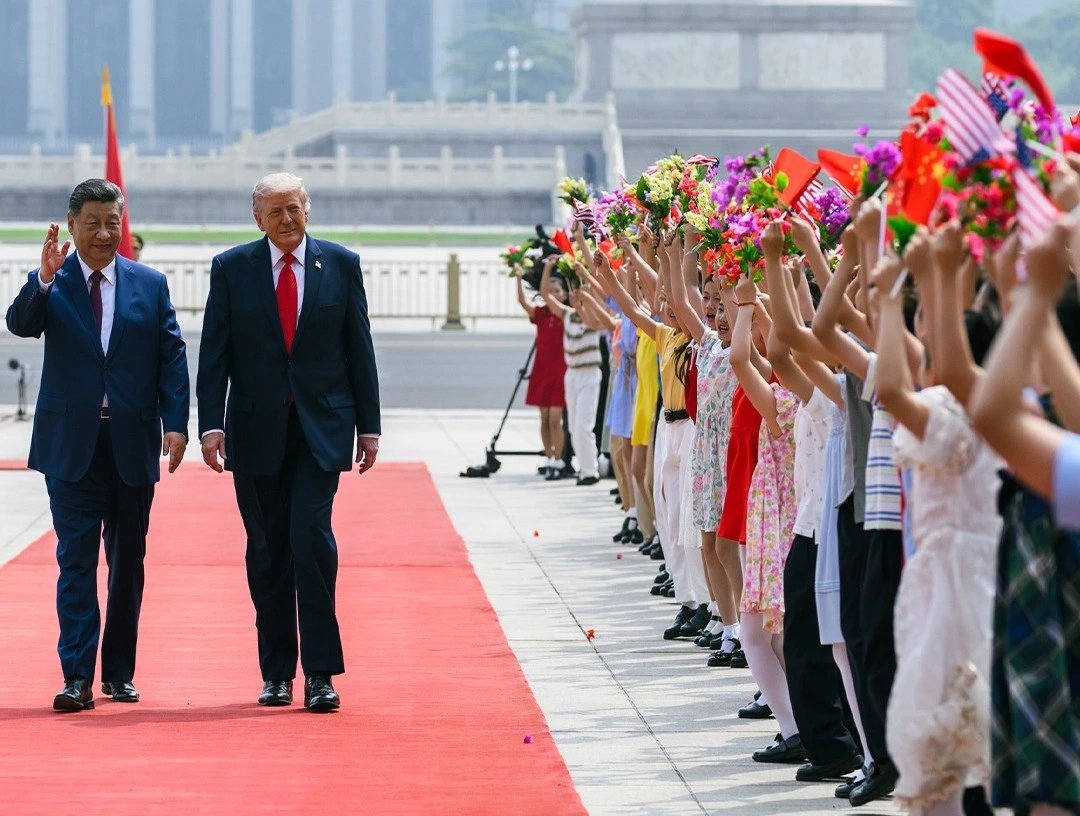
U.S. President Donald Trump and Chinese President Xi Jinping are set to meet at the White House on September 24, pending Beijing's confirmation. The summit follows their May meeting in Beijing and comes amid U.S. midterm elections and the Iran-U.S. war. Four fault lines—tariffs, Taiwan arms sales, China-Russia alignment, and global perceptions—will test the relationship.
Key Facts
- The White House has announced September 24 as the date for the Trump-Xi summit, but Beijing has not officially confirmed the meeting.
- The summit would be Xi Jinping's first visit to Washington since meeting Barack Obama in 2016.
- Brent crude is trading around $100 per barrel amid the Iran-U.S. war.
- Washington and Beijing agreed to a one-year tariff truce at the APEC summit in Busan on October 30, 2025, with the U.S. reducing fentanyl-related tariffs to 10 percent and suspending a 10 percent reciprocal tariff.
- Beijing committed to buy 25 million tons of U.S. soybeans annually through 2028 and deferred rare earth export controls.
Summit Timing and Domestic Pressures
The meeting is scheduled for September 24 at the White House, but China has yet to confirm attendance. The visit would occur roughly 40 days before U.S. midterm elections, a timing Pew Research describes as unusual given that many Americans view Xi unfavorably. Xi last visited Washington in 2016 for talks with then-President Barack Obama focused on cyberespionage and commercial hacking. The summit follows Trump's May visit to Beijing, making it the second leaders' meeting this year.
International Friction Points
The Iran-U.S. war has pushed Brent crude to around $100 per barrel, adding economic pressure to the summit agenda. Xi and Russian President Vladimir Putin reaffirmed their strategic partnership and signed a joint statement shortly after the last Trump-Xi summit. Beijing is underwriting Moscow's war machine in Ukraine even as Washington prepares to welcome Xi. Pew Research surveys show Beijing is viewed favorably in more countries than Washington.
Tariff Truce and Taiwan Arms
At the APEC summit in Busan on October 30, 2025, the U.S. and China agreed to a one-year trade war truce. Washington reduced fentanyl-related tariffs on Chinese goods to 10 percent and suspended a 10 percent reciprocal tariff. Beijing committed to purchasing 25 million tons of U.S. soybeans annually through 2028 and deferred rare earth export controls. Some reports suggest Beijing may cancel the summit if Washington approves a $14 billion arms sale to Taiwan.
1 source
Time · lag behind first