
JPMorgan says no baseline view for oil as Iran war enters seventh month
This digest was compiled by AI from multiple sources — links to the originals are below.
JPMorgan strategists led by Natasha Kaneva told clients Thursday they no longer have a baseline view for energy markets, six months into the Iran war. The Strait of Hormuz remains effectively closed to through traffic, with daily crossings in the low double digits versus a pre-war average above 120. Oil prices are back above $100 per barrel, US gasoline holds above $4 per gallon, and diesel has hit all-time highs above $6 per gallon.
Key Facts
- JPMorgan strategists led by Natasha Kaneva wrote to clients on Thursday that for the first time since the start of the Iran conflict they do not have a baseline view.
- Daily crossings of the Strait of Hormuz have remained in the low double digits, far below the pre-war average of more than 120 daily transits.
- Oil prices are trading back over $100 per barrel, US gasoline is holding above $4 per gallon, and diesel prices have risen to all-time highs above $6 per gallon.
- The 10-year Treasury yield has surpassed 5%.
- Tehran-backed militia groups in Iraq struck Saudi Arabia's East-West pipeline, shuttering operations indefinitely on what had become the primary reroute for oil trapped in the Persian Gulf.
Market Disruption
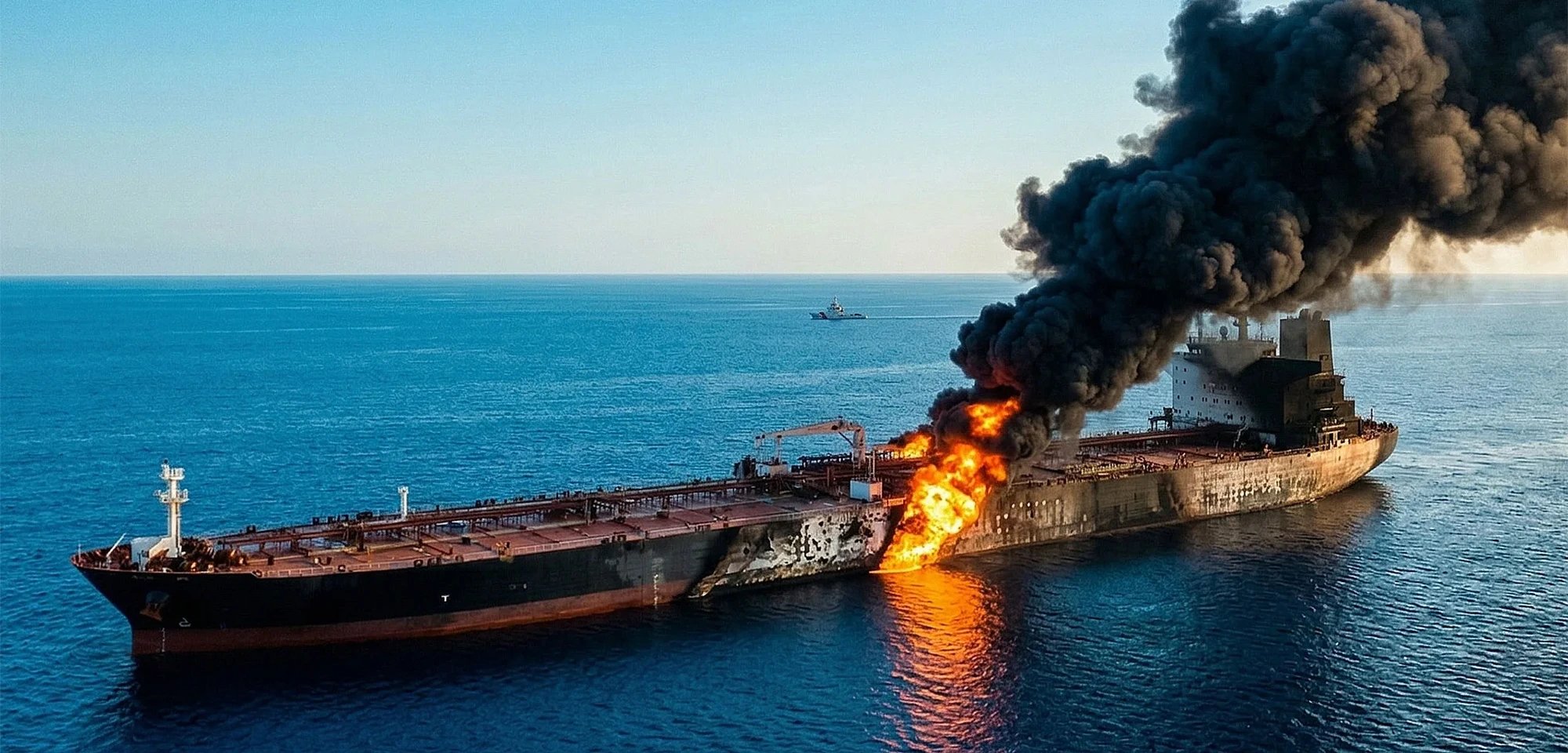
The Strait of Hormuz, the world's most critical chokepoint for global energy flows, remains essentially closed to through traffic as Tehran's Revolutionary Guard Corps continues to threaten vessels in the region. Daily crossings of the waterway have remained in the low double digits, far below the average of more than 120 daily transits before the outbreak of war. To the west, Yemen's Houthi militants have intensified a pressure campaign against Saudi Arabia, capturing a key port city in Yemen and taking effective control of the Red Sea's southeastern coastline. Tehran-backed militia groups in Iraq have struck the Saudi kingdom's East-West pipeline, shuttering operations indefinitely on what had become the primary reroute for oil trapped in the Persian Gulf.
Price Impact
Oil prices are trading back over $100 per barrel, with futures on both international benchmark Brent crude and US benchmark WTI holding right at $100 per barrel on Thursday. US gasoline is holding well above $4 per gallon, and diesel prices have risen to all-time highs above $6 per gallon. The 10-year Treasury yield has surpassed 5%. Futures were pushed lower by projections that Saudi Arabia could quickly resume some, but not all, of the East-West pipeline's 7 million barrels per day capacity.
Analyst Outlook
JPMorgan strategists led by Natasha Kaneva wrote to clients on Thursday that for the first time since the start of the Iran conflict, they do not have a baseline view. They wrote that they assumed there were economic red lines the US administration would be unwilling to cross, but six months later many of those lines have been crossed, yet the exit strategy is less clear, not more. The strategists argue that oil markets are moving quickly toward a position where the assumption that the Middle East disruptions are temporary is becoming increasingly difficult to sustain. They wrote that where things go from here is less about the duration of the conflict and more about how the oil market finds, or fails to find, ways to continue clearing sales.
1 source
Time · lag behind first