
Stanford researchers implant human brain organoids into mice to study brain disorders
This digest was compiled by AI from multiple sources — links to the originals are below.
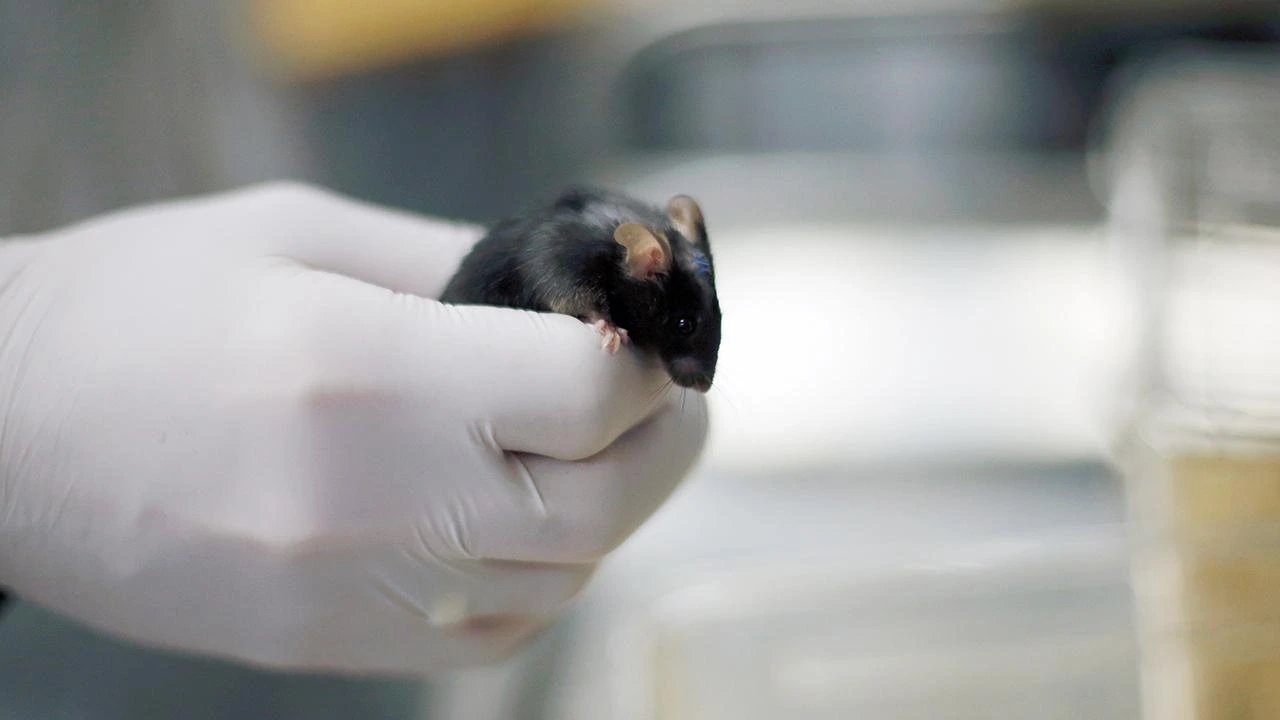
Stanford University researchers have implanted human brain organoids into mice, creating a hybrid model to study brain disorders. The team, led by Professor Sergiu Pașca, published the study in Nature and said the mice are not 'human-thinking mice'. The approach aims to better understand conditions like epilepsy, autism, and cerebral palsy that lack effective treatments.
Key Facts
- The study was published in the journal Nature and conducted under independent ethical oversight.
- Researchers genetically engineered mice to lack most of their cerebral cortex, then implanted human brain organoids derived from reprogrammed skin cells.
- The implanted organoids integrated with the mouse brain and spinal cord, allowing researchers to observe connections between human and mouse neurons.
- Lead researcher Professor Sergiu Pașca stated that psychiatry has one of the lowest success rates for clinical trials, with drugs that work in animal models often failing in humans.
- The team believes the model could be transformative for studying epilepsy, autism, and cerebral palsy.
The Hybrid Model
Stanford University researchers genetically engineered mice to develop almost none of their cerebral cortex, the brain's outer layer responsible for higher-level thinking, memory, and senses. They then reprogrammed human skin cells into brain-like tissue structures called organoids, which are not whole brains but interconnected living cell clusters. When implanted into the mouse brain, the organoid cells divided and organized within the animal's existing brain circuitry, connecting with the rest of the brain and spinal cord. Scans of the implanted mice showed connections between human brain cells and the remaining mouse brain.
Research Motivation
The goal is to better understand the biology of brain disorders that currently lack effective treatments. Some conditions cannot be studied in mice because rodents do not develop these disorders. Professor Sergiu Pașca noted that psychiatry has one of the lowest success rates for clinical trials, and drugs that work well in animal models often fail dramatically in humans. Pașca said the new model captures aspects of human brain function that were previously impossible to study.
Ethical Oversight
The researchers stated that the study was conducted with independent ethical oversight. They emphasized that the mice are not 'human-thinking mice', despite the hybrid nature of their brains. The team believes the approach could be transformative for complex conditions including epilepsy, autism, and cerebral palsy.
2 sources
Time · lag behind first