
NASA orbiter finds 222-meter crater on Moon from 2024 impact
This digest was compiled by AI from multiple sources — links to the originals are below.
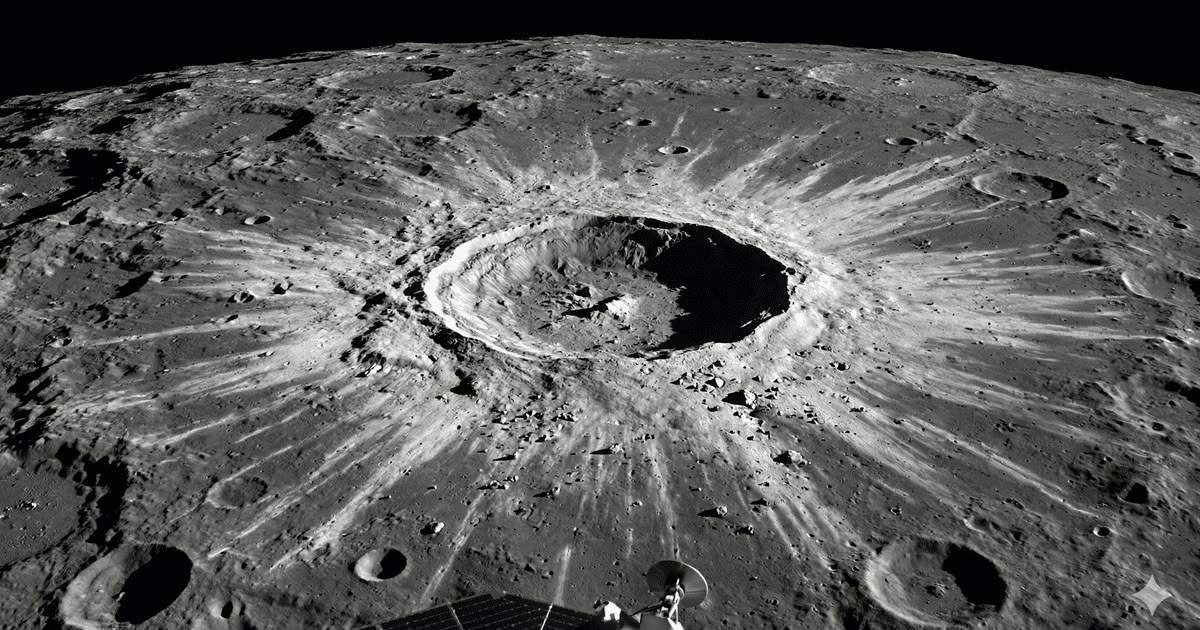
NASA's Lunar Reconnaissance Orbiter identified a new crater on the Moon formed by an asteroid or comet fragment impact in 2024. The crater measures about 222 meters in diameter and up to 43 meters deep, making it the largest modern impact crater found in the Solar System. The discovery was announced on September 17, 2026, after images from April–May 2024 were analyzed.
Key Facts
- The crater has a diameter of about 222 meters and a depth of up to 43 meters.
- The impact occurred in 2024, but the first images were only released in August 2025.
- The crater is named after Thomas McGetchin, former director of the Lunar and Planetary Institute in Houston.
- Craters of this size are estimated to occur roughly once every 130–132 years.
- The Moon has about 5,000 craters with diameters from 1 to 20 km and about 1 million structures from 10 m to 1 km.
Crater Discovery
NASA's Lunar Reconnaissance Orbiter recorded changes on the lunar surface between April and May 2024. The impact was not detected in real time by telescopes, and the first images appeared only in August 2025. In autumn 2025, specialists compared images from the ultra-wide-angle camera and noticed a previously absent structure with a diameter of 222 meters. Additional images taken by the LRO narrow-angle camera allowed a more detailed study of the object's geological structure.
Crater Characteristics
The crater is about 222 meters in diameter and up to 43 meters deep. It is three times larger than the previous crater discovered ten years ago. According to Science Advances, the crater formed in spring 2024 and became the largest modern impact crater found in the Solar System. The crater is named after Thomas McGetchin, former director of the Lunar and Planetary Institute in Houston.
Impact Frequency
Researchers estimate that craters of this size occur approximately once every 130 years. According to modern estimates, an event of this scale happens on average about once every 132 years. The lunar surface is constantly subjected to impacts from space objects. The Moon has about 5,000 craters with diameters from 1 to 20 km and about 1 million structures from 10 m to 1 km. The number of even smaller craters with diameters less than 10 m is estimated at about 1 billion.
2 sources
Time · lag behind first