
Paradromics brain implant lets 68-year-old woman speak in real time
This digest was compiled by AI from multiple sources — links to the originals are below.
Neurotechnology startup Paradromics said its wireless brain implant enabled a 68-year-old woman with severe speech impairment to hold real-time conversations through a computer-generated voice. The patient, the first in the company's clinical trial, communicated spontaneously, including during phone calls with her grandchildren. The device translated her intended words from brain signals without requiring a wired connection.
Key Facts
- Paradromics' Connexus brain-computer interface has more than 400 electrodes and was implanted at University of Michigan Health in June.
- The patient has primary lateral sclerosis, a disease that damages nerve cells controlling movement for speaking, swallowing, and walking.
- Paradromics plans to enroll 10 patients in a nationwide clinical trial including people with stroke and amyotrophic lateral sclerosis.
- The system worked when the patient tried to speak and also when she only imagined speaking without moving her speech muscles.
The Patient
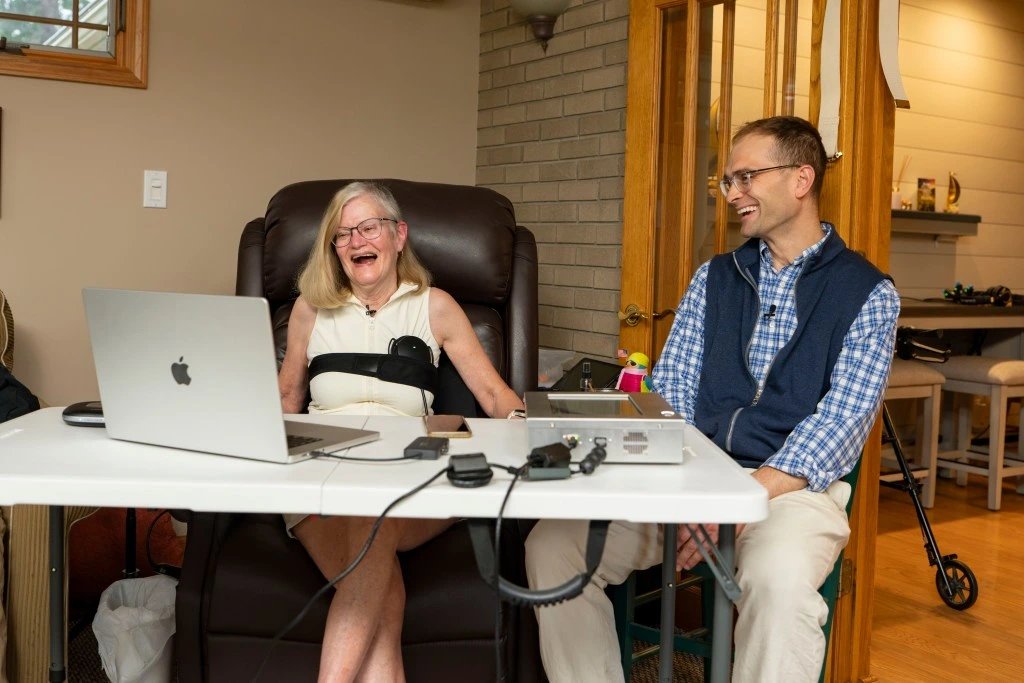
The 68-year-old unnamed Michigan patient has lost most of her ability to speak due to primary lateral sclerosis. She can still move some speech muscles, but most people cannot understand her words clearly, according to Dr. William Marks, Paradromics' chief clinical officer. The experimental device allowed her to communicate spontaneously, including during phone calls with her grandchildren. In a video from Paradromics, researchers asked the woman to say anything she wanted, and the system translated her difficult-to-understand words into a computer voice saying, "Okay, I have a lot to say."
The Technology
Brain-computer interfaces use electrodes implanted in the brain to detect signals, and AI translates those signals into words. When the patient tried to speak, the implant detected brain activity linked to her intended words and sent that information wirelessly to a computer, which displayed and spoke the words aloud. The system also worked when she only imagined speaking, without moving her speech muscles. Experts told The New York Times that the wireless system is an important step toward making brain implants practical for daily use because it does not require a corded connection to a computer.
Clinical Trial
The woman was the first person to receive Paradromics' Connexus brain-computer interface in a clinical trial. Doctors implanted the device, which has more than 400 electrodes, at University of Michigan Health in June. Paradromics plans to enroll 10 patients in a nationwide clinical trial, including people with conditions that cause paralysis and make it hard to speak or move, such as stroke and amyotrophic lateral sclerosis. CEO Matt Angle said the device could identify different types of brain activity tied to communication, including representations of words and phonemes whether the patient tries to say them, imagines them, or just listens to them.
2 sources
Time · lag behind first