
Brain implant translates speech and gestures in real time
This digest was compiled by AI from multiple sources — links to the originals are below.
Researchers have developed a brain implant that decodes both speech and gestures simultaneously in real time. The device, described in Nature Neuroscience, uses AI to convert brain signals into text and animate an avatar. It was tested in two participants with paralysis.
Key Facts
- The implant uses 253 electrodes placed on the brain's cortex to capture signals related to speech and body movements.
- The first participant had impaired speech and movement following a brainstem stroke.
- The second participant had amyotrophic lateral sclerosis, which caused progressive speech paralysis and motor impairments.
- The system is a proof of concept aimed at more multifunctional BCIs that capture more expressivity.
Device Design
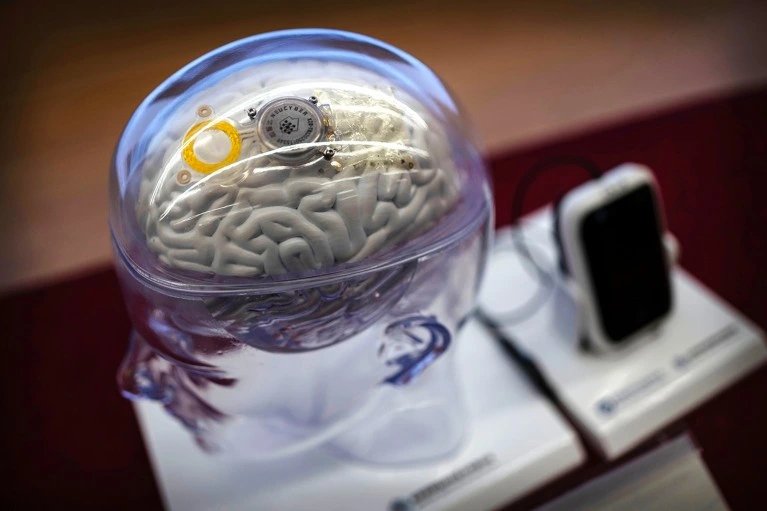
The device is a surgically implanted array of 253 electrodes placed on the surface of the brain’s cortex. It covers a fairly large surface area of the sensorimotor cortex, capturing signals related to both speech and body movements. Artificial intelligence converts electrical brain activity into text that appears on screen and prompts a personalized animated avatar to move.
Participant Testing
The first participant had impaired speech and movement following a brainstem stroke. Researchers asked him to silently speak five phrases and attempt to wave, nod, shake his hands and clap. The second participant had amyotrophic lateral sclerosis, causing progressive speech paralysis and motor impairments. He was asked to vocalize ten phrases and imagine making ten gestures such as a shrug and thumbs up.
1 source
Time · lag behind first