
Almaty construction damages 2,000-year-old Butakty-2 settlement, archaeologists say
This digest was compiled by AI from multiple sources — links to the originals are below.
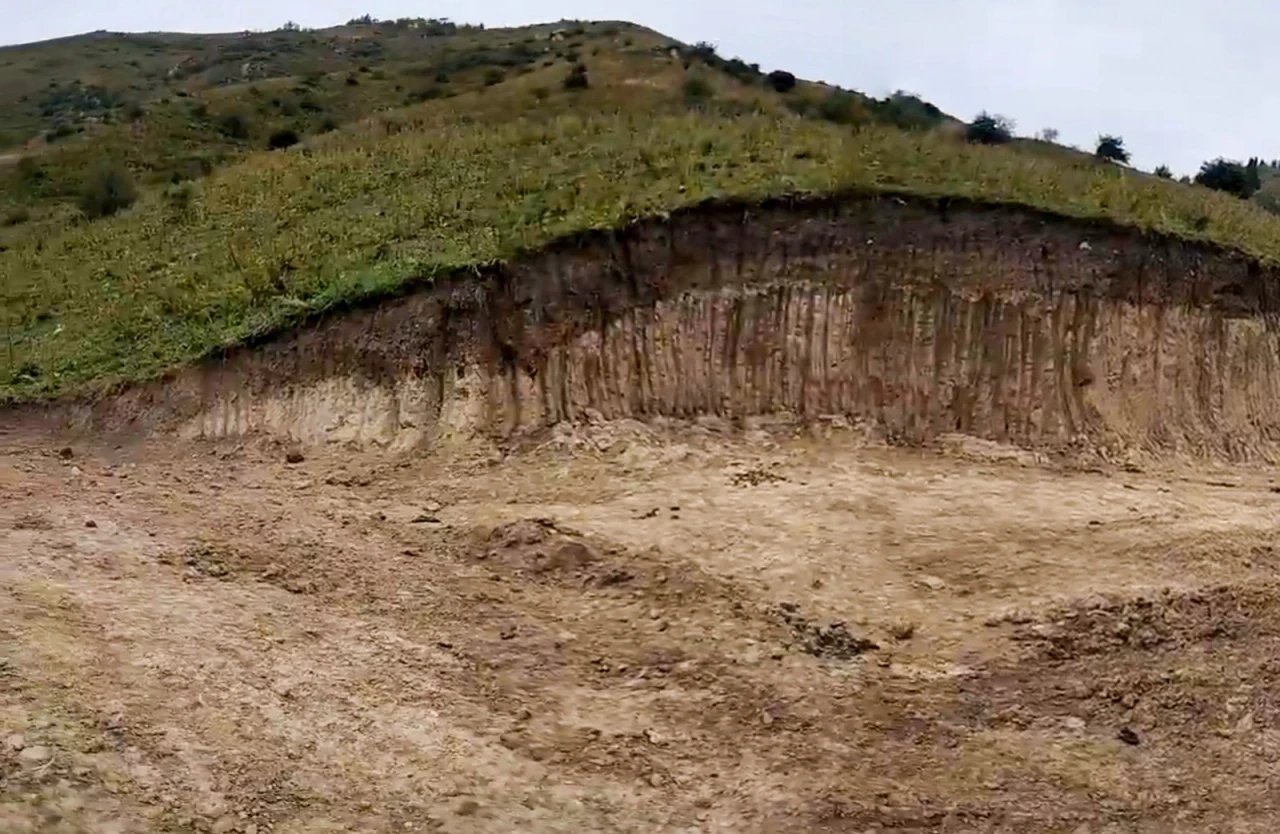
Archaeologists say construction work in Almaty has severely damaged the Butakty-2 settlement, an early Iron Age site dating back about 2,000 years. They report that nine of fifteen ancient dwellings and a large part of the cultural layer have been lost. City authorities have launched an inspection into the circumstances.
Key Facts
- Nine of fifteen ancient dwellings and several hundred square meters of the Butakty-2 settlement were destroyed during construction in Almaty.
- The damaged area covers approximately 1,200–1,500 square meters, according to archaeologist Alexander Goryachev.
- Butakty-2 is a locally protected historical and cultural monument, included in the updated Almaty heritage list in 2017.
- The settlement dates to the early Iron Age (2nd–1st centuries BC) and the medieval period, and is located about 7.9 km east of the Butakty gorge entrance.
Damage to the Settlement
Archaeologists reported that the eastern part of the lower tier of Butakty-2 was completely destroyed during construction work in the Butakty gorge in Almaty. Alexander Goryachev, a leading researcher at the A.Kh. Margulan Institute of Archaeology, said nine of fifteen ancient dwellings and several hundred square meters of the monument were irretrievably lost. The lower tier, which contained nine residential structures with outbuildings, was demolished to a depth of 3–4 meters, and the damaged area is estimated at 1,200–1,500 square meters. The middle and upper tiers of the three-tier settlement remain intact, according to Goryachev.
Site Status and Protection
Butakty-2 is a historical and cultural monument of local significance, dating to the early Iron Age (2nd–1st centuries BC) and the medieval period. The settlement covers about 1,200 square meters and is located 7.9 km east of the Butakty gorge entrance and about 1 km west of the Medeu sports complex. It was first included in the Almaty heritage list in 2005, and after full documentation and tacheometric survey, it was re-approved as a protected monument in 2017. Since 2017, the site has been under state protection in accordance with Kazakhstan's legislation.
1 source
Time · lag behind first