
Uzbek scientists uncover 320,000-year-old stone artifacts near Tashkent
This digest was compiled by AI from multiple sources — links to the originals are below.
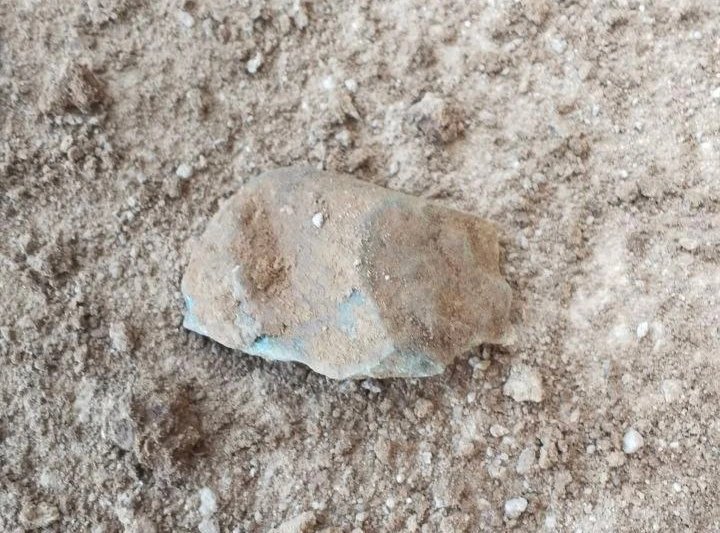
Archaeologists from Uzbekistan and Russia have uncovered stone artifacts at the Arkutsoy site in Tashkent Region that may be 280,000–320,000 years old. The finds were made in three buried soil layers, indicating repeated human occupation of the area. If confirmed, the site would become the oldest known archaeological monument in Uzbekistan.
Key Facts
- Stone artifacts at the Arkutsoy site in Bostanlyk District, Tashkent Region, are preliminarily dated to 280,000–320,000 years ago.
- Excavations are conducted by specialists from the Academy of Sciences of Uzbekistan and the Institute of Archaeology and Ethnography of the Siberian Branch of the Russian Academy of Sciences.
- Targeted study of the site began in 2024, with excavations and observations currently underway at three locations.
- Artifacts from the third buried soil layer are considered especially valuable, as that layer formed approximately 280,000–320,000 years ago.
- If independent laboratory tests confirm the dating, Arkutsoy would become the oldest known archaeological monument in Uzbekistan.
The Arkutsoy Discovery
The Paleolithic site of Arkutsoy is located in Bostanlyk District, Tashkent Region. Stone artifacts found there are preliminarily estimated to be 280,000–320,000 years old. Researchers from the Academy of Sciences of Uzbekistan and the Institute of Archaeology and Ethnography of the Siberian Branch of the Russian Academy of Sciences are conducting the study. Targeted investigation of the site began in 2024, and work is now underway at three separate areas.
Stratified Evidence of Occupation
Scientists discovered human-worked stone tools in three ancient buried soil layers. This indicates that the territory of Arkutsoy was used by ancient people repeatedly and in different periods. Artifacts from the third layer are of particular value because that layer formed roughly 280,000–320,000 years ago, according to preliminary geological and paleoclimatic comparisons.
Implications for Early Human Settlement
If independent laboratory research confirms the dating, the finds could indicate that the Tashkent oasis and the territory of modern Uzbekistan were settled by human communities during the late stages of the Early Paleolithic. In that case, Arkutsoy would become the oldest known archaeological monument in the country. Earlier, remains of an ancient structure and a unique wall painting depicting tulips and white flowers were reported at the Boburtepa site in Kashkadarya Region.
1 source
Time · lag behind first