
Central Asia-South Korea summit opens in Seoul with focus on minerals and technology
This digest was compiled by AI from multiple sources — links to the originals are below.
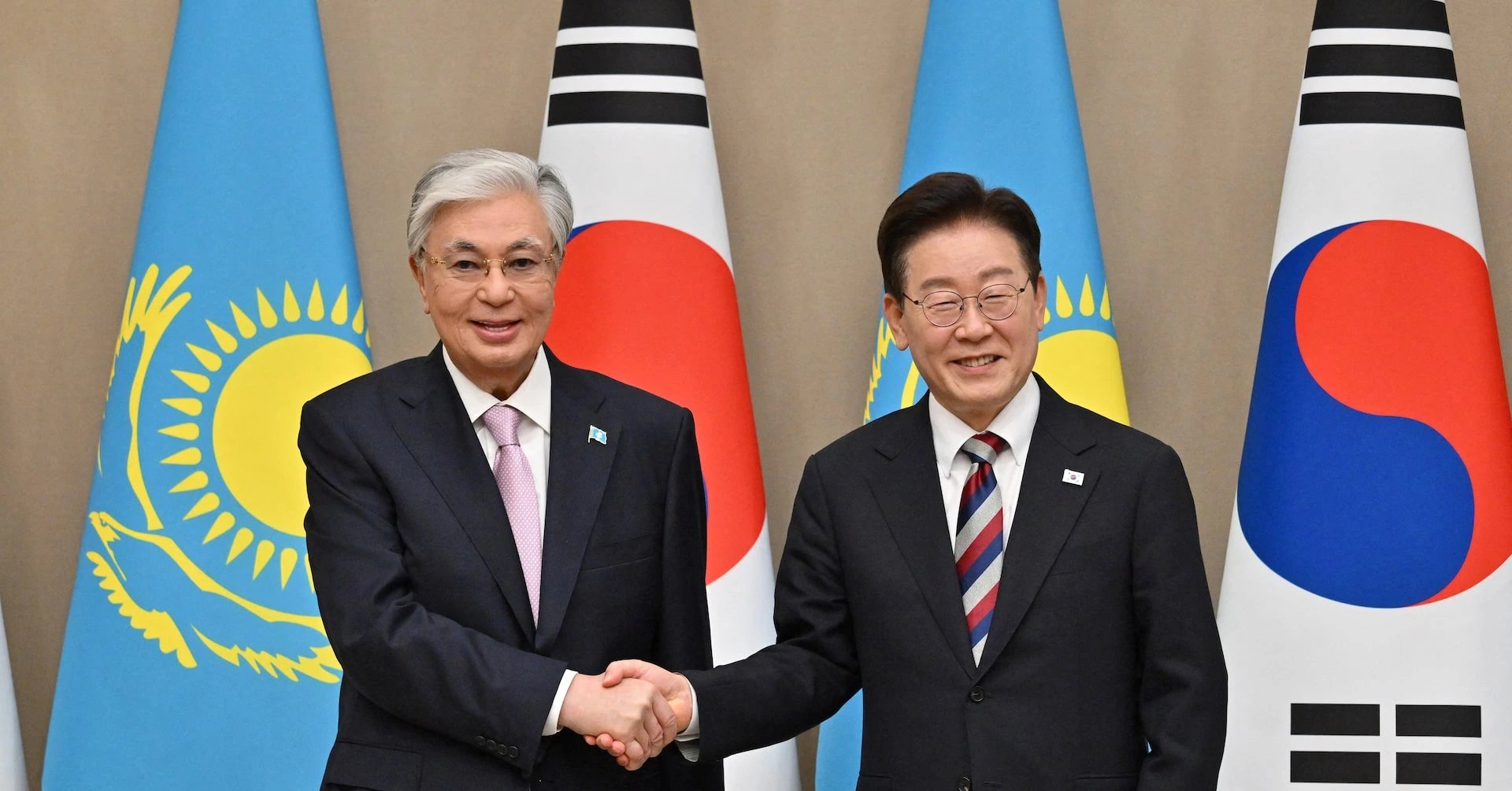
The first Central Asia-Republic of Korea Summit opened in Seoul on September 16, elevating cooperation to heads-of-state level. The summit is expected to produce the Seoul Declaration outlining cooperation in supply chains, emerging industries, and people-to-people exchanges. About 500 government and business representatives are attending alongside the five leaders.
Key Facts
- The Korea-Central Asia Cooperation Forum has existed since 2007 but remained primarily a ministerial mechanism until now.
- The summit is expected to produce the Seoul Declaration, setting out a medium- and long-term vision for cooperation in supply chains, emerging industries, and people-to-people exchanges.
- About 500 representatives of government and business are attending the summit alongside the five leaders.
- Professor German Kim, director of the Institute for Asian Studies at Al-Farabi Kazakh National University, said South Korea’s development experience should not be treated as a model that can simply be copied.
Summit Agenda
The summit’s agenda focuses on innovation, prosperity, and connectivity. South Korea wants to connect Central Asia’s mineral resources with its technologies for geological exploration and processing. Seoul also sees infrastructure, water resources, climate, and industry as potential areas for new projects.
Economic Cooperation
South Korea is expanding cooperation in artificial intelligence, digital technologies, and science with Central Asian countries. The business summit on September 16 should offer the first indication of how much of the broad political agenda can be translated into investment, contracts, and joint production. Critical minerals have become one of the central elements of South Korea’s agenda in Central Asia. South Korean industry needs reliable supplies of raw materials, while the region holds significant reserves of metals used in electronics, batteries, energy, and other high-tech industries.
Korean Experience
Professor German Kim said South Korea’s accelerated modernization took place under completely different historical and international conditions. Kazakhstan should therefore study not so much the Korean model of the past as today’s mechanisms for supporting talented young people, startups, venture capital, and technological entrepreneurship, Kim said. The value of the Korean experience lies more in individual mechanisms that work, from financing technology businesses to linking universities, research, and industry.
1 source
Time · lag behind first