
Donated livers get biologically younger on perfusion machines, study finds
This digest was compiled by AI from multiple sources — links to the originals are below.
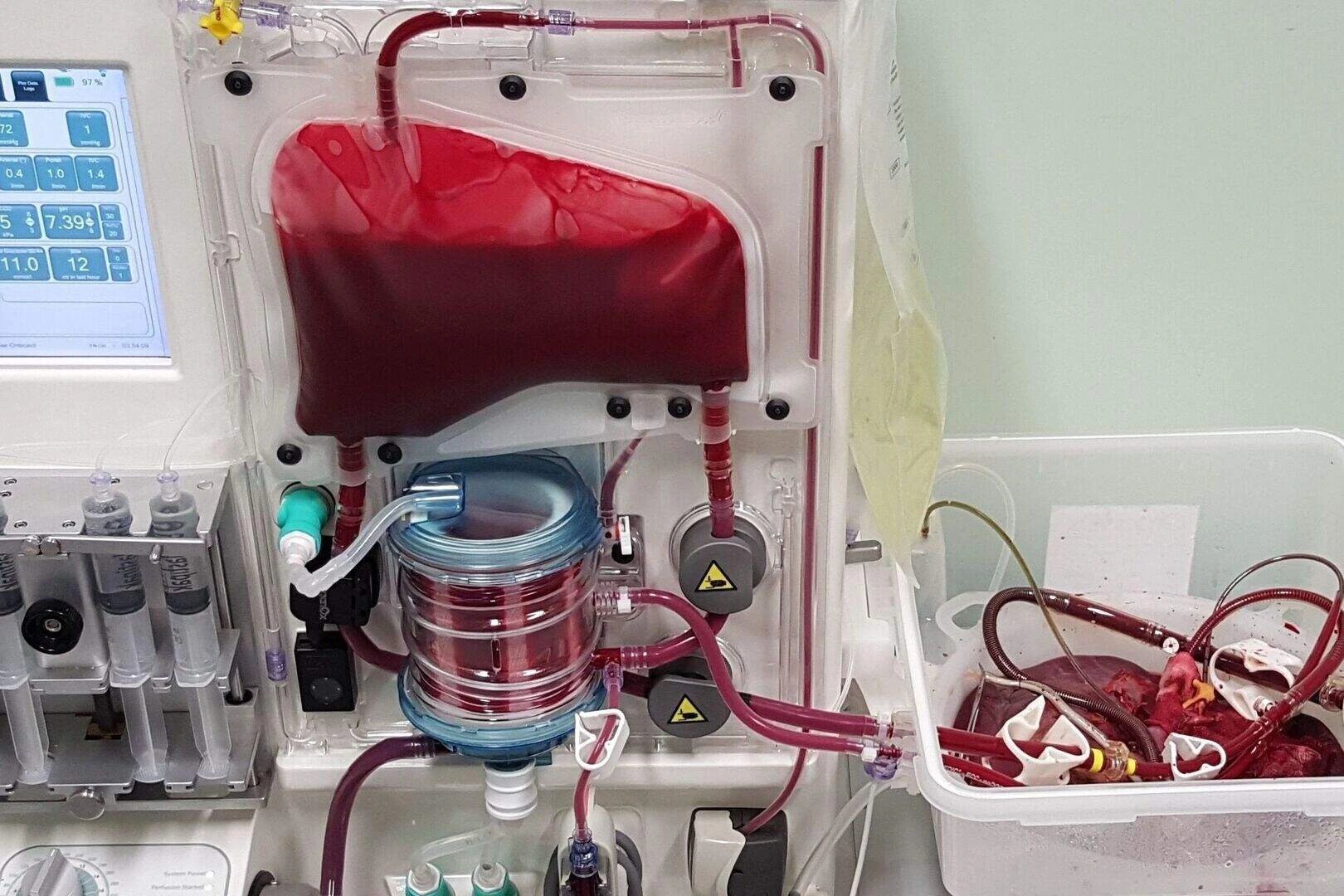
Scientists at Mass General Brigham found that machine perfusion makes donated livers biologically younger at the molecular level. The study analyzed 245 samples from 122 donated livers using epigenetic and gene-expression aging clocks. The findings may explain why perfused organs have higher transplant success rates.
Key Facts
- Researchers analyzed 245 samples from 122 donated livers using epigenetic and gene-expression aging clocks.
- Machine-perfused livers showed lower biological age than non-perfused livers that were chronologically younger.
- The study was led by Heidi Yeh and Alban Longchamp, transplant surgeons at Mass General Brigham, with coauthor Jesse Poganik of Brigham and Women's Hospital.
- Samples were biopsied after up to six hours of cold storage or machine perfusion, with a second sample taken about an hour after transplantation.
Aging Clocks on Donated Livers
The team used epigenetic aging clocks to measure biological age in 37 samples from 19 donated livers. Machine-perfused livers had a lower biological age than non-perfused livers that were chronologically younger, according to Heidi Yeh. A second analysis of 208 samples from 103 donated livers used gene-expression clocks to confirm the pattern. Samples were taken after up to six hours of storage and again about one hour after transplantation.
Clinical Implications
The findings provide molecular clues for why organs from younger donors have higher success rates. Perfused organs are less likely to fail after transplantation, and the study may explain this observation. Researchers hope to develop new tests for organ health and tools to repair organs that might otherwise be discarded. Jesse Poganik said improving organ utilization beyond current systems would be a win.
1 source
Time · lag behind first