
Aral Sea dry seabed becomes carbon source amid competing restoration strategies
This digest was compiled by AI from multiple sources — links to the originals are below.
The dried seabed of the Aral Sea is emerging as a source of carbon emissions, according to a biologist's analysis. Two competing rehabilitation strategies—returning water or greening the desert—now define the region's future. The choice between them will shape the Aral region for decades.
Key Facts
- The Kokaral Dam, built in 2005, raised the Northern Aral's water volume to over 27 km³ by 2025.
- Water salinity in the Northern Aral dropped nearly fourfold to 8–15 ppm after the dam's construction.
- More than 20 fish species have recovered in the Northern Aral since the Kokaral project.
- The Northern Aral's water level exceeded 42 meters Baltic System by 2025, compared to 20 meters in the Western Aral.
The Aral Sea's Fragmentation
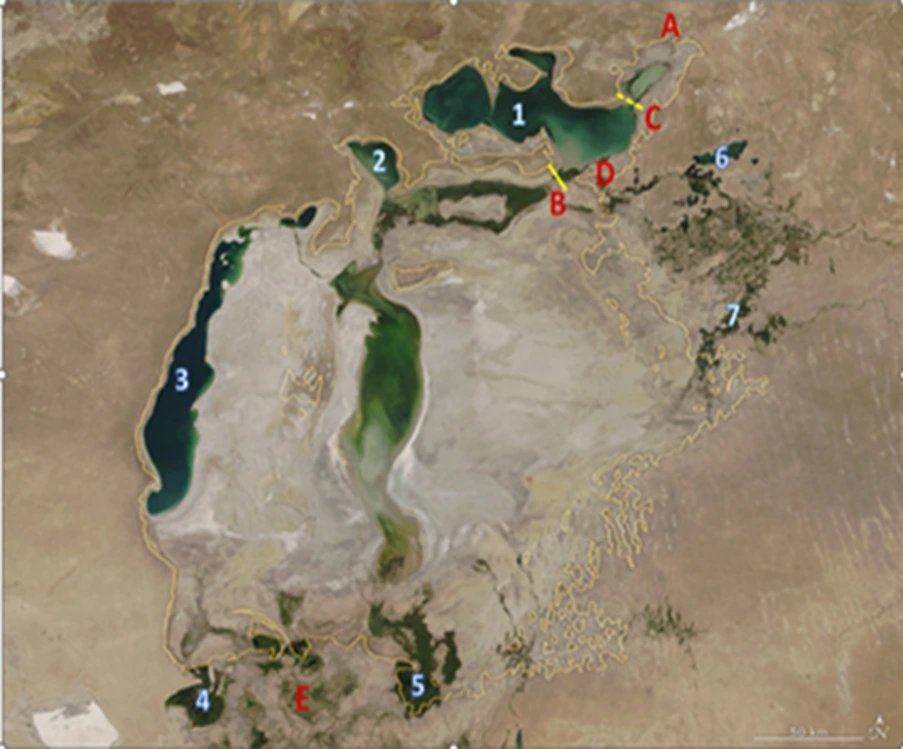
The Aral Sea is no longer a single body of water but several separate water systems and vast expanses of dried seabed. The new desert formed on the former seabed is called Aralkum. NASA Earth Observatory satellite imagery documents the sea's change from the 1960s to 2021.
Northern Aral Restoration
The Kokaral Dam, completed in 2005, separated the northern Small Aral from the southern Large Aral. Water from the Syr Darya River began accumulating in the Small Aral instead of flowing south. By 2025, the Northern Aral's water volume exceeded 27 km³ and its surface area reached 3,400 km², according to Kazakhstan's Ministry of Water Resources and Irrigation. The water level in the Small Aral surpassed 42 meters Baltic System, while the Western Aral remained at 20 meters. Salinity decreased nearly fourfold to 8–15 ppm, and over 20 fish species recovered.
1 source
Time · lag behind first