
Putin, Xi and Modi call for new world order at BRICS summit in New Delhi
This digest was compiled by AI from multiple sources — links to the originals are below.
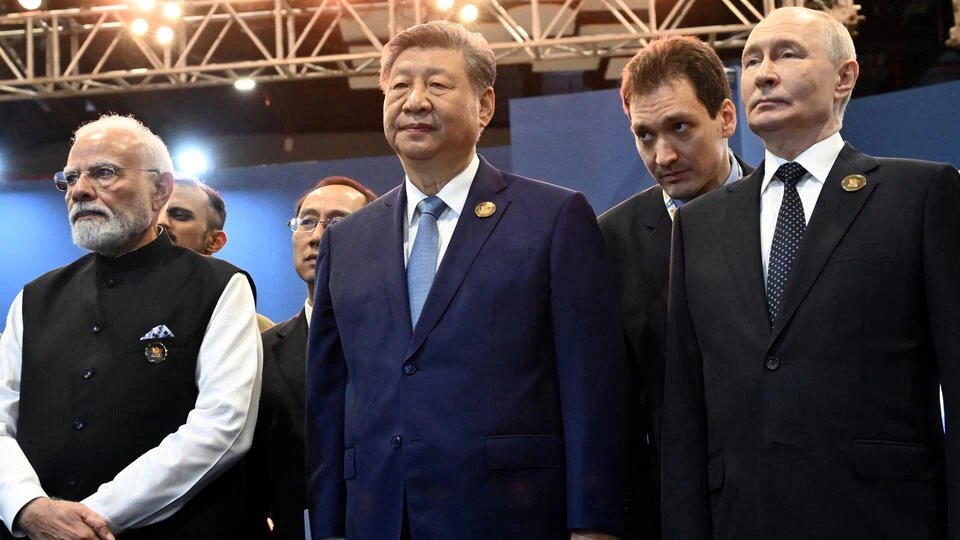
Leaders of Russia, China and India called for a new world order at the BRICS summit that concluded in New Delhi. Indian Prime Minister Narendra Modi said the bloc must move from rule-taker to rule-maker. The summit brought together heads of state from 10 member countries representing over 40% of the world's population.
Key Facts
- Indian Prime Minister Narendra Modi said BRICS leaders must increasingly act as rule-makers rather than rule-takers.
- Chinese President Xi Jinping proposed new artificial intelligence initiatives to "illuminate the path to shared prosperity."
- Russian President Vladimir Putin reiterated his call to include Global South states in the UN Security Council.
- BRICS comprises 10 member states: Brazil, Russia, India, China, South Africa, Egypt, Ethiopia, Indonesia, Iran and the UAE.
- The bloc accounts for more than 40% of the world's population and nearly a quarter of global GDP.
Calls for Global Reform
Modi said BRICS has passed its formative stage and must now convert unity and consensus into concrete results for the world. He called for strengthening the role of Global South countries in shaping international decisions, noting they are often on the front lines of crises but excluded from key decision-making. Modi reiterated his call for reforming the UN Security Council and granting permanent seats to India and other emerging power centers. Putin also proposed expanding the Security Council to include countries from Asia, Africa and Latin America.
BRICS Expansion and Influence
The summit in New Delhi brought together leaders including Xi Jinping, Putin, Iranian President Masoud Pezeshkian, Abu Dhabi Crown Prince Sheikh Khaled bin Mohammed bin Zayed Al Nahyan and South African President Cyril Ramaphosa. BRICS was founded in 2009 as a counterweight to a world order its members see as largely shaped by the United States and its Western allies. The bloc seeks greater influence over international rule-making and reform of institutions such as the World Bank, the International Monetary Fund and the World Trade Organization. Some members consider these institutions excessively dependent on Western countries.
1 source
Time · lag behind first