
Klamath River restoration crews sow 17 billion seeds on 890 hectares
This digest was compiled by AI from multiple sources — links to the originals are below.
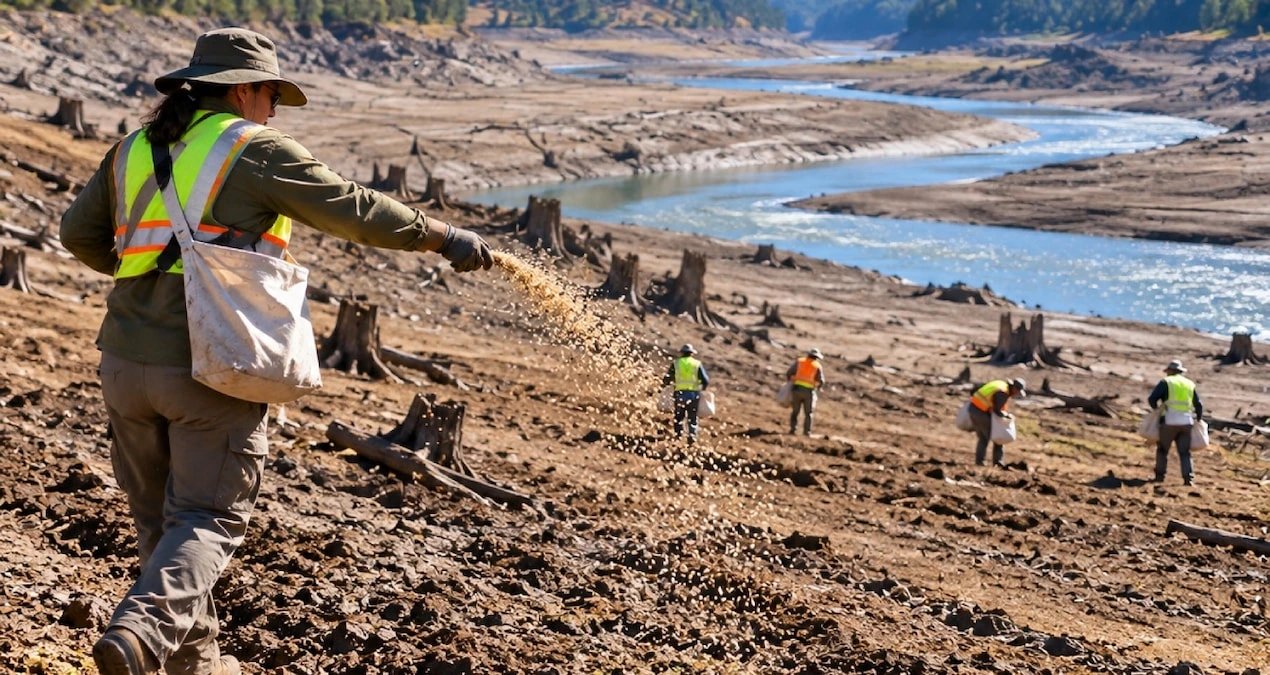
Crews including the Yurok Tribe have begun sowing roughly 17 billion seeds across 890 hectares of former reservoir land exposed by the removal of four Klamath River dams. The work aims to restore native vegetation and stabilize sediment on the drained lakebeds. The effort follows the dams' removal, which reopened about 640 kilometers of historic salmon habitat.
Key Facts
- Approximately 890 hectares of former reservoir land were exposed after the four Klamath River dams were removed.
- Crews prepared about 17 billion seeds collected from native plants around the Klamath region.
- The project uses roughly 100 native plant species, including grasses, shrubs, and trees.
- About 76,000 trees and shrubs and tens of thousands of acorns were planted in the former reservoir areas.
- Dam removal reopened approximately 640 kilometers of historic salmon habitat on the Klamath River.
Seed Collection and Preparation
Preparation began years before the dams were fully removed, with crews collecting millions of seeds from native plants around the Klamath region. The seeds were propagated in local nurseries to build a stock of about 17 billion. Planting is not random; different seed mixes are prepared according to soil structure and the area's natural characteristics. The project uses about 100 native plant species, including grasses, shrubs, and trees.
Planting Operations
As soon as reservoir waters receded, crews entered the muddy ground to begin sowing. Initial work included spreading billions of seeds and planting tens of thousands of acorns. About 76,000 trees and shrubs were also planted in the former reservoir areas. The Yurok Tribe is among the teams working to spread seeds and restore the landscape.
Salmon Habitat Restoration
Removal of the four dams restored the Klamath River's natural flow, which had been interrupted for decades. A key goal is to allow salmon to reach spawning grounds they historically used. The dam removals are expected to reconnect about 640 kilometers of historic habitat for fish. New vegetation is expected to stabilize bare soil, reduce erosion, and slow the spread of invasive species. As trees and shrubs grow, they are intended to create new habitat for fish, birds, and other wildlife along the river.
1 source
Time · lag behind first