
UCLA scientists turn cord blood stem cells into cancer-fighting T cells
This digest was compiled by AI from multiple sources — links to the originals are below.
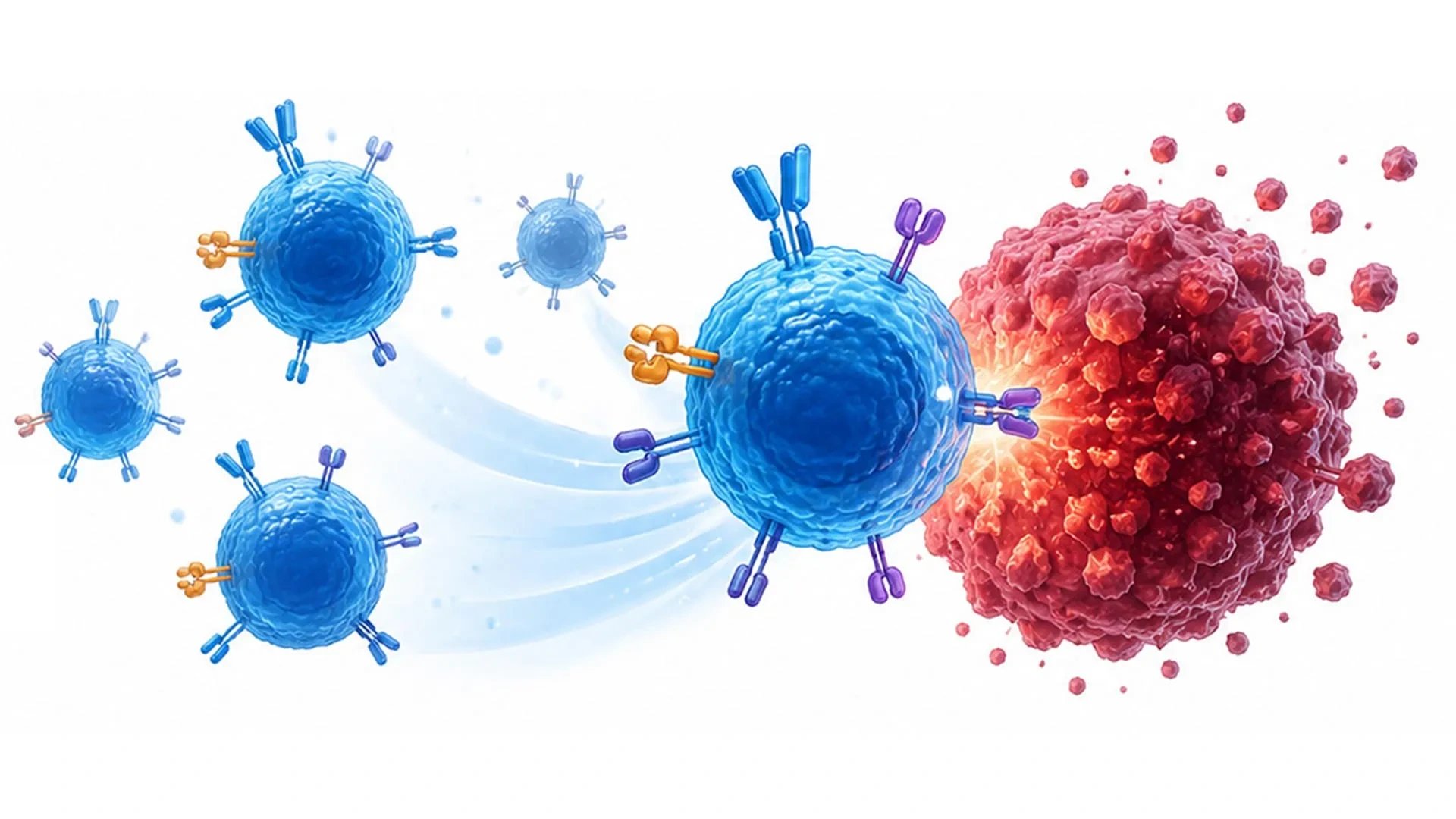
UCLA researchers have developed a scalable method to produce cancer-targeting T cells from donated cord blood stem cells. The engineered cells, called AlloESO-T cells, controlled tumor growth and extended survival in mouse models of ovarian cancer and melanoma without dangerous side effects. The approach could address both the high cost and delay of personalized T cell therapy and the risk of graft-versus-host disease from donor cells.
Key Facts
- The UCLA team engineered T cells from cord blood stem cells to recognize NY-ESO-1, a protein found in many solid tumors.
- In mouse models of ovarian cancer and melanoma, a single dose of AlloESO-T cells controlled tumor growth and improved survival without dangerous side effects.
- The study was published in Cell Reports Medicine.
- Co-senior author Lili Yang is a professor of microbiology, immunology and molecular genetics at UCLA and a member of the UCLA Broad Stem Cell Research Center and the UCLA Health Jonsson Comprehensive Cancer Center.
TCR Therapy Potential
T cell receptor therapy, or TCR therapy, genetically modifies T cells to recognize and attack cancer with high precision. Unlike CAR T-cell therapy, which recognizes proteins on the outside of cancer cells, TCR therapy can detect small protein fragments that originate inside cancer cells and are transported to the cell surface. This expanded reach could be especially important for treating solid tumors, where many cancer-driving molecular changes are inside the cell rather than on its exterior.
Cord Blood Stem Cell Platform
Current TCR therapy approaches generally require personalized treatment made from each patient's own T cells, a process that can take weeks and cost well into six figures. Using T cells from healthy donors could allow off-the-shelf treatments, but donor cells can cause graft-versus-host disease, a serious condition in which transplanted immune cells attack the patient's healthy tissue. The UCLA team started with blood stem cells from donated cord blood, which can develop into every major type of blood and immune cell. They inserted a gene for a receptor that recognizes NY-ESO-1, a protein found in many solid tumors, and the resulting cells are called AlloESO-T cells.
Preclinical Results
In mouse models of ovarian cancer and melanoma, a single dose of AlloESO-T cells controlled tumor growth and helped the animals survive longer. The treatment did not produce dangerous side effects in the animal studies. Lili Yang, co-senior author and professor at UCLA, said the platform brings researchers closer to a future where the product is already made, frozen, and ready to go as soon as the patient needs it.
1 source
Time · lag behind first