
Japan demands UN change new Equal Earth map over Kuril Islands depiction
This digest was compiled by AI from multiple sources — links to the originals are below.
Japan has formally protested the United Nations' newly adopted Equal Earth world map, demanding a correction to its depiction of the disputed Kuril Islands. The Japanese government said the map shows the islands in the same color as Russia, contradicting Tokyo's position. The protest was lodged through diplomatic channels with the map website's operator.
Key Facts
- The UN General Assembly adopted a resolution on September 4 calling for use of the Equal Earth projection instead of the traditional Mercator projection.
- The resolution was supported by 164 countries, with six abstentions and only the United States voting against.
- Japan initially voted in favor of the resolution but later demanded a change to the map's depiction of the Kuril Islands.
- Japanese government representative Minoru Kihara said the map contains an image that contradicts Japan's position.
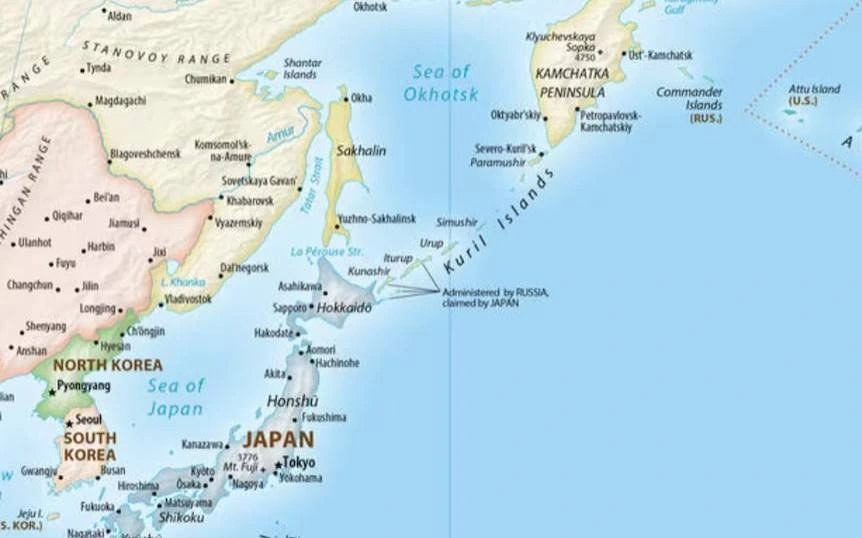
- The southern Kuril Islands have been under Soviet/Russian control since 1945, and Japan claims Iturup, Kunashir, Shikotan, and the Habomai group as its 'Northern Territories'.
UN Map Resolution
On September 4, the UN General Assembly adopted a resolution urging the use of the Equal Earth projection, an equal-area map, instead of the traditional Mercator projection. The Equal Earth projection does not preserve angles or areas perfectly, but it represents the relative sizes of countries and continents more accurately. Supporters of the resolution argued that the Mercator projection has visually diminished the importance of Africa and other regions of the Global South for decades, affecting their perception in education, culture, and politics. In contrast, Russia and Greenland appear much larger than their actual size on the Mercator map because of their high latitudes. The resolution was supported by 164 countries, including Uzbekistan, while six countries abstained and only the United States voted against.
Japan's Protest
Japan initially voted in favor of the resolution, but on Thursday, Japanese government representative Minoru Kihara announced that the new map contains an image that contradicts the Japanese government's position. Kihara said Japan has lodged a protest through diplomatic channels with the operator of the map website and demanded that the image be corrected. The disputed image shows the southern Kuril Islands in the same color as Russia, according to The Guardian. Japan considers Iturup, Kunashir, Shikotan, and the Habomai island group as its own territory and calls them the 'Northern Territories'. The islands came under Soviet control in 1945 following World War II, and the dispute has prevented Moscow and Tokyo from signing a peace treaty.
Territorial Dispute Background
In August 2026, Vladimir Putin visited the disputed islands for the first time, after which Japan summoned the Russian ambassador and expressed a 'strong protest'. The territorial dispute over the Kuril Islands remains a major obstacle to a formal peace treaty between Russia and Japan.
6 sources
Time · lag behind first