
Iran Threatens Gulf Exclusion Zone After Firing Ballistic Missile at US Warships
This digest was compiled by AI from multiple sources — links to the originals are below.
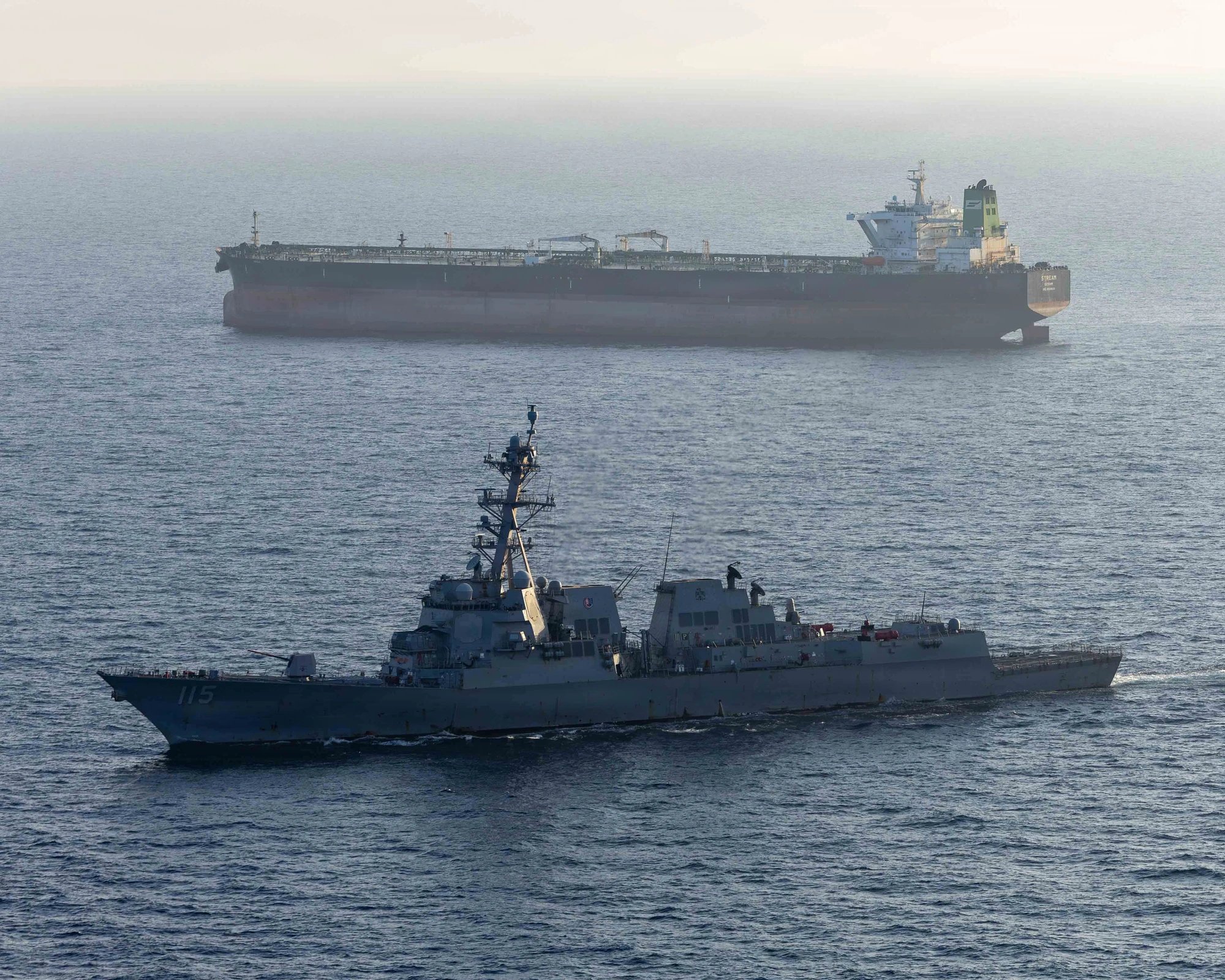
Iran threatened to impose a maritime exclusion zone in the Persian Gulf and said it fired a Qassem Basir ballistic missile at U.S. warships near the Strait of Hormuz, which avoided the attack. The move adds missile, mine, and fast-attack-craft pressure on a critical energy corridor as Washington tightens economic restrictions and maintains layered regional defenses.
Key Facts
- Iran threatened to impose a maritime exclusion zone in the Persian Gulf, according to Mohsen Rezaei, secretary of Iran's Supreme National Security Council.
- Iran said it fired a Qassem Basir ballistic missile at U.S. warships near the Strait of Hormuz, and U.S. Central Command stated the vessels avoided the missiles.
- The Qassem Basir has a stated range of at least 1,200 km and uses terminal electro-optical guidance, reportedly based on an infrared sensor.
- Iran also intends to publish new navigation maps establishing a corridor operating under its own conditions of passage.
Maritime Exclusion Zone Threat
Mohsen Rezaei, secretary of Iran's Supreme National Security Council, presented the planned zone as a response to what Tehran describes as U.S. economic warfare. Iran also intends to publish new navigation maps establishing a corridor operating under its own conditions of passage. Details have yet to be released, but the measure directly targets the U.S. blockade and vessels continuing to transit this strategic waterway.
Qassem Basir Missile Capabilities
Presented in May 2025, the solid-fuel ballistic missile is derived from the Haj Qassem and has a stated range of at least 1,200 km. Iranian authorities attribute to it a terminal electro-optical guidance system, reportedly based on an infrared sensor, designed to reduce dependence on GPS and retain accuracy in a jamming environment. Tehran also claims that modifications to the reentry vehicle improve maneuverability during the final phase of flight. These performance claims remain difficult to verify independently.
U.S. Defenses and Regional Pressure
U.S. forces in the region rely on Aegis-equipped destroyers, Patriot and THAAD batteries, and mine-countermeasure systems. The Islamic Revolutionary Guard Corps retains fast attack craft that can harass shipping, approach merchant vessels, or support mine-laying operations. Indirect mediation continues without an announced resumption of direct U.S.-Iran talks.
1 source
Time · lag behind first