
US-Iran tanker strikes turn Strait of Hormuz into environmental tinderbox
This digest was compiled by AI from multiple sources — links to the originals are below.
US and Iranian forces have exchanged strikes on oil tankers in and around the Strait of Hormuz, with the US hitting five Iranian tankers on September 8 and Iran attacking Jordan's Al-Azraq airbase. As of September 7, 42 tankers were waiting to transit the strait, including 18 carrying oil with a combined capacity of 1.76 million cubic metres. The attacks have raised the risk of a major oil spill in the Gulf.
Key Facts
- On September 8, the US struck five Iranian oil tankers, and Iran attacked Jordan's Al-Azraq airbase.
- As of September 7, 42 tankers were waiting to transit the Strait of Hormuz, 18 of them carrying oil.
- The 18 oil-laden tankers have an estimated combined capacity of 1.76 million cubic metres, equivalent to about 11.1 million barrels or 11% of world daily oil demand.
- Since the start of the war, at least 75 ships have been attacked and at least 21 seafarers killed.
- On September 5, US Central Command struck three Iranian crude-oil tankers near Kharg Island, Jask, and in the Gulf of Oman.
Escalating Tanker Strikes
The US-Iran war is increasingly being fought at sea, with both sides targeting oil tankers and other vessels in and around the Strait of Hormuz. On September 8, the US struck five Iranian oil tankers, provoking an Iranian attack on Jordan's Al-Azraq airbase. Three days earlier, the US hit three other Iranian tankers after Iran launched ballistic missiles towards a US aircraft carrier and a navy destroyer near the Strait, according to US Central Command. Iran said it targeted three oil tankers travelling through what it called an 'unauthorised route' in the Strait, as well as three US-linked vessels elsewhere. On September 5, US Central Command said its forces struck three Iranian crude-oil tankers — one off Kharg Island, another near Jask, and a third, an unladen tanker, in the Gulf of Oman after its crew was ordered to abandon ship.
Environmental Risk in the Gulf
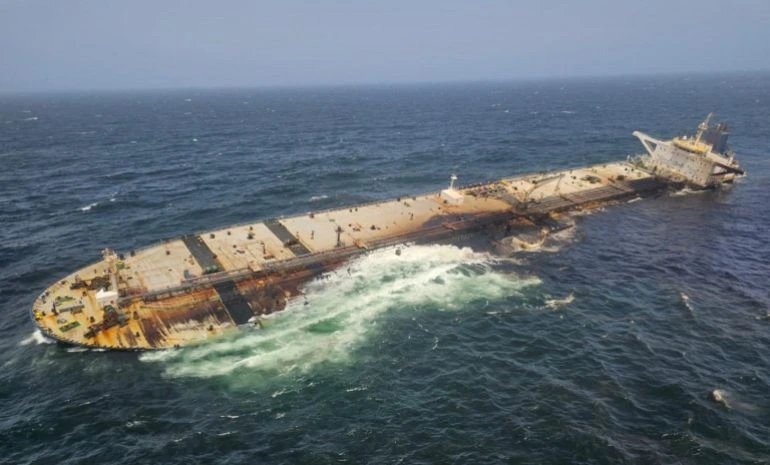
The tit-for-tat attacks have turned Hormuz into a potential environmental tinderbox. With tankers carrying millions of barrels of crude and petroleum products passing through or waiting around the waterway, a successful strike could trigger a fire, a sinking, or a major oil spill. As of September 7, MarineTraffic data shows 42 tankers waiting to transit the Strait of Hormuz, while hundreds of other vessels are waiting or moving slowly in the wider Gulf of Oman and Gulf region. Of those tankers, 18 are carrying oil, with an estimated combined capacity to carry 1.76 million cubic metres of oil and petroleum products. That volume is roughly 11.1 million barrels of oil, equivalent to about 11 percent of the world's daily oil demand, and enough to fill roughly 714 Olympic-sized swimming pools.
Shipping Casualties
Since the start of the war, at least 75 ships have been attacked, with at least 21 seafarers killed. A major tanker strike or sinking could release millions of litres of oil into the Gulf, potentially contaminating coastlines, fisheries and fragile marine ecosystems. Unlike an oil spill on land, oil at sea can spread over a vast area, carried by currents and winds far from the original site of the accident.
1 source
Time · lag behind first