
Yemeni forces launch counteroffensive against Houthis, vow to retake Sanaa
This digest was compiled by AI from multiple sources — links to the originals are below.
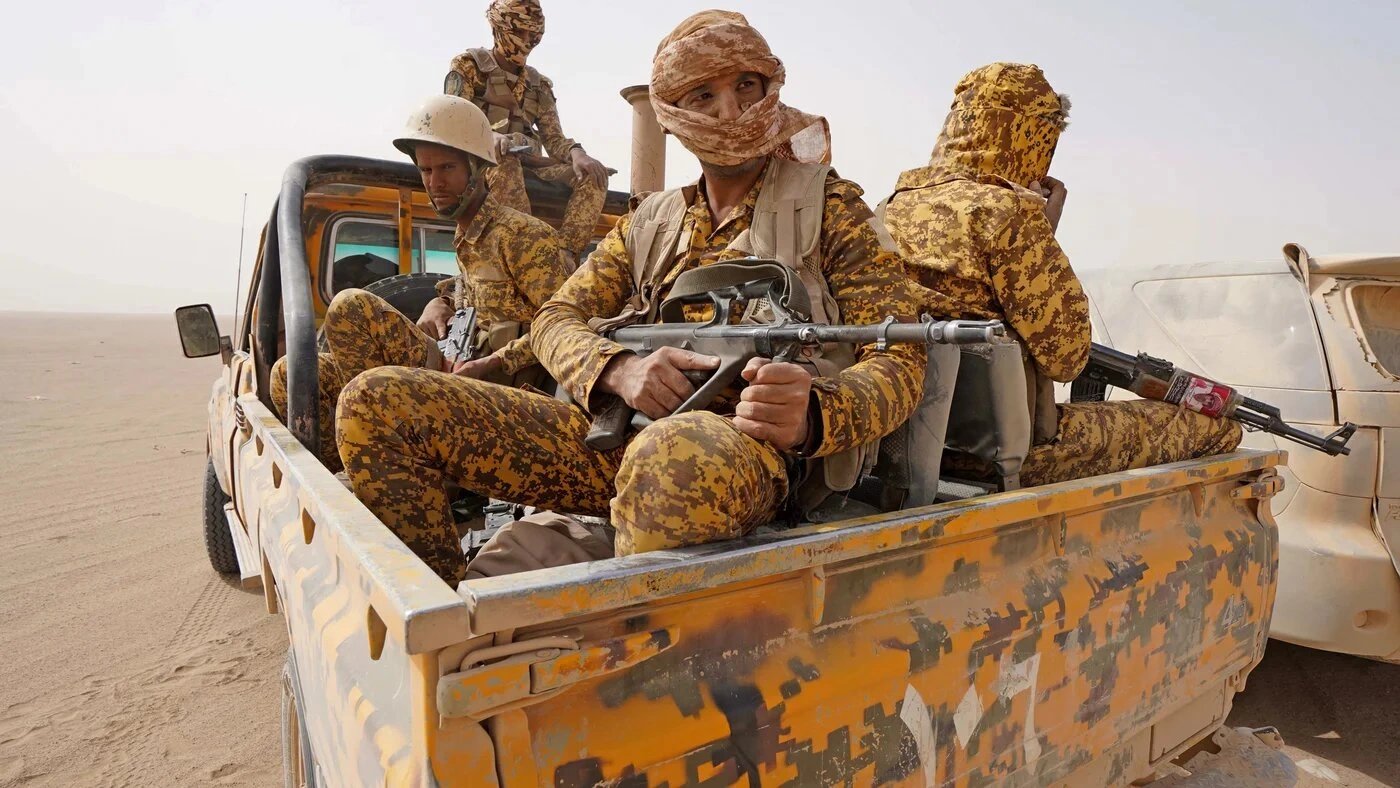
Yemeni government forces launched counterattacks against Houthi rebels on Monday, with Deputy Defence Minister Major-General Samir Al-Sabri announcing a decision to retake the capital Sanaa. The offensive comes as fighting intensifies in al-Bayda and al-Jawf provinces, the main gateway to the capital, marking one of the most serious escalations since the 2022 UN-brokered truce.
Key Facts
- Major-General Samir Al-Sabri, Yemen's deputy defence minister, announced on state television that the decision has been made to retake Sanaa.
- Fighting has intensified in the provinces of al-Bayda and al-Jawf, which are seen as the main gateway to the capital.
- The Houthis said seven people were killed in a strike on a prison in al-Hazm in al-Jawf.
- The renewed hostilities mark one of the most serious escalations since a United Nations-brokered truce in 2022 halted large-scale fighting.
- Fighting resumed in July when government forces struck the Houthi-controlled airport in Sanaa, blocking the landing of an aircraft from Iran.
Counteroffensive Announcement
Major-General Samir Al-Sabri, Yemen's deputy defence minister, said in remarks broadcast on state television on Monday that 'the decision has been made to retake Sanaa'. The announcement came as fighting intensified in the provinces of al-Bayda and al-Jawf, seen as the main gateway to the capital. Forces loyal to Yemen's internationally recognised government have launched counterattacks against the Houthi rebels, with officials saying they aim to recapture the capital more than a decade after the Iran-backed Houthis seized it.
Escalation and Fronts
The renewed hostilities mark one of the most serious escalations since a United Nations-brokered truce in 2022 halted large-scale fighting in a war that began after the Houthis took Sanaa in 2014. Fighting in Yemen resumed in July, when government forces struck the Houthi-controlled airport in Sanaa, blocking the landing of an aircraft from Iran. Then last week, the Houthis launched a major offensive, trying to advance through western Taiz and southern Hodeidah, towards the port city of al-Makha and the Bab al-Mandeb Strait in the Red Sea. Ahmed al-Shalafi, Al Jazeera's Yemen affairs editor, said Yemeni government forces appear 'to have absorbed the initial shock' of the rebel offensive 'and expanded the fighting across several fronts, partly to stretch Houthi forces and increase pressure on them'. He said the fighting was mainly concentrated west of Taiz and south of Hodeidah on Thursday, but has now spread to the provinces of al-Dhalea, Marib, al-Jawf and al-Bayda.
Strategic Significance
Al-Jawf is particularly important because it borders Saudi Arabia and connects towards Saada, the Houthis' main stronghold, according to Ahmed al-Shalafi. The Bab al-Mandeb Strait is a vital corridor for shipping between the Red Sea and the Gulf of Aden. It has taken on new significance for Saudi oil exports since Iran began restricting passage through the Strait of Hormuz at the outset of the US and Israel's war on the country. Earlier, the Houthis had declared a blockade against Saudi vessels transiting the waterway.
1 source
Time · lag behind first