
Caspian Sea retreat threatens Kazakhstan's transit, fishing, and Aktau water supply
This digest was compiled by AI from multiple sources — links to the originals are below.
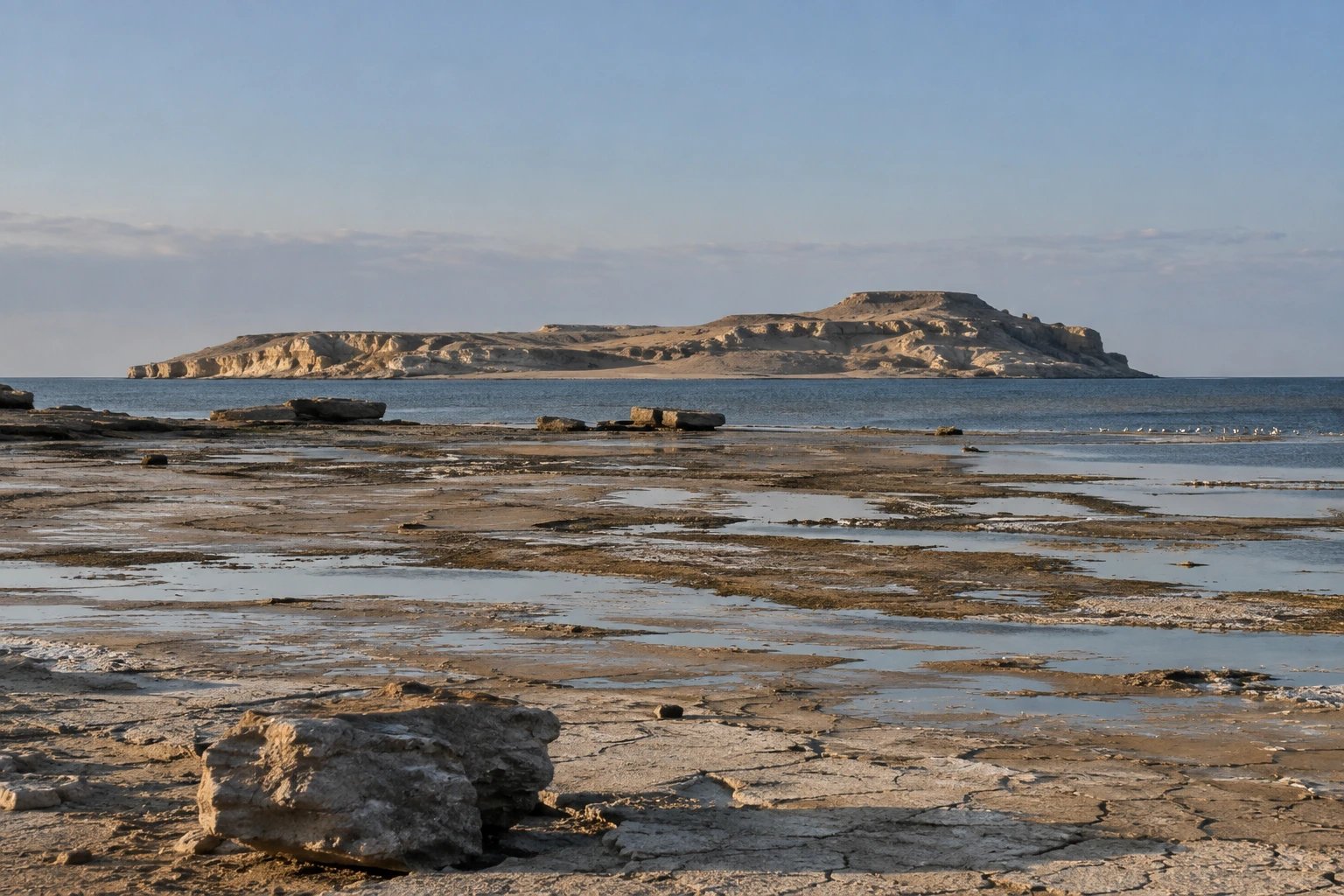
The Caspian Sea's falling water level is creating problems for shipping, cargo transit, fishing, tourism, and drinking water supply in Aktau, Kazakhstan. A new island dubbed 'Rybachy' has appeared as the sea retreats to historic lows. Scientists comparing the situation to the Aral Sea collapse warn of ecosystem degradation and desertification risks.
Key Facts
- The Caspian Sea's water level has fallen to historic lows, with a new island called 'Rybachy' emerging as a visible sign of the retreat.
- The shallowing is creating problems for shipping, cargo transit, fishing, tourism, and drinking water supply in Aktau, Kazakhstan.
- Historically, the Caspian accounted for up to 80% of the world's sturgeon catch, but commercial wild sturgeon fishing is now banned.
- Satellite data analysis shows elevated chlorophyll levels in the sea, indicating pollution and eutrophication, or ecosystem degradation.
- Economist Arman Baiganov warns that the shallowing could lead to serious changes in the natural system and accelerate desertification, primarily affecting the local population.
Economic and Environmental Impact
Vadim Ni, founder of the Save the Caspian Sea movement and director of a socio-ecological fund, states that the shallowing is recognized as creating problems for shipping, cargo transportation, fishing, tourism, and drinking water supply in Aktau. He notes that no full-scale studies on the economic damage from the sea's retreat have been published, as the establishment of a Caspian Sea research institute in Aktau alone took several years. A group of scientists analyzing satellite data compares the current shallowing to the catastrophic collapse of the Aral Sea. Their data shows elevated chlorophyll levels in the sea, indicating pollution and eutrophication, which signals ecosystem degradation.
Regional Consequences and Desertification Risk
Economist and financial advisor Arman Baiganov of R-Finance believes the shallowing will affect the entire region, citing the Aral Sea drying as an example that hit agriculture, ecology, and the population. He warns that because the Caspian lies in a lowland surrounded by sandy and semi-desert areas, the shallowing could lead to serious changes in the natural system and intensify desertification, primarily affecting the lives of the population. The Caspian's water level has historically fluctuated sharply; from 1978 to 1995 it rose and flooded settlements and agricultural lands, but now the level is falling.
Fisheries and Sturgeon Decline
As the Caspian's level falls, the area of shallow waters in the north, where fish feed, has shrunk, leading to a sharp decline in fish catches. Historically, the Caspian accounted for up to 80% of the world's sturgeon catch, including sturgeon, stellate sturgeon, and beluga, but commercial wild sturgeon fishing is now banned. The shallowing reduces available spawning grounds, complicating natural reproduction of sturgeon, while artificial sturgeon farming is developing but faces new threats from the falling sea level.
1 source
Time · lag behind first