
Climate shifts reroute Eurasian trade as Arctic opens and Rhine dries
This digest was compiled by AI from multiple sources — links to the originals are below.
A Chinese container ship departed Ningbo-Zhoushan on August 15 for Europe via the Arctic Northern Sea Route, with operator Sea Legend promising delivery in about 20 days. The voyage tests a corridor that could nearly halve transit time versus the Suez Canal. The experiment unfolds even as drought on the Rhine forces barges to carry about 30% of normal loads, costing Europe an estimated €50 billion.
Key Facts
- Container ship Dubai Tower left Ningbo-Zhoushan on August 15 bound for Europe via the Arctic Northern Sea Route.
- Operator Sea Legend says the Arctic route delivers to Northern European ports in about 20 days, nearly twice as fast as the Suez Canal route.
- Only eight Arctic voyages are planned through October, carrying batteries, solar panels, energy storage systems, and EV components.
- Rhine barges are loading at about 30% of normal capacity due to record low water, forcing operators to deploy around 100 extra barges weekly.
- Economists surveyed by the Financial Times estimate direct damage to the European economy from the drought at about €50 billion, with total summer costs possibly reaching €180 billion.
Arctic Route Trial
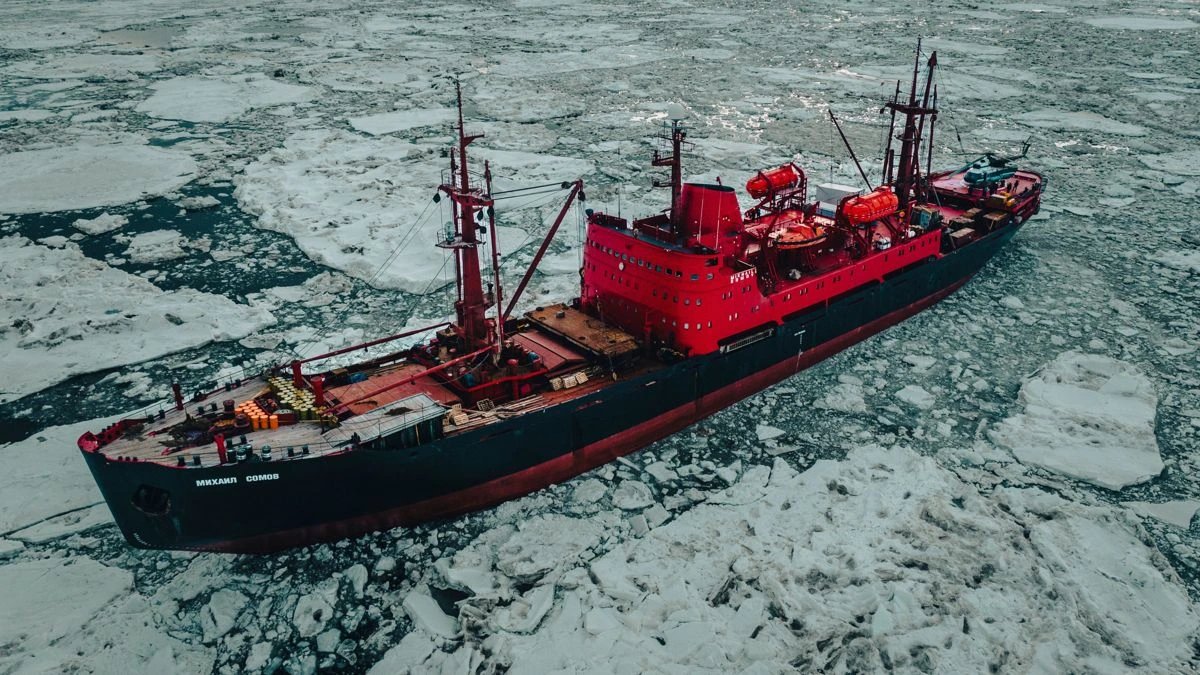
The Dubai Tower departed Ningbo-Zhoushan on August 15 for Europe along Russia's Northern Sea Route. Sea Legend, the operator, says the Arctic corridor delivers cargo to Northern European ports in about 20 days, nearly twice as fast as the Suez Canal route. Eight voyages are scheduled through October, carrying batteries, solar panels, energy storage systems, and electric vehicle components. China is using the route for goods that will underpin its next export wave, turning environmental change into trade strategy.
Rhine Disruption
The Rhine, Germany's main industrial river, has fallen to record low levels this summer. Vessels carrying oil, chemicals, and industrial goods through Rotterdam are loading at about 30% of normal capacity to avoid running aground. Operators are deploying around 100 additional barges per week, and even that is not enough. The drought is already limiting operations at chemical plants, hydroelectric stations, and European nuclear power plants that need water for cooling.
Strategic Shift
Russia and China signed an agreement in 2017 to jointly develop the Polar Silk Road. The new corridor shortens delivery times and reduces China's dependence on Suez and instability in the Red Sea, but does not yet replace traditional routes. Rosatom issues transit permits and provides nuclear icebreakers needed by most vessels. The route remains seasonal, expensive, and dependent on sanctions, with much of current traffic consisting of Russian oil tankers, including shadow fleet vessels.
2 sources
Time · lag behind first