
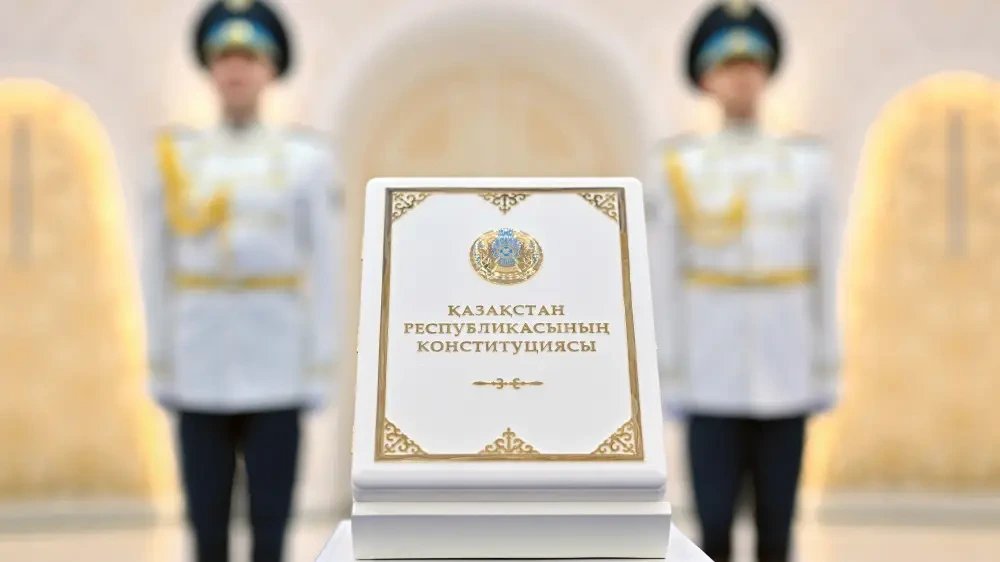
New Constitution takes effect in Kazakhstan, replacing Parliament with Kurultai
This digest was compiled by AI from multiple sources — links to the originals are below.
Kazakhstan's new Constitution took effect on July 1, replacing the bicameral Parliament with a Kurultai and introducing a Vice-President. The document consists of 11 sections and 95 articles, with 77 articles updated and two new sections added. The changes also include the Miranda principle and new family norms.
Key Facts
- The new Constitution consists of 11 sections and 95 articles, with 77 articles updated and two new sections added.
- The Kurultai replaced the bicameral Parliament, and 145 representatives from 5 parties were elected for 5 years on August 23.
- Aibek Dadebai was elected Chairman of the Kurultai with 144 votes, and Yerlan Karin was appointed Vice-President by presidential decree.
- The Miranda principle was enshrined, requiring law enforcement to immediately explain rights and reasons for detention from the moment of arrest.
- The state fee for appealing to the Constitutional Court was removed from the Tax Code.
Constitutional Structure
The new Constitution consists of 11 sections and 95 articles, with 77 articles updated and two new sections added. The sections 'People's Council' and 'Amendments to the Constitution' were added. The bicameral Parliament was replaced by the Kurultai, which gained legislative status. In the August 23 election, 145 representatives from 5 parties were elected for a 5-year term. Aibek Dadebai was elected Chairman of the Kurultai with 144 votes.
New Institutions
The position of Vice-President was introduced to ensure political stability. Yerlan Karin was appointed Vice-President by presidential decree. The Tax Code was updated to replace 'Parliament' with 'Kurultai' and introduce the 'Kazakhstan People's Council' norm. The term 'republican referendum' was replaced with 'nationwide referendum'. The state fee for appealing to the Constitutional Court was removed from the Tax Code.
Rights and Family
The Miranda principle was enshrined in the new Constitution. Law enforcement must immediately explain rights and reasons for detention from the moment of arrest. The suspect has the right to remain silent, to legal counsel, and to know the substance of the suspicion. Lawyer Nurlan Zhanabayev called this a very important guarantee, as a person is most vulnerable when detained. New norms were introduced to strengthen the institution of marriage, parental responsibility, and protection of children's rights.
1 source
Time · lag behind first