
Russia's Northern Sea Route reshapes Eurasian energy trade as Arctic LNG 2 expands
This digest was compiled by AI from multiple sources — links to the originals are below.
Russia's Northern Sea Route is becoming a central corridor for Eurasian energy trade, driven by Europe's January 2027 ban on Russian LNG. Arctic LNG 2 has loaded 41 cargoes totalling about 3.1 million tonnes so far this year, already exceeding last year's NSR volume. The route offers a 6,400 km, roughly 20-day passage from Murmansk to Qingdao, compared with 12,400 km and about 39 days via the Suez Canal.
Key Facts
- The Northern Sea Route extends about 5,600 km from the Kara Strait area to the Bering Strait and lies solely within Russian jurisdiction.
- Arctic LNG 2 on the Gydan Peninsula was designed to produce 19.8 million tonnes per year across three floating trains, two of which have been completed.
- 41 cargoes totalling about 3.1 million tonnes have been loaded from Arctic LNG 2 so far this year, already exceeding last year's NSR volume.
- Two large prefabricated LNG modules were shipped from China to Russia's Belokamenka construction yard in mid-August for Arctic LNG 2's third train.
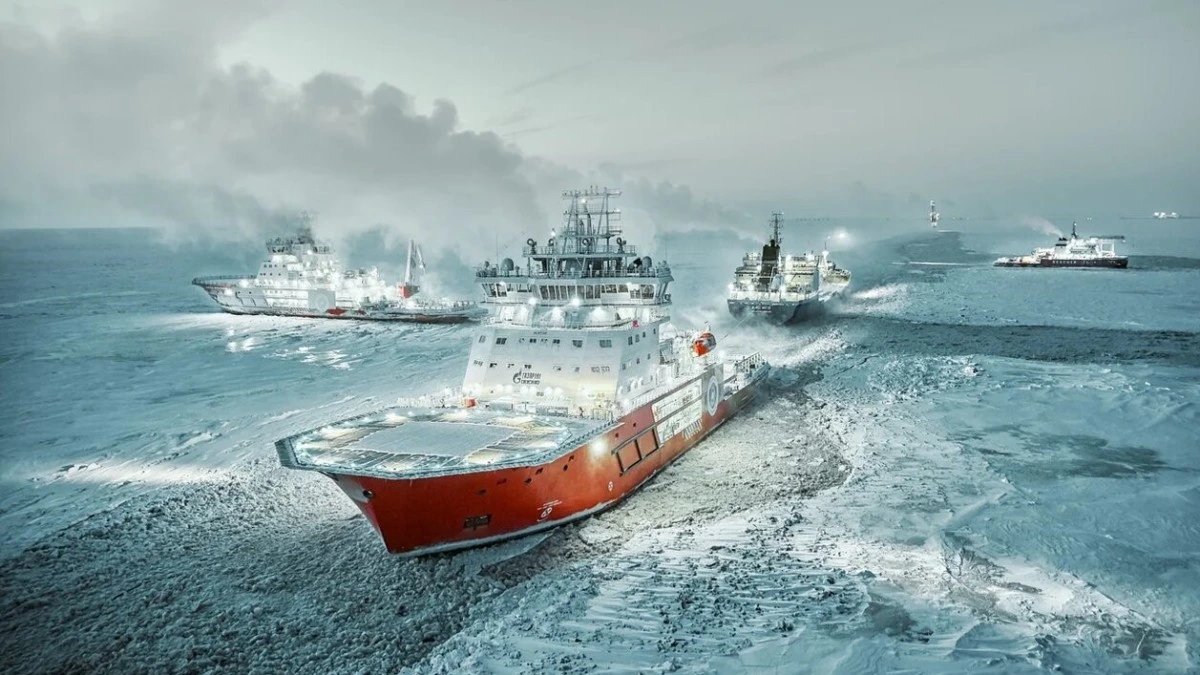
- Since 2025, winter operations are supported by Arc7 carriers transporting LNG to docked FSRUs near Kamchatka and Murmansk for ship-to-ship transfer onto conventional vessels.
The Northern Sea Route
The NSR follows Russia's Arctic coast from the Kara Strait area to the Bering Strait and extends about 5,600 km. It lies solely within Russian jurisdiction and is managed through the country's navigation rules, icebreakers and ports, without any dependence on external canal authorities. Traffic is concentrated between June or July and October, but warming conditions and more Arctic-capable vessels are lengthening the manageable season. For cargo sailing from Murmansk to Qingdao on China's eastern coast, the Arctic route covers about 6,400 km and takes roughly 20 days, compared with 12,400 km and around 39 days via the Suez Canal. Its value as a shortcut has been reinforced by the Suez route's growing unreliability.
Arctic LNG 2 Expansion
Arctic LNG 2 represents the next major stage of Russia's Arctic LNG trade. The Gydan Peninsula project was designed to produce 19.8 million tonnes per year across three floating trains, two of which have been completed. Output remains below capacity because of US sanctions and a shortage of dedicated tankers, with a gradual start to China-bound exports last year. Most Arctic LNG 2 sailings used the NSR, carrying a total of 530,000 tonnes of LNG, while only two cargoes took southern routes, underscoring the NSR's central commercial role. Novatek is preparing to advance the third train, with two large prefabricated LNG modules shipped from China to Russia's Belokamenka construction yard in mid-August.
Winter Operations and Fleet
Since 2025, winter operations are supported by Arc7 carriers transporting LNG to docked FSRUs near Kamchatka and Murmansk, where the cargo is transferred via ship-to-ship onto conventional vessels for final delivery. This has allowed the specialized Arc7 carriers to make shorter, more frequent voyages. With September typically the busiest period for Arctic shipping, exports are on course to rise further. Seven additional modules remain in China at varying stages of completion.
1 source
Time · lag behind first