
NVIDIA DLSS 5 shifts real-time rendering into remaster territory
This digest was compiled by AI from multiple sources — links to the originals are below.
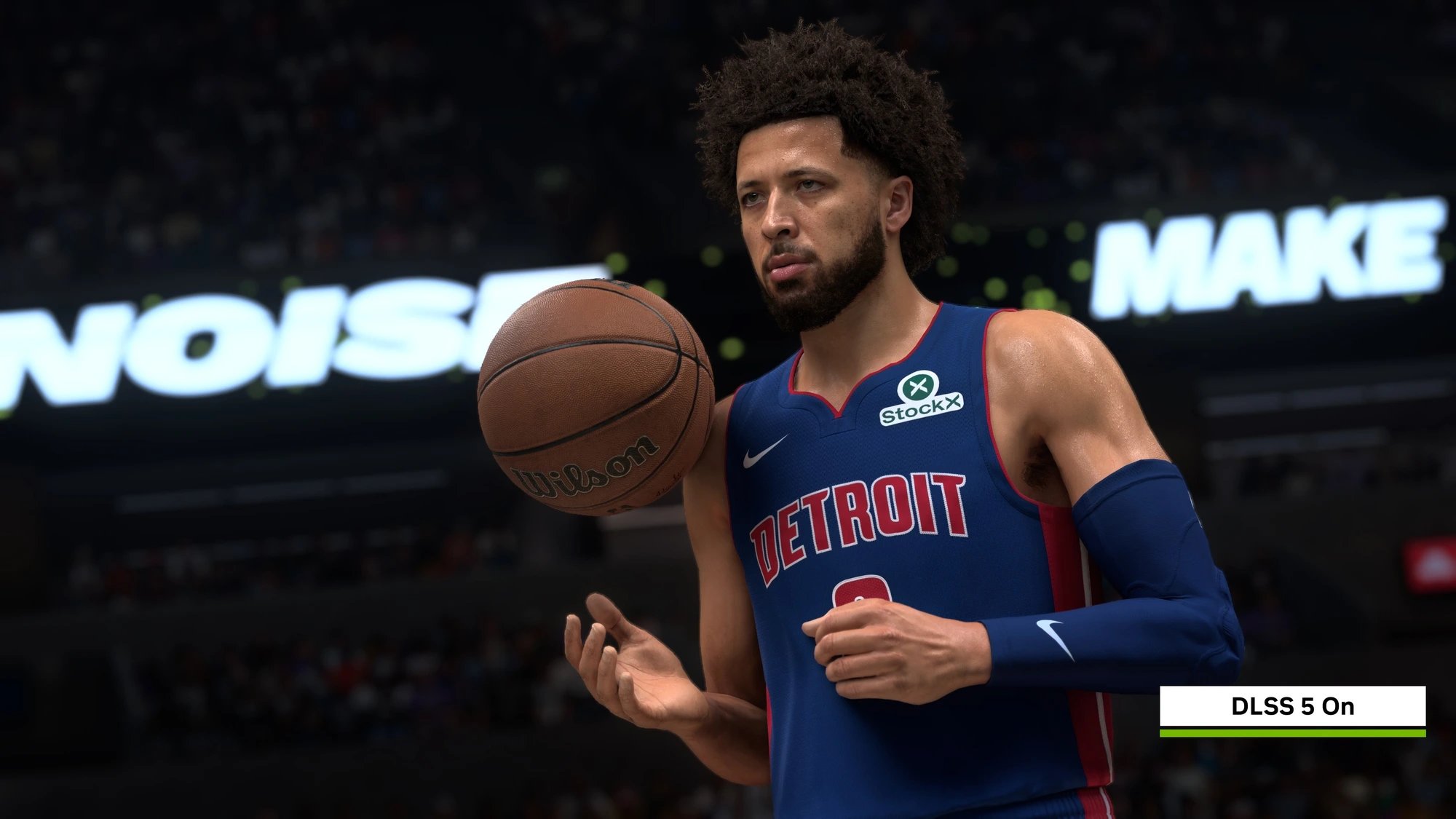
NVIDIA's DLSS 5 with 3D-Guided Neural Rendering debuted September 3 in NBA 2K27, improving lighting and materials in real time. The technology now handles visual upgrades that previously required separate remastered releases. Simple graphics-focused remasters lose their main advantage, while full remakes remain unaffected.
Key Facts
- DLSS 5 with 3D-Guided Neural Rendering debuted September 3 in NBA 2K27.
- The technology improves lighting, subsurface scattering, and material response in real time using game engine data.
- Visual Concepts senior producer Peter Cavic stated DLSS 5 significantly improved material and lighting quality toward photorealism.
- NVIDIA says DLSS 5 extends rather than replaces the classic graphics pipeline and still depends on original assets and developer work.
- The Elder Scrolls IV: Oblivion Remastered included reworked graphics, animations, effects, new dialogue, updated systems, and changed character progression.
DLSS 5 Technology
DLSS 5 with 3D-Guided Neural Rendering officially debuted on September 3 in NBA 2K27. Unlike conventional upscaling, the system works directly with scene appearance, analyzing objects and engine data to generate more realistic lighting, subsurface scattering, and material reactions. Developers can control the result using masks and other tools. In NBA 2K27, the technology renders more natural skin, hair, and light passing through players' ears while preserving the original facial geometry from scans of real athletes.
Remaster Market Impact
DLSS 5 begins to encroach on traditional graphics remasters by handling lighting, materials, and overall image refresh during rendering. NVIDIA emphasizes that DLSS 5 does not replace the classic graphics pipeline but extends it, with output quality depending on the original geometry, lighting, and scene data. The technology cannot create a full remaster of an old game with one click and still relies on original assets and developer work. Simple graphics-focused remasters, whose main value is a more modern picture, are most at risk.
Full Remakes Unaffected
The Elder Scrolls IV: Oblivion Remastered shows the limits of DLSS 5. Bethesda reworked graphics, animations, and effects, recorded new dialogue, updated game systems, and changed character progression. According to Bethesda, nearly every element of the original game was modernized. Full re-releases with new models, animations, interface, controls, sound, fixes, and gameplay changes are not replaced by DLSS 5.
2 sources
Time · lag behind first