
China's Robot Games Blend Industrial Strategy With State Spectacle
This digest was compiled by AI from multiple sources — links to the originals are below.
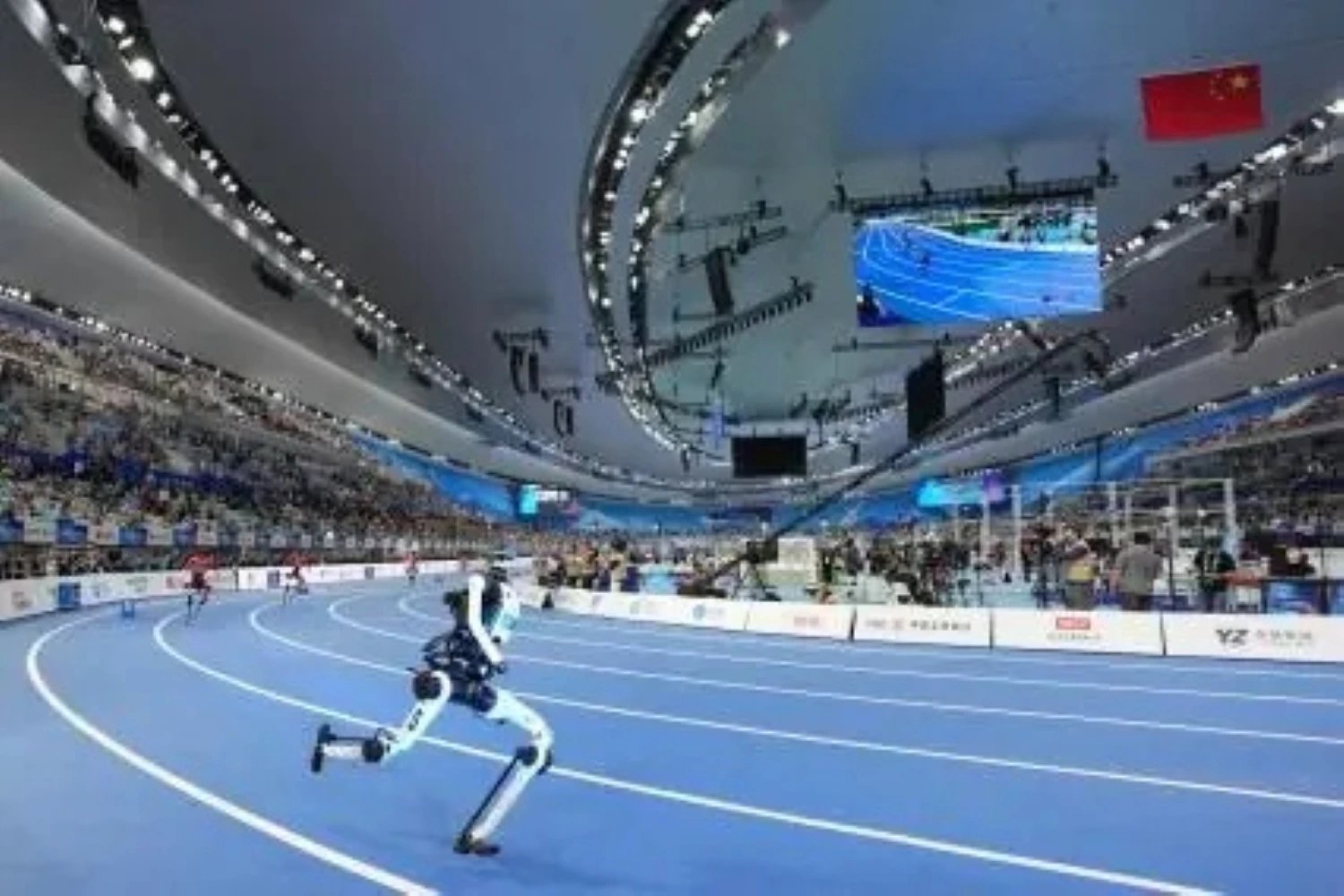
China's World Humanoid Robot Games in Beijing featured over 2,000 robots competing in 51 events this August. Chinese state media framed the event around future industrial and domestic applications, while Western coverage emphasized spectacle and state power. The dual framing reflects Beijing's broader push to advance humanoid robotics for commercial use.
Key Facts
- Tiangong Ultra, a Chinese humanoid robot, finished the 100 meters in 8.64 seconds at the World Humanoid Robot Games in Beijing.
- More than 2,000 robots competed in 51 events at the August games, including running, boxing, household chores, and industrial tasks.
- Chinese state media emphasized future applications of humanoid robots in factories, warehouses, homes, and daily life.
- Western coverage often framed the event as a spectacle, a demonstration of Chinese state power, or propaganda.
- Tesla presents its Optimus robot as part of a broader technological transformation bringing artificial intelligence into the physical world.
The Beijing Games
The World Humanoid Robot Games took place in Beijing this August. More than 2,000 robots competed in 51 events, including sprinting, boxing, household chores, and industrial tasks. Tiangong Ultra, a Chinese humanoid robot, completed the 100 meters in 8.64 seconds, faster than Usain Bolt's human world record. Some robots fell over during the competitions, underscoring the event's dual nature as sporting contest and technology demonstration.
Competing Narratives
Western media often framed the games as a spectacle, a demonstration of Chinese state power, or propaganda. Chinese state media focused less on the event itself and more on what the robots might eventually do: work in factories, move through warehouses, assist in homes, or become part of everyday life. Beijing has made technological development a national priority, and events like the Robot Games serve that ambition. Political purpose and technological progress can exist at the same time, and reducing the event to political theater risks missing what is happening on the technological side.
Industrial Strategy
China has invested heavily in humanoid robotics, with companies developing robots for factories, logistics, healthcare, and other commercial applications. The Robot Games are designed not only to show what robots can do, but also to test how they might be used outside the laboratory. In the United States, Silicon Valley has long sold technological visions, with Tesla presenting its Optimus robot as part of a broader transformation bringing artificial intelligence into the physical world.
1 source
Time · lag behind first