
Scientists map metabolic signals that steer human brain stem cell decisions
This digest was compiled by AI from multiple sources — links to the originals are below.
UCLA researchers mapped metabolism in the developing human cortex and found radial glia stem cells rely on the pentose phosphate pathway to decide which neurons to produce. Lowering glucose or disrupting the pathway shifted output toward inhibitory neurons and later cell types. The findings appear in Cell and Science.
Key Facts
- Radial glia stem cells depend heavily on the pentose phosphate pathway, which uses glucose to make materials for rapidly dividing cells.
- Lowering glucose or interfering with the pathway caused radial glia to produce more inhibitory neurons and other cell types that normally appear later in development.
- The Cell study was a collaboration between Aparna Bhaduri's lab and Heather Christofk's lab, led by co-first authors Jessenya Mil and Jose Soto.
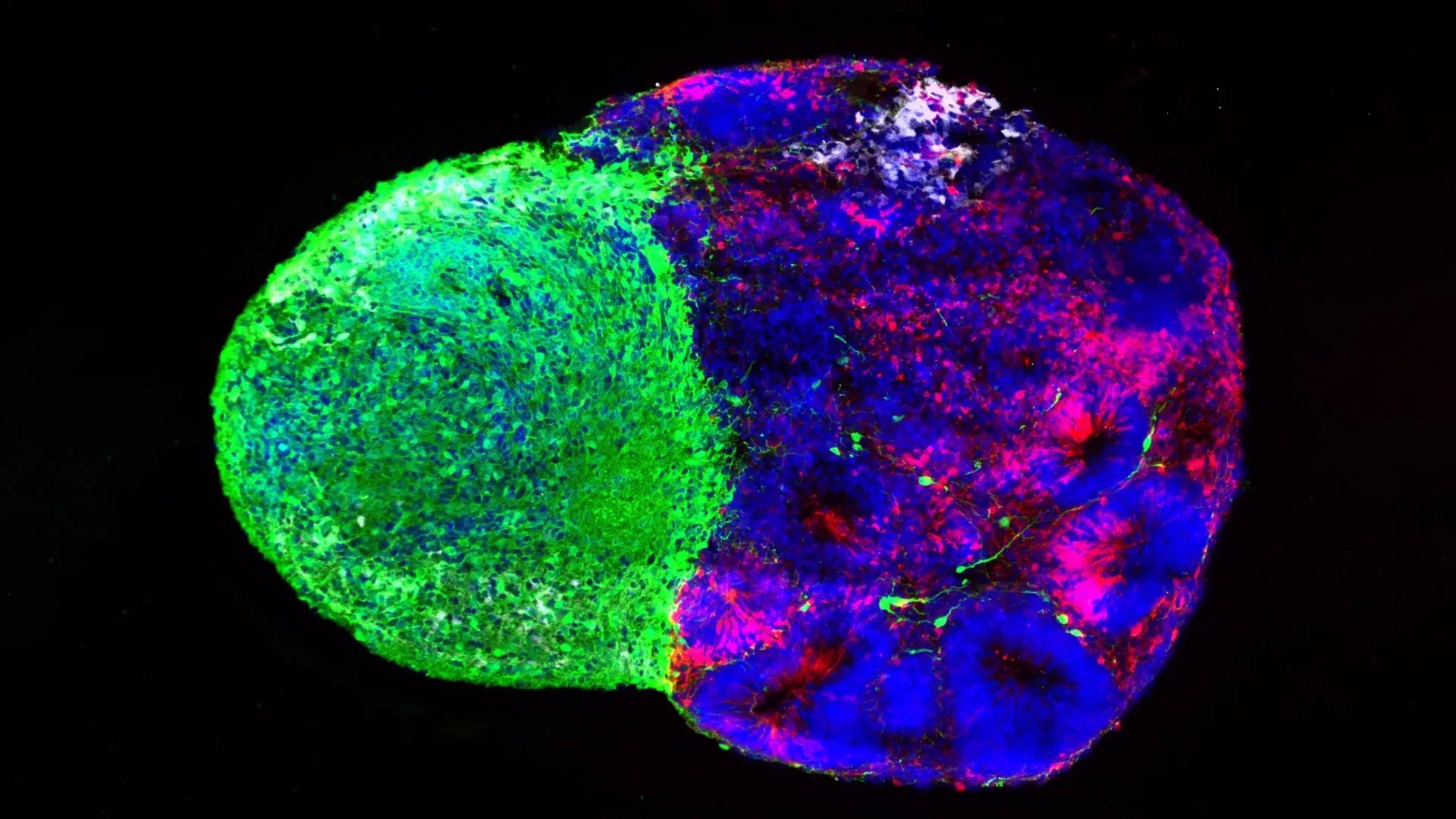
- The researchers analyzed donated human tissue and brain organoids grown from stem cells to build the metabolic atlas.
Metabolic Control of Cell Fate
In the Cell study, researchers built a detailed map of metabolism in the developing human cortex. The project was a collaboration between Aparna Bhaduri's lab and Heather Christofk's lab, led by co-first authors Jessenya Mil and Jose Soto. To create the atlas, the team analyzed donated human tissue along with brain organoids grown from stem cells. Their results pointed to an unexpected conclusion: metabolism does not simply support brain development in the background, but can actively influence which kinds of cells are produced.
Pentose Phosphate Pathway Dependence
The researchers found that radial glia depend heavily on the pentose phosphate pathway, a metabolic process that uses glucose to make materials needed by cells that are dividing rapidly. When the scientists lowered the amount of available glucose or interfered with this pathway, the stem cells changed what they produced. They began generating more inhibitory neurons and other cell types that normally appear later in development. Bhaduri, a member of both the UCLA Broad Stem Cell Research Center and the UCLA Health Jonsson Comprehensive Cancer Center, said metabolism 'can really control how stem cells make decisions.'
1 source
Time · lag behind first