
Nature study: Brain stimulation strengthens cell assemblies via gene networks
This digest was compiled by AI from multiple sources — links to the originals are below.
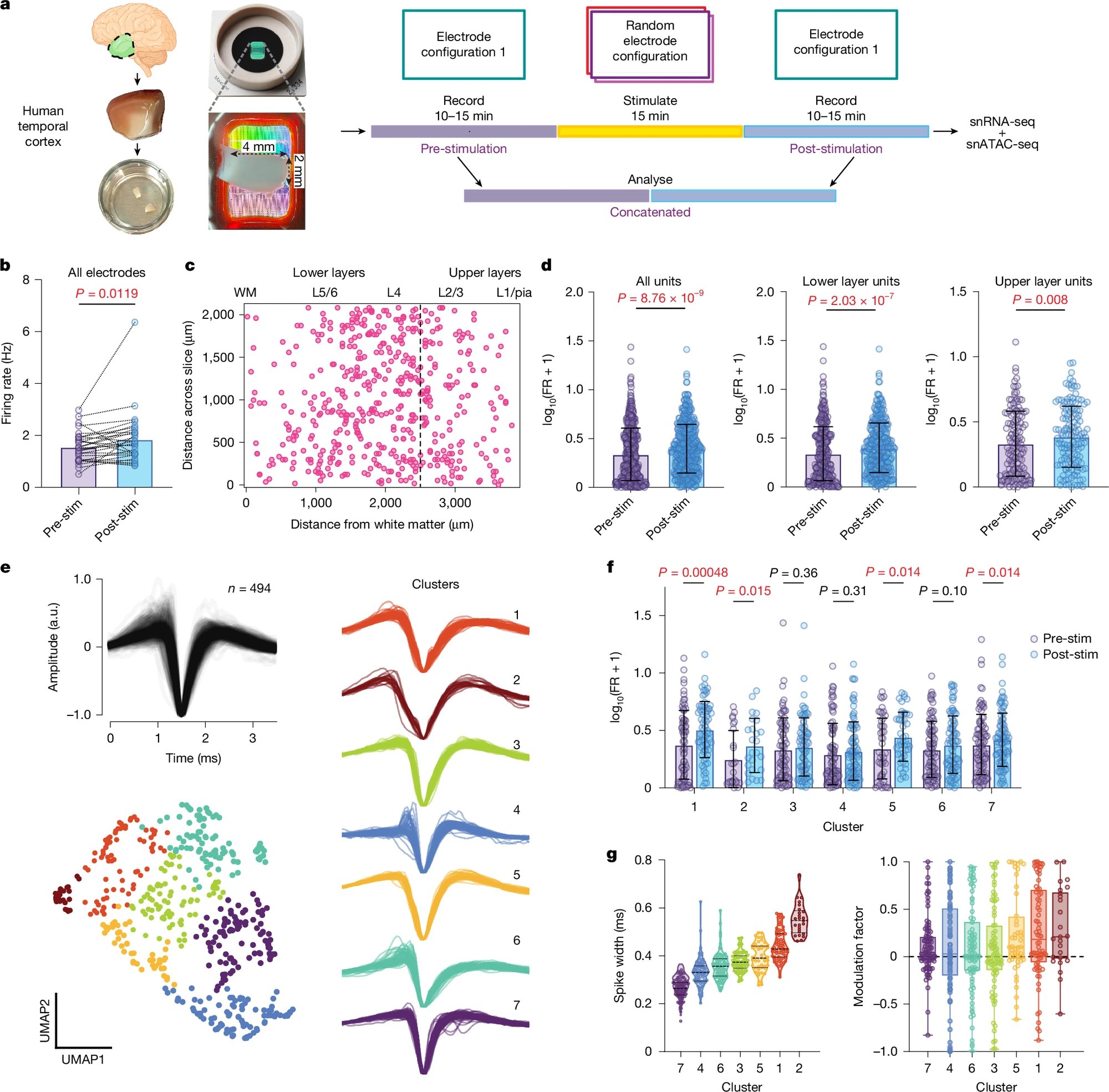
Scientists have uncovered the biological mechanisms through which electrical stimulation reshapes the human cortex. Using an ex vivo platform with resected temporal lobe tissue from neurosurgery patients, they found that stimulation strengthens cell assemblies and identified cell-type-specific gene regulatory networks driving this effect. The findings, published in Nature, link physiology to targetable genetic signatures.
Ex Vivo Platform
Researchers developed a system integrating microelectrode array stimulation with simultaneous recording and single-nucleus genomics. The platform used resected temporal cortex from epilepsy and tumor patients undergoing neurosurgery. Tissue was stimulated ex vivo, and gene expression was profiled at a single-cell resolution.
Gene Regulatory Networks
Stimulation was found to strengthen cell assemblies through cell-type-specific gene regulatory networks. The team identified gene expression changes in excitatory, inhibitory, and non-neuronal cells. These networks were enriched for synaptic signaling and plasticity pathways, suggesting a molecular basis for circuit-level remodeling.
In Vivo Validation
The findings were corroborated by in vivo stimulation data, which showed common gene-expression signatures across cell types. This confirmed the generalizability of the ex vivo results. The data have been deposited in the Gene Expression Omnibus under accession GSE288939.
1 source
Time · lag behind first