
Burnham hosts Macron for talks on small boats and defence
This digest was compiled by AI from multiple sources — links to the originals are below.
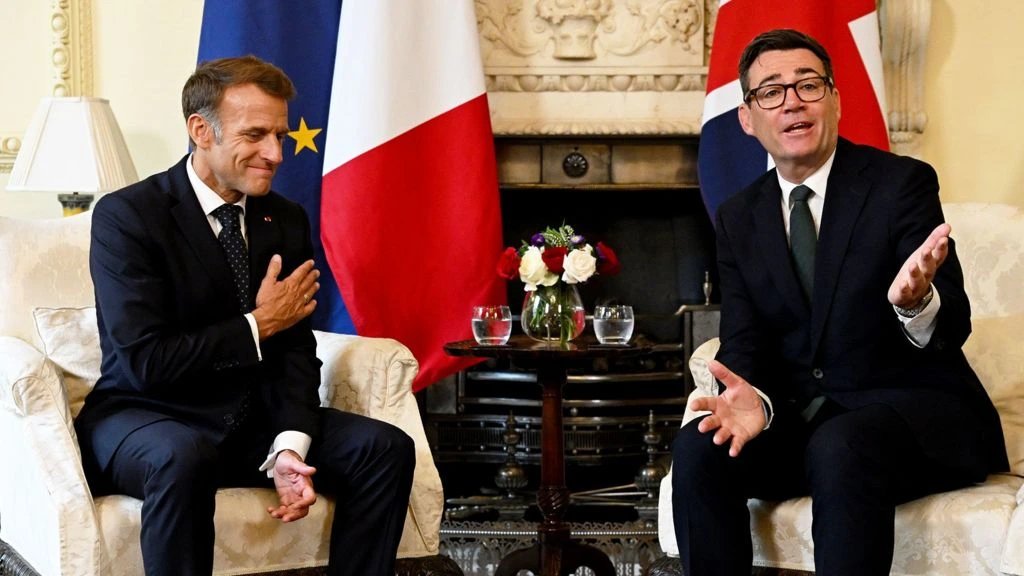
Prime Minister Andy Burnham met French President Emmanuel Macron at 10 Downing Street on Thursday to discuss small boat crossings, defence, and UK-EU relations. The meeting marked Macron's first visit to the UK under Burnham's premiership. The talks come as the UK deploys 45 extra police officers to French beaches to tackle larger dinghies.
Key Facts
- Burnham described Macron as 'our nearest neighbour and close friend Emmanuel' during their meeting.
- Macron's visit was primarily to mark the Bayeux Tapestry's loan to the British Museum, where he met King Charles on Wednesday.
- Downing Street says 45 extra police officers are being deployed to French beaches in a 'surge team' to tackle larger dinghies.
- Home Office Minister Anna Turley said the officers were part of more than 1,000 officers on northern French beaches doing 'actual intervention' in the water.
Bilateral Talks
Burnham and Macron discussed 'shared challenges' including the rise of 'mega dinghies' crossing the Channel illegally. The talks also covered the conflicts in Ukraine and the Middle East, as well as defence and EU co-operation. Burnham said it was 'so fitting' that Macron was his first overseas visitor in Downing Street since becoming PM in July. The meeting reflects an obvious reality: to further reduce small boat crossings, working with France will be essential.
Small Boats Response
The overall number of small boat arrivals in the UK fell to a seven-year low this summer. Downing Street announced a 'surge team' of 45 extra police officers deployed to French beaches. Home Office Minister Anna Turley said the officers were 'just part of the armoury' of more than 1,000 officers on northern French beaches. Turley told BBC Radio 4's Today programme that videos in recent weeks show officers 'going to the boats, slashing them, pushing people back, being bombarded with stones and bricks'.
2 sources
Time · lag behind first