
US-Iran escalation threatens Kazakhstan's oil revenue and transport corridor plans
This digest was compiled by AI from multiple sources — links to the originals are below.
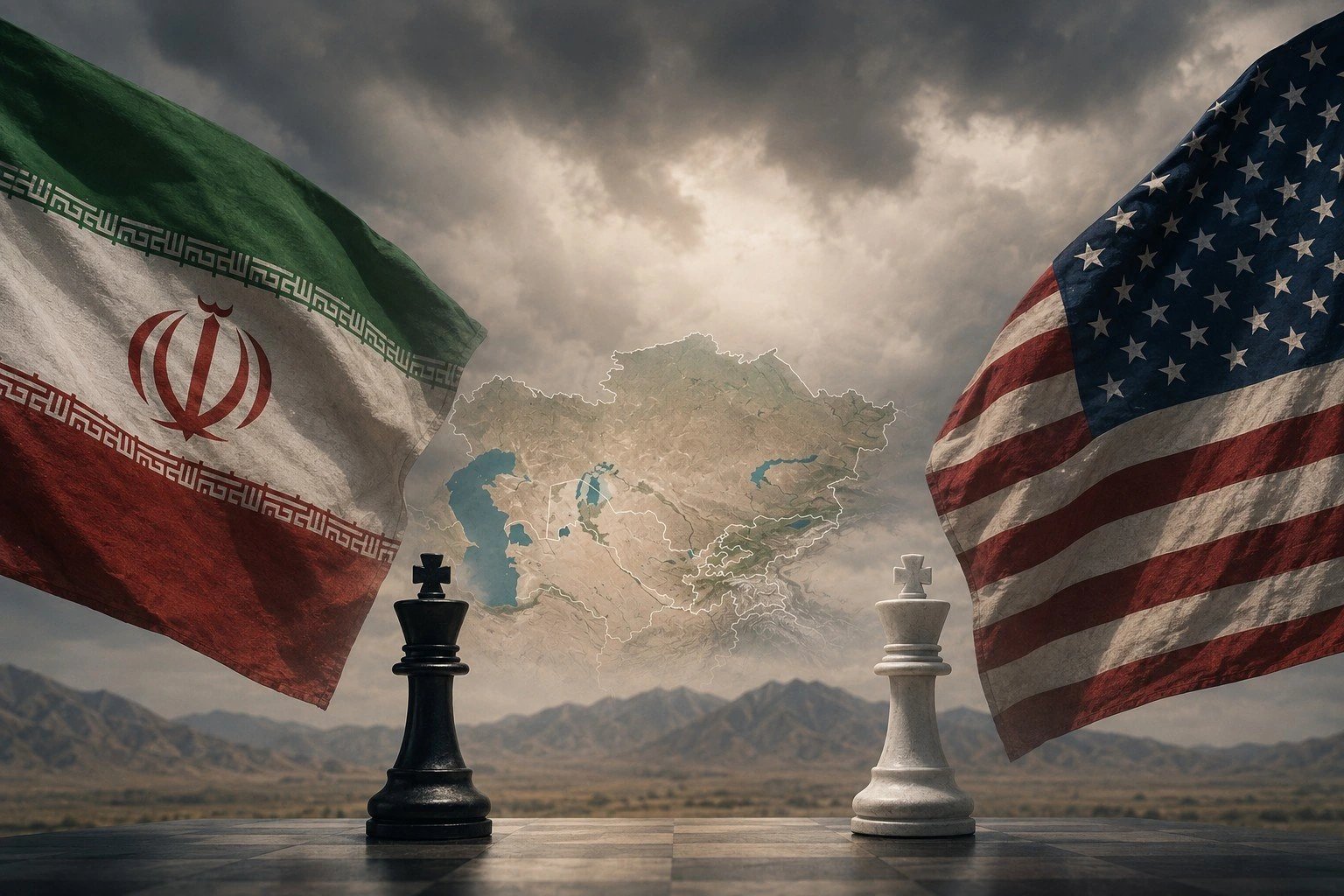
The United States and Iran exchanged their heaviest strikes since July, with Washington hitting military targets on Iran's southern coast and Tehran responding with missile and drone attacks on US assets in Kuwait, Jordan, Bahrain, and Iraq. Brent crude traded at about $97 a barrel on September 3, but Kazakhstan's logistical constraints limit its ability to benefit from higher prices. The renewed escalation also threatens Kazakhstan's plans to expand transport corridors through Iran, including the International North-South Transport Corridor.
Key Facts
- Brent crude traded at about $97 a barrel on September 3, with further price movements dependent on developments surrounding Iran and shipping through the Strait of Hormuz.
- Kazakhstan-Iran trade increased by 26.4% in 2025 to $430.2 million, with both countries aiming to raise bilateral trade to $3 billion.
- Freight volumes on the International North-South Transport Corridor increased by 12% in 2025 to 3.5 million tons, and rail freight between Kazakhstan and Iran rose by 69%.
- On June 28, Iran's Ports and Maritime Organization signed a Build-Operate-Transfer agreement allocating land at Shahid Rajaee Port in Bandar Abbas for a Kazakh transport and logistics terminal.
Oil Market Exposure
Brent crude was trading at about $97 a barrel on September 3, with the oil market remaining highly volatile and further price movements likely to depend on developments surrounding Iran and shipping through the Strait of Hormuz. Kazakhstan could theoretically benefit from higher oil prices, but existing logistical constraints substantially limit that opportunity. Ukrainian attacks affecting the Caspian Pipeline Consortium have contributed to production cuts, while Kazakhstan's shipments through the Baku-Tbilisi-Ceyhan pipeline remain far too small to compensate for a major disruption to the CPC. Kazakhstan therefore risks missing out on another oil price surge.
Transport Corridor Ambitions
Iran is important to Kazakhstan's transport strategy, and on June 16, while a ceasefire between Washington and Tehran was still in effect, Kazakhstan moved to advance its transport and trade plans through Iran. Deputy Prime Minister and Minister of National Economy Serik Zhumangarin met an Iranian delegation headed by Minister of Roads and Urban Development Farzaneh Sadegh. A central topic in the talks was the International North-South Transport Corridor, where freight volumes increased by 12% in 2025 to 3.5 million tons. The two sides agreed to modernize transport infrastructure with the goal of increasing the corridor's capacity to 20 million tons annually. Iran also completed arrangements to allocate Kazakhstan a land plot at Shahid Rajaee Port in Bandar Abbas and confirmed its readiness to provide access to Chabahar Port, offering connections to markets in South and Southeast Asia.
Strategic Calculations
Kazakhstan tried to use the lull in the US-Iran conflict to advance a route of its own that does not depend on Russia, China, or Turkey. Much of that effort, however, depends on an end to hostilities in the region.
1 source
Time · lag behind first