
Mirziyoyev Condemns Uzbekistan's Forced Labor Legacy in Cotton Fields
This digest was compiled by AI from multiple sources — links to the originals are below.
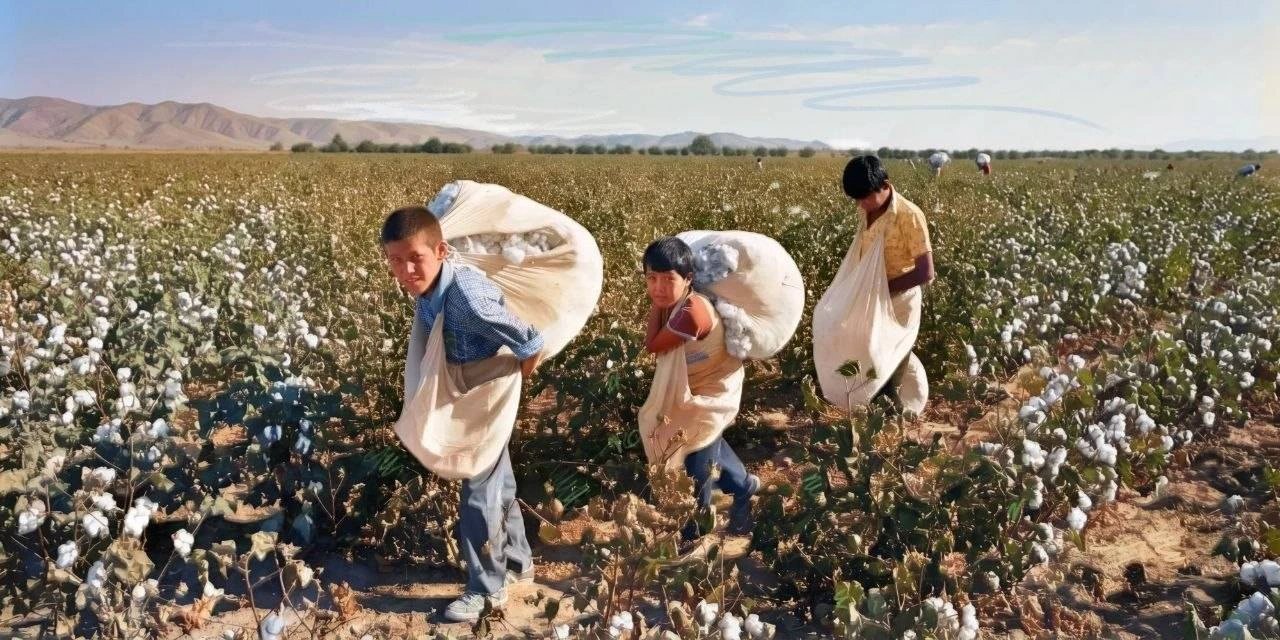
Uzbekistan's President Shavkat Mirziyoyev has condemned the country's history of forced labor in cotton production, saying the crop turned many people into 'slaves of cotton.' His remarks mark a break from the Soviet-era mantra that cotton is 'white gold.' The country's cotton industry has faced international boycotts over forced labor involving nearly 2 million people annually.
Key Facts
- President Shavkat Mirziyoyev said cotton turned many people in Uzbekistan into 'slaves of cotton.'
- A 2014 Human Rights Watch report said the Uzbek government forcibly mobilized nearly 2 million adults and children during the autumn cotton harvest.
- The Cotton Campaign launched in 2009 persuaded more than 330 international brands to boycott Uzbek cotton.
- Uzbekistan's cotton sales totaled $1.6 billion in 1995 and $1.4 billion in 1997.
Forced Labor Legacy
Since the 1860s, Moscow promoted cotton cultivation in Uzbekistan as an ideal source of the crop. Soviet propaganda stressed cotton production as a patriotic duty, and hundreds of thousands of people, including children, were forced into the fields as 'volunteers' at harvest time. The practice continued after Uzbekistan gained independence in 1991, with local officials and factory heads required to meet labor quotas. Imams used sermons to exhort worshippers to pick cotton, calling it a religious duty.
Economic Dependence
Cotton sales were a key source of hard currency for independent Uzbekistan, totaling $1.6 billion in 1995 and $1.4 billion in 1997. Despite falling world prices, cotton and textile sales still amounted to just over $1 billion in 2013. Countries such as China, Bangladesh, Vietnam, and Iran continued to buy Uzbek cotton despite international criticism.
International Boycott
The Cotton Campaign launched efforts in 2009 to persuade international brands to stop using Uzbek cotton. More than 330 brands eventually joined the boycott. A 2014 Human Rights Watch report said the government forcibly mobilized nearly 2 million adults and children for the cotton harvest.
1 source
Time · lag behind first