
NASA studies link Sun's galactic path to Earth's ancient climate shifts
This digest was compiled by AI from multiple sources — links to the originals are below.
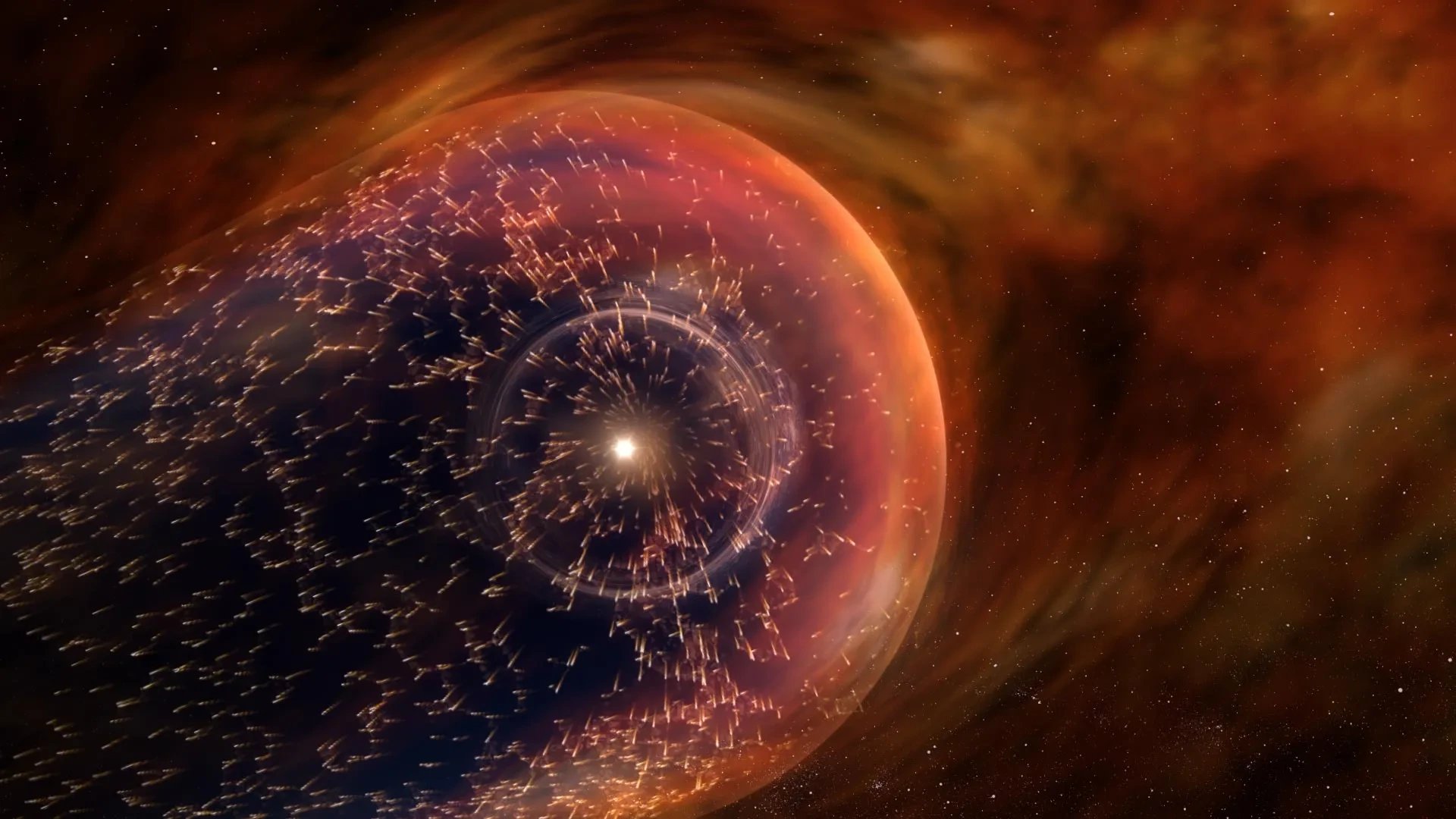
Two NASA-funded studies suggest the Sun's journey through the Milky Way and ancient solar eruptions influenced Earth's climate. Computer simulations indicate the heliosphere compressed during encounters with interstellar cold clouds, potentially affecting conditions on Earth. The findings link galactic environment changes to ancient temperature shifts and early planetary warmth.
Key Facts
- NASA's SHIELD center used computer simulations to reconstruct the heliosphere's trajectory through the Milky Way.
- The Sun passed through extremely cold interstellar regions at least three times in the past several million years.
- Encounters with interstellar cold clouds may have compressed the heliosphere dramatically.
- A separate NASA-led study suggests powerful solar eruptions helped generate strong greenhouse gases in Earth's early atmosphere.
- The study was published Aug. 21 in Annual Review of Astronomy and Astrophysics.
Heliosphere Compression
The heliosphere is a vast protective bubble produced by the Sun that surrounds the solar system. Charged particles in the solar wind stream outward from the Sun in every direction, forming this region. During encounters with interstellar cold clouds, the heliosphere may have been pressed with enough force to dramatically compress it. Merav Opher, SHIELD's principal investigator at Boston University, led the simulation work. The solar system has moved through many different galactic environments during the Sun's 4.6-billion-year lifetime.
Early Earth Warmth
A separate study led by a NASA scientist explores how a much dimmer young Sun could have kept Earth warm. The findings suggest powerful solar eruptions may have helped generate strong greenhouse gases in Earth's early atmosphere. These greenhouse gases could have kept the young planet warm enough for liquid water and possibly life. Earth's climate has changed dramatically over tens of millions of years, with major ice ages and warmer periods. Scientists have traditionally investigated changes in Earth's orbit, greenhouse gas levels, and ice coverage to understand these shifts.
1 source
Time · lag behind first