
Serbia Opens Europe's First Chinese Humanoid Robot Factory in Sabac
This digest was compiled by AI from multiple sources — links to the originals are below.
Serbia opened a humanoid robot factory in Sabac on August 29, a joint project with Chinese companies Minth Group and AGIBOT. The facility is Europe's first mass-production plant for Chinese-designed humanoid robots, with an annual target of over 5,000 units. The opening comes weeks after Washington banned imports of such robots, citing national security risks.
Key Facts
- The Sabac factory is a joint project between Serbia and Chinese companies Minth Group and AGIBOT.
- Serbian President Aleksandar Vucic said the factory aims to assemble and later produce more than 5,000 robots annually.
- The United States announced a ban on imports of advanced foreign-made robots on July 29.
- Vucic announced the Serbian military would present the first use of Chinese robots in the Serbian Armed Forces within 15 days of the factory's opening.
- China's embassy in Washington vowed to take all necessary measures in response to the US ban.
Factory Opening
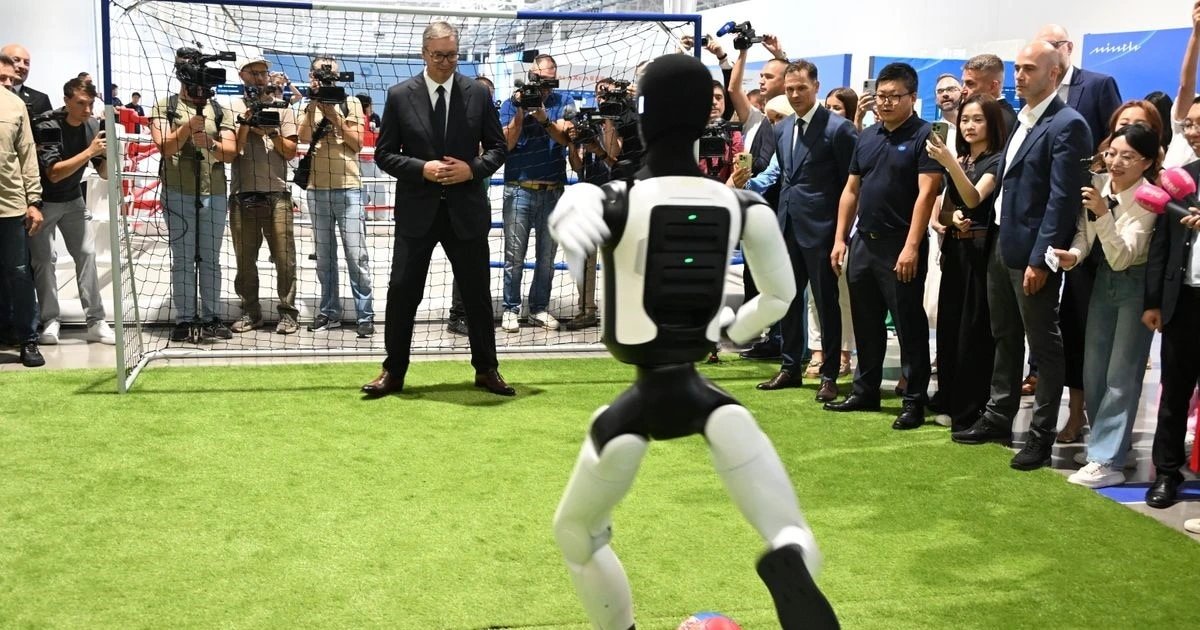
The factory in Sabac opened on August 29, weeks after the United States blocked imports of the technology, citing unacceptable national security risks. Serbian President Aleksandar Vucic said the facility aims to assemble and later produce more than 5,000 robots annually. During the opening ceremony, Vucic fielded a penalty goal kicked by a humanoid robot and watched a man being carried by a quadruped version of the technology. William Shi, CEO of AGIBOT Europe, said in February that Serbia was chosen for the robot factory because of its stable business environment.
US Ban and Chinese Response
On July 29, the United States announced a ban on imports of advanced, foreign-made robots, a category that includes the humanoid and animal-like quadrupeds being assembled in Serbia. The FCC said foreign robots equipped with sensors and cameras could allow malign actors to surveil Americans, enhance foreign intelligence capabilities, or remotely commandeer the robots. China's embassy in Washington reacted strongly to the ban, vowing to take all necessary measures in response to trade barriers that harm Beijing's interests. The embassy called for Washington to stop smearing Chinese companies and threatening them with sanctions.
Military Use and EU Risks
Vucic announced that Serbia's military would present the first use of Chinese robots in the Serbian Armed Forces within 15 days of the factory's opening. He added that the robots would be seen not only walking but using weapons, and very serious weapons. Antonia Hmaidi, a technology expert at the Berlin-based Mercator Institute for China Studies, said the Serbian facility may enable China to avoid potential future tariffs as humanoid technology becomes more widespread. If EU tariffs or import bans on Chinese robots are enacted, the Serbian robot facility may be able to categorize its products as made substantially in Serbia, which currently has preferential trade conditions with Brussels.
1 source
Time · lag behind first