Glacier-rock avalanche caused Gyirong checkpoint mudslide, Chinese Academy of Sciences finds
This digest was compiled by AI from multiple sources — links to the originals are below.
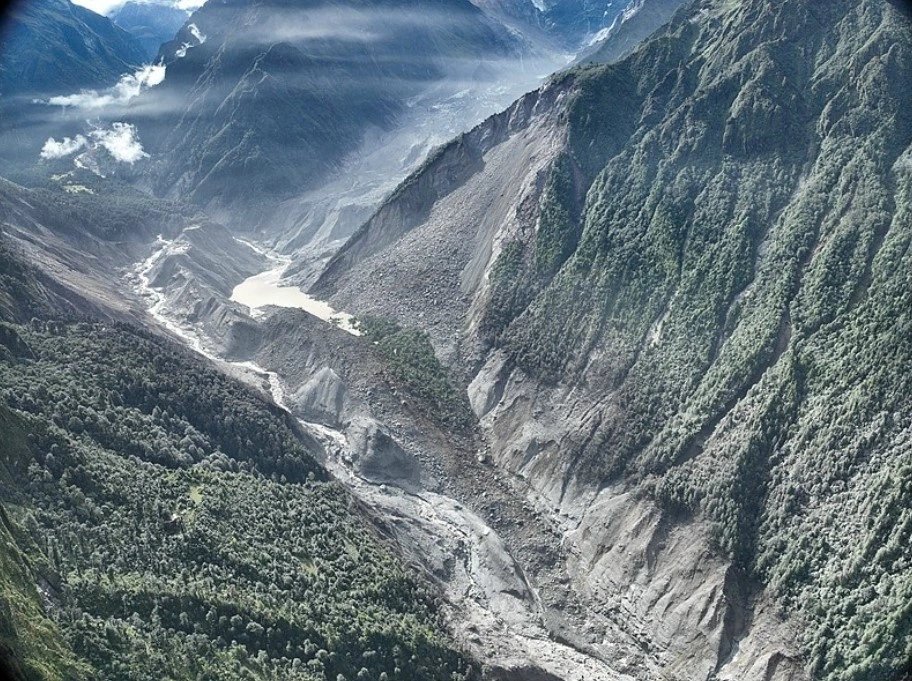
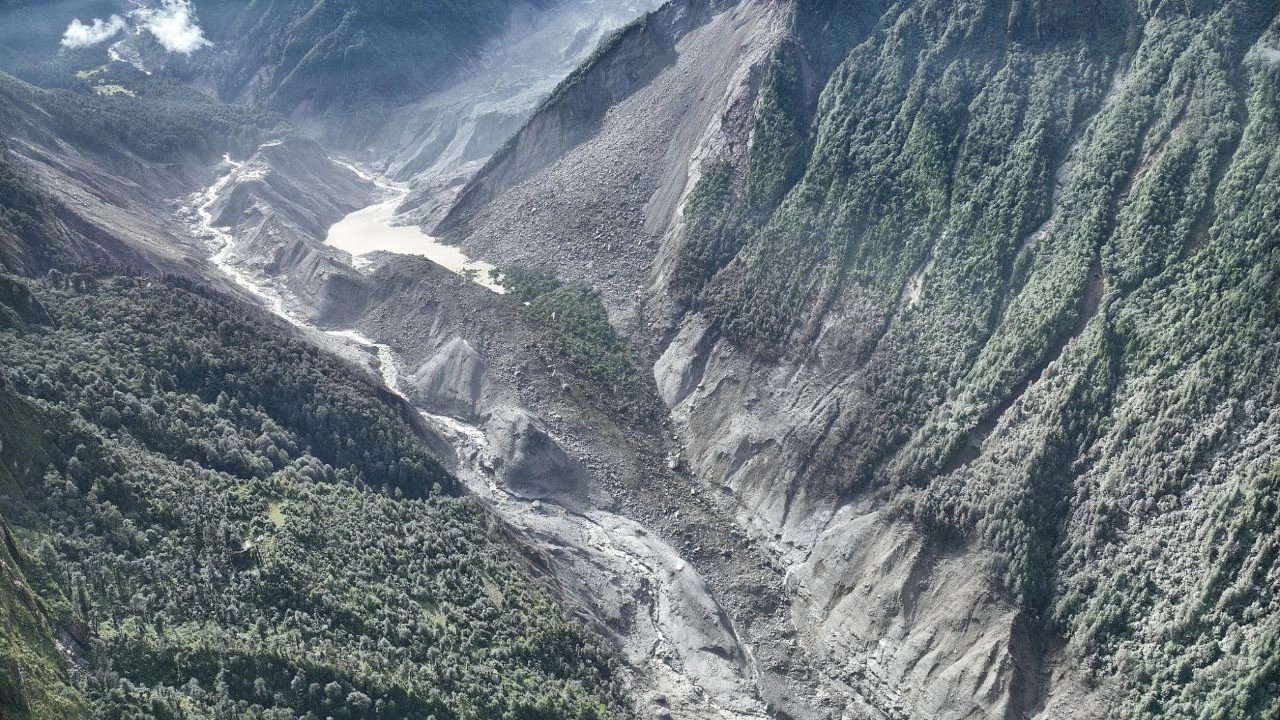
A glacier-rock avalanche on Nepal's Langtang-Lirung peak triggered the mudslide that destroyed the Gyirong checkpoint in Xizang on August 26. The mass traveled 22 kilometers in 6–7 minutes, obliterating 27 buildings and infrastructure facilities across 0.7 square kilometers.
Key Facts
- The avalanche detached from the southern slope of Langtang-Lirung peak in Nepal at an altitude of about 5,200 meters at 10:52 Beijing time on August 26.
- The resulting mudflow traveled approximately 22 kilometers and struck the Gyirong checkpoint at an altitude of 1,800 meters.
- Monitoring showed only 6–7 minutes elapsed between the avalanche in Nepal and the impact on the checkpoint.
- The disaster completely destroyed 27 buildings and infrastructure facilities over an area of about 0.7 square kilometers.
Avalanche Origin
The Chinese Academy of Sciences determined that a glacier and rock mass detached from the southern slope of Langtang-Lirung peak in Nepal at an altitude of about 5,200 meters. The detachment occurred at approximately 10:52 Beijing time on August 26. The falling mass formed a massive mudflow that traveled at high speed.
Impact on Gyirong Checkpoint
The mudflow covered about 22 kilometers and reached the Gyirong checkpoint at an altitude of 1,800 meters. Monitoring data showed that only 6–7 minutes passed from the avalanche in Nepal to the impact on the checkpoint. The disaster completely destroyed 27 buildings and infrastructure facilities across an area of approximately 0.7 square kilometers.
1 source
Glacier-rock avalanche caused Gyirong checkpoint mudslide, Chinese Academy of Sciences finds