
Curiosity rover finds 21 organic molecules in 3.5-billion-year-old Martian sandstone
This digest was compiled by AI from multiple sources — links to the originals are below.
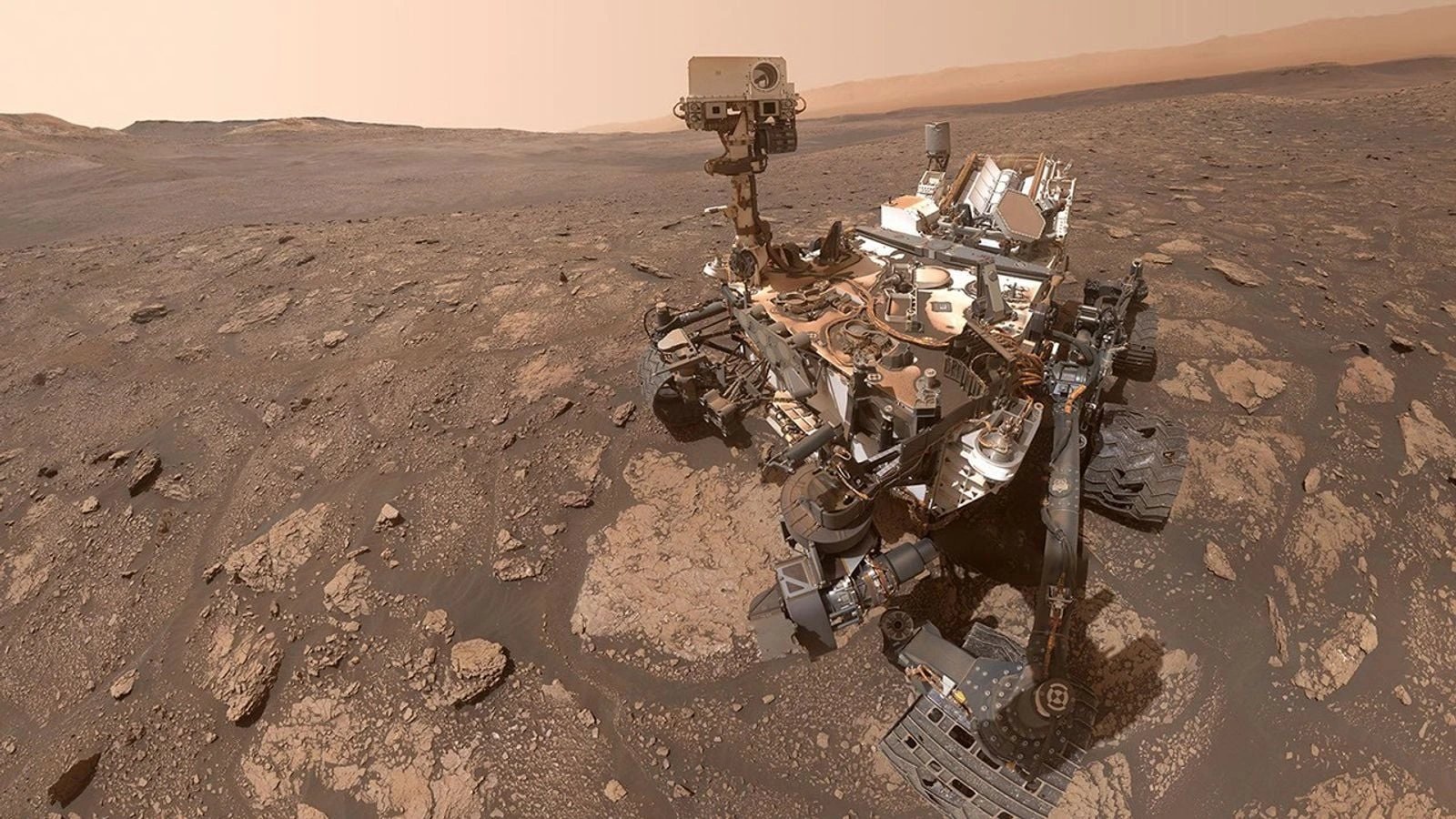
NASA's Curiosity rover identified 21 organic molecules in a drilled sandstone sample from Gale Crater, including seven never before detected on Mars. The Mary Anning 3 sample, collected in October 2020, preserves a complex chemical record from a vanished wet environment. The discovery does not confirm life, but shows that organic compounds can survive in Martian rock for billions of years.
Key Facts
- NASA's Curiosity rover detected 21 organic molecules in the Mary Anning 3 sample from Gale Crater, including seven not previously found on Mars.
- The sample was drilled in October 2020 from the Knockfarrill Hill member, a sandstone dated to about 3.5 billion years old.
- One detected signal is consistent with a nitrogen heterocycle, a ring structure used in RNA and DNA chemistry on Earth.
- Mars lost its global magnetic field more than 3.5 billion years ago, with a commonly cited estimate near 3.7 billion years.
- NASA's MAVEN mission found that most of Mars' original atmosphere has been lost to space, especially under the more active young Sun.
Organic Molecules in Ancient Rock
The Mary Anning 3 sample yielded 21 carbon-containing molecules, including aromatic, sulfur-bearing, oxygen-bearing, and nitrogen-bearing compounds. Seven of these molecules had never been detected on Mars before this analysis. One signal was consistent with a nitrogen heterocycle, a ring built from carbon and nitrogen that belongs to the family of structures used in RNA and DNA chemistry on Earth. NASA's public inventory counted 21 organic molecules in the sample, but the agency emphasized that 'organic' means carbon-containing, not biological. The durable discovery is that a rock from a vanished wet environment kept a complex organic archive through roughly three-quarters of Mars's history.
Geologic Context of Gale Crater
Curiosity drilled Mary Anning 3 in October 2020 in Glen Torridon, a clay-rich region on the lower slopes of Mount Sharp. Sedimentary layers show that lakes and streams repeatedly occupied this part of Gale Crater, sometimes filling and drying as the local environment changed. The sandstone belongs to the roughly 3.5-billion-year-old Knockfarrill Hill member, placing it near a profound planetary transition. Remanent magnetism in old Martian crust shows that Mars once had a global dynamo generated within its interior, and the field had ceased more than 3.5 billion years ago. Losing the dynamo removed planet-wide magnetic shielding and allowed the solar wind to interact more directly with the upper atmosphere.
Atmospheric Loss and Water History
Measurements by NASA's MAVEN mission show that escape to space became an important part of atmospheric loss, especially under the more active young Sun. MAVEN found that most of the gas once present has been lost, although atmospheric escape was not the only process involved. Impacts, early hydrodynamic escape, chemical reactions with the crust, freezing, and burial all helped redistribute or remove volatile material. Surface water persisted regionally after the global climate had begun deteriorating, showing a long overlap rather than a tidy sequence. Clay minerals are valuable targets because organic material can attach to their large, reactive surfaces or become enclosed as sediment is compacted into rock.
1 source
Time · lag behind first